


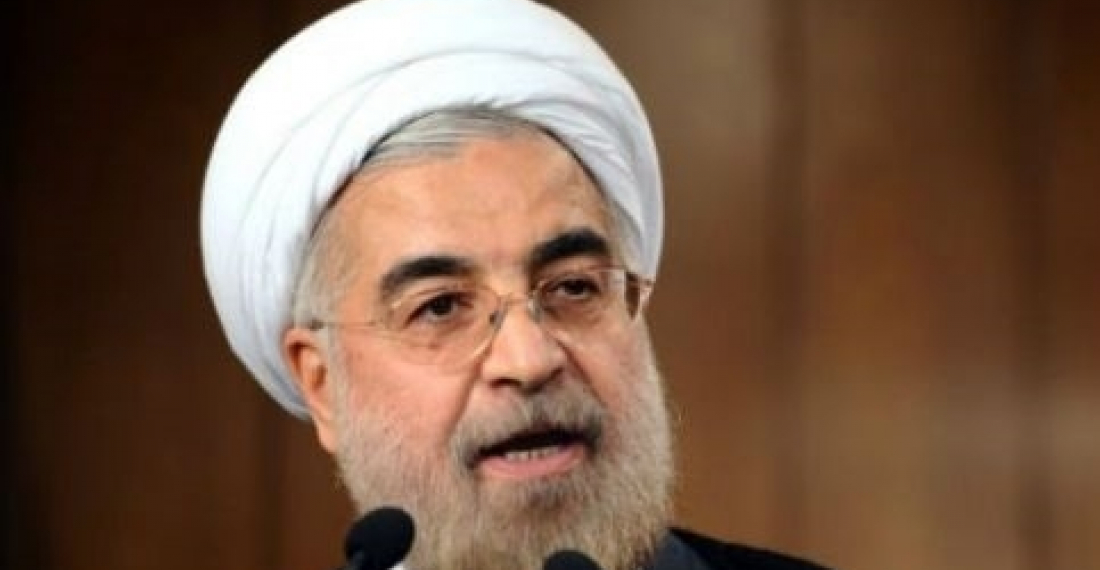
Победа на выборах Хасана Рохани будет иметь влияние и на Кавказ, но не сразу.

Хасан Рохани одержал победу на прошедших президентских выборах, состоявшихся в Иране в эту пятницу, набрав более пятидесяти процентов голосов в первом туре, во время которого избиратели продемонстрировали большую активность и явку. Рохани официально вступит в должность в августе.

Наблюдатели описывали Рохани как кандидата, который настаивает на реформах в Исламской Республике. В своей предвыборной кампании он раскритиковал цензуру, а также нарушение личной свободы и призвал к новым отношениям с США и Западом.

Политический редактор Commonspace.eu в своем комментарий сообщает:

Политическая система Исламской Республики Иран далека от совершенства, но выборы доказали, что она позволяет иранскому народу выбрать того, кого они хотят видеть у руля своей страны. Рохани придется ответить на ожидания своих избирателей, которые разглядели в нем надежду на перемены в стране. Ему также придется действовать осторожно и на международной арене, чтобы не расстраивать слишком сильно религиозный истеблишмент страны, который остается всемогущим, а также военных, которые также стали более значимыми. Баланс между этими двумя  и активным гражданским обществом будет его главной задачей внутри страны.

На международной арене Рохани придется решать текущую изоляцию Ирана, его противостояние с международным сообществом по ядерной проблеме и сирийский вопрос. Кавказский регион не будет среди первых в повестке дня Рохани, но и не будет последним. Иран рассматривает себя в качестве региональной державы на Кавказе, так же как и в Персидском заливе и Центральной Азии. До сих пор это было "в коробке" из-за международной изоляции. При более прагматичном и гибком руководстве в Тегеране могут рассчитывать на более важную роль во всех трех субрегионах, с которыми граничит исламская республика. Иран имеет давние и сложные отношения со всеми тремя странами Южного Кавказа. Стоит ожидать некоторые новые инициативы, но не в ближайшее время. В конце концов, все будет зависеть от того, насколько Иран воспринимает свою ответственность как игрока на международной арене. Если Иран это осознает, то он должен внести важный вклад в будущее Кавказского региона.

Источник: commonspace.eu

Related articles

Editor's choice
News
(Updated) European leaders arrive in Armenia for Monday's summit of the European Political Community

(Updated) European leaders arrive in Armenia for Monday's summit of the European Political Community

Updated at 1700 CEST. European leaders are arriving in Armenia on Sunday, for the 8th summit of the European Political Community (EPC), which is expected to take place in Yerevan on Monday 4 April. This is the biggest gathering of European leaders in the South Caucasus ever. This afternoon, British Prime Minister, Sir Keir Starmer, and Polish prime minister Donald Tusk where amongst those arriving. Sir Keir was welcomed at Zvarnots International Airport by Vahagn Khachaturyan, the president of Armenia Among those arriving will be French President, Emanuel Macron, European Commission president, Ursula von der Leyen and European Council president, Antonio Costa. Ukrainian president Volodmyr Zelenski is also expected to attend and he is already in the Armenian capital. Turkish Vice president, Turkish Vice President Cevdet Yilmaz will represent his country in the summit. Also present will be Canadian prime minister, Mark Carney. The European Political Community (EPC) is an intergovernmental forum for political and strategic discussions about the future of Europe established in 2022 after the Russian invasion of Ukraine The group first met in October 2022 in Prague, with participants The 47 EPC participating states are home to 689.5 million people, constitute 8.7 percent of the world's population and represent about 23.5 percent of the global GDP.

Popular

Editor's choice
Interview
Thursday Interview: Murad Muradov

Thursday Interview: Murad Muradov

Today, commonspace.eu starts a new regular weekly series. THURSDAY INTERVIEW, conducted by Lauri Nikulainen, will host  persons who are thinkers, opinion shapers, and implementors in their countries and spheres. We start the series with an interview with Murad Muradov, a leading person in Azerbaijan's think tank community. He is also the first co-chair of the Action Committee for a new Armenian-Azerbaijani Dialogue. Last September he made history by being the first Azerbaijani civil society activist to visit Armenia after the 44 day war, and the start of the peace process. Speaking about this visit Murad Muradov said: "My experience was largely positive. My negative expectations luckily didn’t play out. The discussions were respectful, the panel format bringing together experts from Armenia, Azerbaijan, and Turkey was particularly valuable during the NATO Rose-Roth Seminar in Yerevan, and media coverage, while varied in tone, remained largely constructive. Some media outlets though attempted to represent me as more of a government mouthpiece than an independent expert, which was totally misleading.  Overall, I see these initiatives as important steps in rebuilding trust and normalising professional engagement. The fact that soon a larger Azerbaijani civil society visits to Armenia followed, reinforces the sense that this process is moving in the right direction." (click the image to read the interview in full)


