


Переосмысление ОБСЕ: Главы МИД договорились запустить процесс обновления. Процесс "Хельсинки +40" должен быть серьезным и открытым, если организация хочет исправиться.

Комментарии подготовлен политическим редактором commonspace.eu

ОБСЕ - Организация по безопасности и сотрудничеству в Европе, заработала себе сомнительную честь будучи наименее прозрачной международной или региональной организацией в Европе. Но знайте, это не из-за отсутствия пресс-релизов, веб-сайтов или других средств массовых коммуникаций. Этого всего есть много, и комнаты для прессы на ежегодных министериалах всегда наполнены сотнями журналистов. Но деятельность организации в итоге отражается в документах, которые являются шедеврами двусмысленности и недосказанности. Большинство решений крайне расплывчатые, и обычно заканчиваются направлением вопроса обратно в орган, называемый Постоянным советом, орган, состоящий из  дипломатов, представляющих 57 государств-членов, которые собираются еженедельно в Вене.

Два фактора способствуют этой деятельности. ОБСЕ работает по принципу консенсуса и получить согласие 57 государств-членов на что-либо очень трудно. Министры иностранных дел не стали даже пытаться выступить с заявлением после годового собрания. Вместо этого они ограничиваются изданием серьезных "решении" многие из которых носят чисто административный характер, такие, как, кто возглавит ежегодное председательство в Организации, и дату следующего заседания. Все остальное должно быть обязательно неоднозначным, чтобы не оскорбить ничьи чувства.

Вторая проблема заключается в том, что работу организации часто считают слишком "специальной" для простых смертных. Взамен скучные и педантичные дипломаты часто располагаются в Вене подальше от глаз общественности, чтобы трудиться не покладая рук над выработкой документов, большинство из которых никогда не будут согласованы и не увидят дневного света.

Но ОБСЕ важно, потому что это один из форумов, где все страны Европы вместе со своими североамериканскими и центрально-азиатскими соседями сидят вместе, чтобы поработать над вопросами безопасности Европы. Её работа также исторически охватывает основные вопросы безопасности, такие как контроль над вооружениями, а также работы в области прав человека. Её логика основывается на принципе того, что безопасность неделима.

ОБСЕ также имеет славную историю, поскольку она является прямым потомком СБСЕ - орган, который подарил миру в 1975 году Хельсинкский заключительный акт, который часто рассматривается как начало конца холодной войны в Европе, и который у многих ассоциируется с достижениями Европы в области прав человека.

Пожалуй, из-за стремления ухватиться за эту былую славу на встрече министров иностранных дел стран-членов ОБСЕ в Дублине на прошлой неделе было принято решение начать то, что они называют "процесс ОБСЕ Хельсинки +40". Решение было принято должным образом. Они заявили, что в новый процесс "включены усилия всех государств-участников обеспечить сильный и непрерывный политический импульс дальнейшей работе сообщества безопасности, а в дальнейшем усиление нашего сотрудничества в ОБСЕ на пути к 2015 году, в год, который знаменует четыре десятилетия с момента подписания Хельсинкского заключительного акта". В документе также говорится, что министры иностранных дел, подчеркивают, что этот юбилей представляет собой уникальную возможность подтвердить приверженность государств-участников к концепции всеобъемлющей, совместной, равной и неделимой безопасности, отметить практические результаты отражающие активные усилия по полной реализации обязательств ОБСЕ и развить достижения ОБСЕ во всех трех измерениях, а также ответить на вызовы двадцать первого века".

В сущности, то, что министры иностранных дел сделали на прошлой неделе было призыв к возвращению организации к чертежной доске и начать трехлетнее обсуждения о том, как реорганизовать свою работу в будущем. Действительно очень хорошая вещь, кроме одного, трудно понять, как люди, которые создали сегодняшнее ОБСЕ смогут изменить организацию.

Единственная надежда в этой работе, если три последующих председательствующих стран в ОБСЕ - Украина (2013) Швейцария (2014) и Сербии (2015) - подойдут к этой задаче серьезно и будут развивать стратегию, которая помогла бы выйти за пределы постоянного совета в Вене к обществу в целом на просторах ОБСЕ для того, чтобы видение 21-ого века отражало реальность сотен миллионов людей от Ванкувера до Владивостока, будущее которых организация стремится защитить.

В последнее время наблюдалось недовольство работой ОБСЕ. Организация не смогла справиться с некоторыми вопросами. Этот новый процесс обновления должен быть серьезным и открытым, если организация хочет исправиться. Доводы о том, что это не будет стоить слишком много, и что лучше пусть это будет, чем нет больше не могут быть поддерживаемыми, так что во многом процесс Хельсинки +40 предлагает ОБСЕ экзистенциальный вызов.
Этот комментарий был подготовлен политическим редактором commonspace.eu

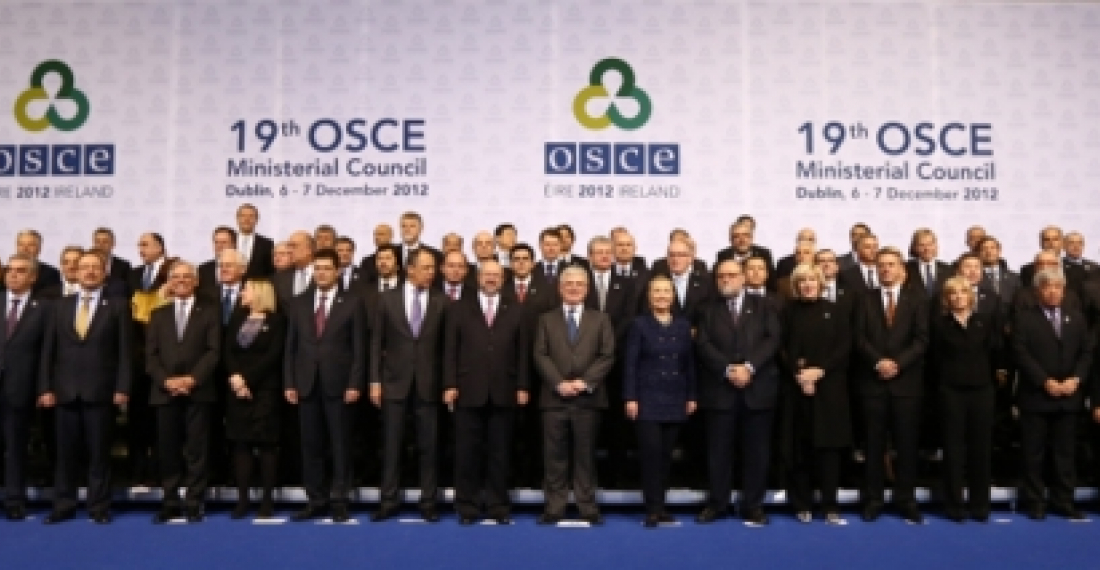
Фото: Министры иностранных дел 57 государств-членов ОБСЕ на 19-ом министериале в Дублине, 6-7 декабря 2012 года. (фото любезно предоставлено ОБСЕ)

Related articles

Editor's choice
News
COP 17 in Armenia

COP 17 in Armenia

Armenia is currently hosting the COP17 conference of the Convention on Biological Diversity, which began earlier this week (19 October) and will run until 30 October, bringing around 15,000 participants from 196 different countries to Yerevan. At a leaders' summit held as part of COP17, Prime Minister Nikol Pashinyan expressed realistic ambitions: “We are halfway towards achieving these goals (Kunming-Montreal Global Biodiversity Framework), and we must honestly acknowledge that we are not yet moving in the right direction. Our task now is not to make new promises, but to fulfil the commitments we have already made.” Pashinyan pointed towards Armenia's own records, noting that the whitefish stock in Lake Sevan has increased substantially in the last ten years. Iranian President Masoud Pezeshkian and Georgian Prime Minister Irakli Kobakhidze also addressed the summit, with Turkiye sending its agriculture minister. However, there were no reports of Azerbaijani representatives attending. The conference has given Yerevan a valuable international platform, yet the absence of Azerbaijan is likely to be read as a sign that the peace process in the South Caucasus has not yet been translated into wider regional cooperation. The leaders' summit was opened by Armenian Prime Minister Nikol Pashinyan, who stressed that hosting the conference was a great honour for Armenia. He expressed hope that it would 'be productive and contribute to protecting our planet's biodiversity'. 'We – the citizens of Armenia, the government, state authorities and local governments – owe a debt to our nature,' the prime minister said. He noted that the international community had already developed the concept of 'living in harmony with nature’ and adopted the Kunming-Montreal Global Biodiversity Framework in 2022, setting out goals and specific targets to be achieved by 2030. 'We are halfway towards achieving these goals, and we must honestly acknowledge that we are not yet moving in the right direction. Our task now is not to make new promises, but to fulfil the commitments we have already made,' Nikol Pashinyan said. The COP17 conference is expected to adopt a declaration at leaders' level. More than 30 documents are scheduled for discussion. If approved, the commitments set out in them will become legally binding on countries that are parties to the Convention on Biological Diversity.”
Editor's choice
News
Landmines present to the European Union both a contradiction and a dilemma

Landmines present to the European Union both a contradiction and a dilemma

Finland’s decision to buy one million landmines creates a serious contradiction in the policy of the European Union, and is symbolic of a bigger dilemma facing European countries as they get used to the need to acquire “hard” power to face an increasing threat from Russia. Finland is seeking to acquire one million anti-personnel mines at a cost of 100 million euros. Finland, together with Poland, Latvia, Lithuania and Estonia last year abandoned the Ottawa agreement, the international framework that bans the use of anti-personnel mines, which the EU had been instrumental in establishing and supporting. All five countries cite the threat from Moscow as the reason. Colonel Riku Mikkonen of the Army Command told Finland’s national news agency STT that officials are now gathering information from suppliers regarding the deal, the AFP news agency reports. Helsinki would like domestic manufacturers to supply the mines, with contracts signed by the end of 2027 and production up and running by 2028. “It would be useful in many ways if Finnish companies produced the anti-personnel mines in Finland,” Mikkonen said. About half a dozen Finnish firms qualify, he told STT. “However, at this stage, buying the mines from abroad is not totally ruled out,” he added. LANDMINES PROVIDE THE EU WITH BOTH A CONTRADICTION, AND A DILEMMA Eliminating landmine contamination worldwide is one of the EU’s main soft power postures, and it basks in its record as the biggest funder of anti-landmine action in the world. But the fact that 5 of its 27 member states  have now left the Ottawa Treaty dents the EU moral high ground. It is a contradiction that is too big and important to be ignored. It also presents the European Union with a deeper dilemma. The threat from Russia is changing what the EU has stood for decades, namely a force for good able to mobilise its considerable soft power for the greater good of humanity. How the Union will implement this change will define its future. In the meantime landmines have not become any less lethal, benign, or unimportant. They remain in many parts of the world a major threat to life, an impediment to prosperity, and a potential trigger to further conflict. The 22 EU members states that still adhere to the Ottawa treaty must regroup, and be more assertive in their quest against anti-personnel land mines. All the reasons why they supported the Ottawa treaty in the first place still exist. The message must be clear: NO TO LANDMINES!

Popular

Editor's choice
Interview
Thursday Interview: Murad Muradov

Thursday Interview: Murad Muradov

Today, commonspace.eu starts a new regular weekly series. THURSDAY INTERVIEW, conducted by Lauri Nikulainen, will host  persons who are thinkers, opinion shapers, and implementors in their countries and spheres. We start the series with an interview with Murad Muradov, a leading person in Azerbaijan's think tank community. He is also the first co-chair of the Action Committee for a new Armenian-Azerbaijani Dialogue. Last September he made history by being the first Azerbaijani civil society activist to visit Armenia after the 44 day war, and the start of the peace process. Speaking about this visit Murad Muradov said: "My experience was largely positive. My negative expectations luckily didn’t play out. The discussions were respectful, the panel format bringing together experts from Armenia, Azerbaijan, and Turkey was particularly valuable during the NATO Rose-Roth Seminar in Yerevan, and media coverage, while varied in tone, remained largely constructive. Some media outlets though attempted to represent me as more of a government mouthpiece than an independent expert, which was totally misleading.  Overall, I see these initiatives as important steps in rebuilding trust and normalising professional engagement. The fact that soon a larger Azerbaijani civil society visits to Armenia followed, reinforces the sense that this process is moving in the right direction." (click the image to read the interview in full)

