


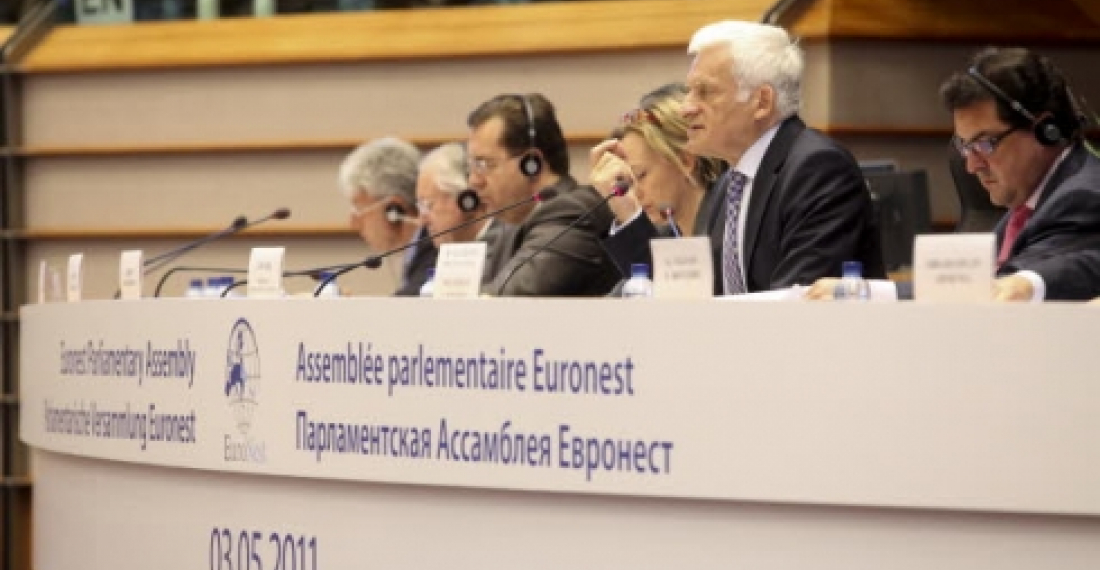
Парламентарии из Южного Кавказа объединяются для работы Парламентской Ассамблеи Евронест

Парламентарии из Южного Кавказа объединяются для работы Парламентской Ассамблеи Евронест
Брюссель, 3 мая 2011 года

Руководители парламентов Армении, Азербайджана и Грузии 3 мая присоединились к коллегам из Молдовы и Украины и членам Европейского Парламента для проведения Первой сессии Парламентской Ассамблеи (ПА) Евронест. Армянскую делегацию возглавил председатель Национального Собрания Овик Абраамян, азербайджанскую - первый вице-спикер Мелли Меджлиса Зияфат Аскеров, грузинскую - первый вице-спикер грузинского парламента Михаил Мачавариани.

Цель работы данного института заключается в создании парламентского формата Политики Восточного соседства ЕС. «Мы создали сегодня влиятельный инструмент», - сказал избранный со-председатель Евронест Кристиан Вигенин по завершении учредительного заседания.

Учредительное заседание ПА Евронест было открыто президентом Европарламента Ежи Бузеком, который отметил, что процесс демократических реформ в странах Восточного соседства необходимо укреплять. «Стабильными могут быть только демократичные страны; демократия - это единственный путь к стабильности», - сказал он. Бузек также добавил, что Парламентская Асамблея сыграла решающую роль в сближении народов региона. «Если мы стремимся к большему сотрудничеству и более глубокой интеграции, то мы должны начинать с парламентского сотрудничества, посколько оно представляет контакты между людьми», -  отметил со-председатель.

Закрывая заседание, со-председатель Кристиан Вигенин подчеркнул, что «эта ассамблея - один из двух равных компонентов, равных в правах и обязанностях», и выразил уверенность в том, что члены Евронест будут поддерживать оба компонента. В последующем заявлении для СМИ он подчеркнул, что «учреждение этого института - самый сильный сигнал, который мы могли послать» по поводу потенциала сотрудничества между Европарламентом и восточными партнерами. Со-председатель Борис Тарасюк (Украина) повторил выраженную точку зрения и обратился ко всем институтам Европейского Союза с призывом не поддаваться искушению отнимать внимание и средства, направляемые восточным соседям, в пользу южных.  

Принятые решения

Парламентская Ассамблея приняла и подписала учредительный документ, одобрила регламент, создала две рабочие группы (по Беларуси и Регламенту) и создала четыре комитета (один - по политическим вопросам, правам человека и демократии, второй - по экономическим вопросам, правовому сближению и соответствию с политикой ЕС, третий - по вопросам энергетической безопасности, четвертый - по вопросам культуры, образования и гражданского общества).

ПА выбрала двоих со-председателей, господ Вигенина и Тарасюка, а также восьми вице-президентов, которые войдут в состав Бюро: Ваан Ованнесян (Армения), Эльхан Сулейманов (Азербайджан), Давид Дарчиашвили (Грузия), Игорь Корман (Молдова), Трайан Унгуренау (Румыния), Ричард Чарнецкий (Польша), Гербен-Ян Гербранди (Нидерланды) и  Яцек Сарыуш-Вольски (Польша).

В состав Парламентской Ассамблеи Евронест входят 60 членов Европарламента и по 10 депутатов от  каждой из пяти стран из Восточного соседства. С Беларусью сложилась особая ситуация: несмотря на то, что она входит в Восточное соседство, активно обсуждался вопрос  ее членства в Евронест без признания режима Александра Лукашенко. В итоге учредительное собрание было проведено без участия представителей Беларуси.

Отчет подготовлен редакторским составом commonspace.eu с использованием материалов пресс-службы Европарламента.  

Related articles

Editor's choice
News
Council of Europe launches new International Claims Commission for Ukraine

Council of Europe launches new International Claims Commission for Ukraine

Thirty-four countries and the European Union have signed a new convention establishing an International Claims Commission for Ukraine at a diplomatic conference co-hosted by the 46-nation Council of Europe and the Netherlands in the Hague. The diplomatic conference was attended by leaders and high-level representatives from over 50 states, including the President of Ukraine, Volodymyr Zelenskyy, the President of the Republic of Moldova, Maia Sandu, and the Prime Minister of the Netherlands, Dick Schoof.  “Today marks a major step forward in ensuring accountability for Ukraine. The International Claims Commission represents justice and hope for tens of thousands of victims—our determination that those who have suffered will not be forgotten. I call for quick ratifications so we can get the commission rapidly up and running for the people of Ukraine,” said Council of Europe Secretary General Alain Berset. Ukrainian President Volodymyr Zelenskyy said: “We expect that every mechanism for compensation from the Register of Damage and Claims Commission to the actual payments – will start working and receive strong and sufficient international support, so that people can truly feel that any kind of damage caused by the war can be compensated. This war, and Russia’s responsibility for it, MUST become a clear example – so that others learn not to choose aggression.” “Accountability is about creating the conditions for peace that endures. And therefore, accountability is a condition of security – today and for the future. But accountability is not only about Ukraine. And it is not only about one aggressor and one victim. Accountability is about Europe. About every country in Europe. It is about whether Europe, as a whole, is willing to defend its peace,” said Maia Sandu, President of the Republic of Moldova, which currently holds the Presidency of the Council of Europe’s Committee of Ministers. The Prime Minister of the Netherlands, Dick Schoof, said: “Every day Russia is deliberately bombarding homes, destroying businesses and damaging infrastructure in Ukraine. Russia must compensate Ukraine for the damage caused. That is why we have launched the International Claims Commission for Ukraine and we are honoured to host it.” The International Claims Commission will be the second part of a comprehensive compensation mechanism related to Russia’s war of aggression, building on the existing Register of Damage for Ukraine. The claims commission will be established within the framework of the Council of Europe and will also be open to other countries. The Register of Damage for Ukraine, created in 2023, collects and records compensation claims submitted by individuals, organisations and public bodies in Ukraine. Forty-four states and the European Union have so far joined the Register, which has already received 86,000 claims. The International Claims Commission will review, assess and decide upon claims submitted to the Register of Damage for Ukraine and determine the amount of compensation, if any, which is due in each case. The convention establishing the commission will enter into force once it has been ratified by 25 signatories, as long as sufficient funds have been secured to support its initial work.

Popular

Editor's choice
News
Council of Europe launches new International Claims Commission for Ukraine

Council of Europe launches new International Claims Commission for Ukraine

Thirty-four countries and the European Union have signed a new convention establishing an International Claims Commission for Ukraine at a diplomatic conference co-hosted by the 46-nation Council of Europe and the Netherlands in the Hague. The diplomatic conference was attended by leaders and high-level representatives from over 50 states, including the President of Ukraine, Volodymyr Zelenskyy, the President of the Republic of Moldova, Maia Sandu, and the Prime Minister of the Netherlands, Dick Schoof.  “Today marks a major step forward in ensuring accountability for Ukraine. The International Claims Commission represents justice and hope for tens of thousands of victims—our determination that those who have suffered will not be forgotten. I call for quick ratifications so we can get the commission rapidly up and running for the people of Ukraine,” said Council of Europe Secretary General Alain Berset. Ukrainian President Volodymyr Zelenskyy said: “We expect that every mechanism for compensation from the Register of Damage and Claims Commission to the actual payments – will start working and receive strong and sufficient international support, so that people can truly feel that any kind of damage caused by the war can be compensated. This war, and Russia’s responsibility for it, MUST become a clear example – so that others learn not to choose aggression.” “Accountability is about creating the conditions for peace that endures. And therefore, accountability is a condition of security – today and for the future. But accountability is not only about Ukraine. And it is not only about one aggressor and one victim. Accountability is about Europe. About every country in Europe. It is about whether Europe, as a whole, is willing to defend its peace,” said Maia Sandu, President of the Republic of Moldova, which currently holds the Presidency of the Council of Europe’s Committee of Ministers. The Prime Minister of the Netherlands, Dick Schoof, said: “Every day Russia is deliberately bombarding homes, destroying businesses and damaging infrastructure in Ukraine. Russia must compensate Ukraine for the damage caused. That is why we have launched the International Claims Commission for Ukraine and we are honoured to host it.” The International Claims Commission will be the second part of a comprehensive compensation mechanism related to Russia’s war of aggression, building on the existing Register of Damage for Ukraine. The claims commission will be established within the framework of the Council of Europe and will also be open to other countries. The Register of Damage for Ukraine, created in 2023, collects and records compensation claims submitted by individuals, organisations and public bodies in Ukraine. Forty-four states and the European Union have so far joined the Register, which has already received 86,000 claims. The International Claims Commission will review, assess and decide upon claims submitted to the Register of Damage for Ukraine and determine the amount of compensation, if any, which is due in each case. The convention establishing the commission will enter into force once it has been ratified by 25 signatories, as long as sufficient funds have been secured to support its initial work.


