Баку шлет четкий сигнал: Никаких мер, которые приведут к укреплению статус-кво!
В течение нескольких последних недель в международном сообществе при обсуждении нагорно-карабахского конфликта на слуху были слова "меры по укреплению доверия" и "механизмы расследования инцидентов".

Меры по укреплению доверия рассматриваются, как необходимость для сокращения военных и политических заблуждении и они призваны помочь в создании надлежащих условий для возобновления мирных переговоров. Существуют разговоры о том, что Европейский Союз может принять ответственность за эти меры, используя свой опыт на Балканах и в других местах.

"Механизмы расследования инцидентов" это термин, который появился публично на последней встрече в Сочи между президентами России, Армении и Азербайджана. Они рассматриваются, как ответ на рост нарушений режима прекращения огня на линии соприкосновения, разделяющей армянские и азербайджанские силы. И Армения, и Азербайджан в принципе взяли на себя обязательства по обоим формулировкам. Но, кажется, что их понимание того, как это все может сработать очень разные.

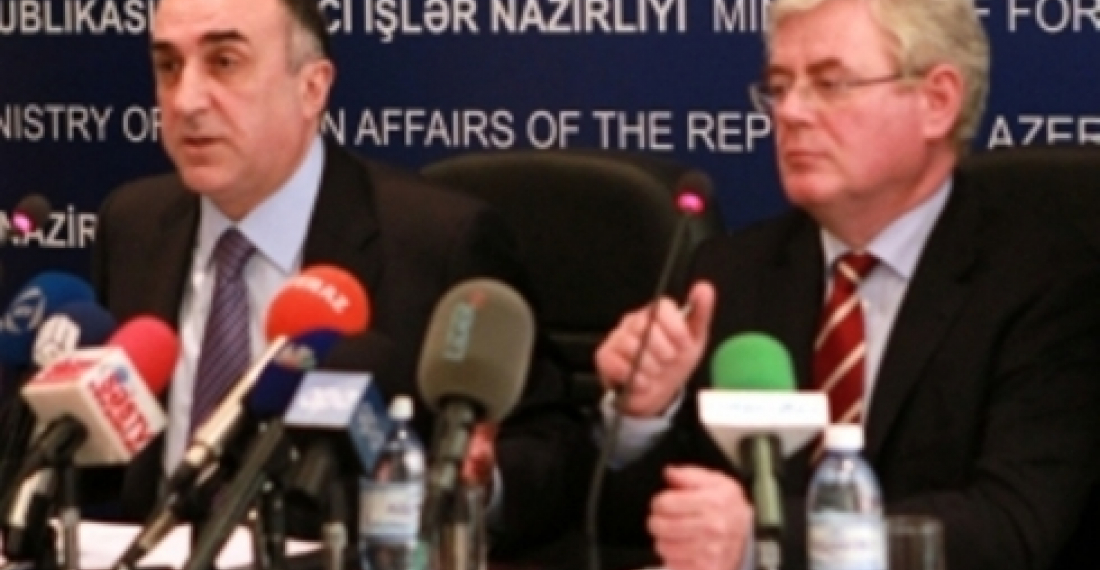
В четверг (14 июня) обычно приветливый министр иностранных дел Азербайджана, Эльмар Мамедъяров, вылил  холодный душ на эти предложения. Мамедъяров категорически исключил любые меры, которые будут укреплять статус-кво. Выступая на пресс-конференции в Баку, вместе с ирландским министром иностранных дел и председателем ОБСЕ, Имоном Гилмором, Мамедъяров сказал, что введение таких мер в настоящее время будет укрепление статус-кво, что не является приемлемым для Азербайджана .

Министр заявил, что "механизм может быть введен лишь после начала вывода армянских оккупационных войск с территории Азербайджана, иначе это станет лишь укреплением нынешнего статус-кво." Министр добавил, что "Смерть солдат – это крайне неприятное событие. Но если руководство Армении хочет прекратить гибель своих людей, пусть выведет свои войска с территории Азербайджана."

Председатель ОБСЕ повторил вновь позицию ОБСЕ:

"Круговорот насилия должен остановиться, - это конфликт не будет решен с помощью силы", сказал он. Гилмор призвал стороны к дальнейшему развитию событий на общих принципах резолюции, реализовывать меры по укреплению доверия, а именно вывести снайперов с линии соприкосновения, выполнить соглашение о создании механизма расследования инцидентов на линии фронта, а далее следуя недавнему соглашению президентов развивать контакты между людьми.

"Председатель ОБСЕ поддерживает усилия Минской группы ОБСЕ в работе со сторонами по укреплению режима прекращения огня и поиску решения путем переговоров", заявил председатель Гилмор. Он также подчеркнул поддержку ОБСЕ сторонам в преодолении различии между странами и народами.

"Мы хотим помочь региону сделать шаг к прочному миру", сказал он. "Мы в Ирландии, через Северо Ирландский мирный процесс, стали свидетелями того, что сопереживание, терпимость, уважение и открытость - готовность учитывать различия - это ключ к успешным мирным переговорам. Мы не можем навязать решение, но мы можем обеспечить форум для диалога".

Это была одна и таже пресс-конференция, но эти двое явно были на разных планетах.

Источник: commonspace.eu по материалам агентства новостей Trend и пресс-службы ОБСЕ.

Фото: Министр иностранных дел Азербайджана, Эльмар Мамедъяров, и председатель ОБСЕ, Имон Гилмор, в Баку 14 июня 2012 года (фото любезно предоставлено пресс-службой ОБСЕ.)

Related articles

Editor's choice
News
Council of Europe launches new International Claims Commission for Ukraine

Council of Europe launches new International Claims Commission for Ukraine

Thirty-four countries and the European Union have signed a new convention establishing an International Claims Commission for Ukraine at a diplomatic conference co-hosted by the 46-nation Council of Europe and the Netherlands in the Hague. The diplomatic conference was attended by leaders and high-level representatives from over 50 states, including the President of Ukraine, Volodymyr Zelenskyy, the President of the Republic of Moldova, Maia Sandu, and the Prime Minister of the Netherlands, Dick Schoof.  “Today marks a major step forward in ensuring accountability for Ukraine. The International Claims Commission represents justice and hope for tens of thousands of victims—our determination that those who have suffered will not be forgotten. I call for quick ratifications so we can get the commission rapidly up and running for the people of Ukraine,” said Council of Europe Secretary General Alain Berset. Ukrainian President Volodymyr Zelenskyy said: “We expect that every mechanism for compensation from the Register of Damage and Claims Commission to the actual payments – will start working and receive strong and sufficient international support, so that people can truly feel that any kind of damage caused by the war can be compensated. This war, and Russia’s responsibility for it, MUST become a clear example – so that others learn not to choose aggression.” “Accountability is about creating the conditions for peace that endures. And therefore, accountability is a condition of security – today and for the future. But accountability is not only about Ukraine. And it is not only about one aggressor and one victim. Accountability is about Europe. About every country in Europe. It is about whether Europe, as a whole, is willing to defend its peace,” said Maia Sandu, President of the Republic of Moldova, which currently holds the Presidency of the Council of Europe’s Committee of Ministers. The Prime Minister of the Netherlands, Dick Schoof, said: “Every day Russia is deliberately bombarding homes, destroying businesses and damaging infrastructure in Ukraine. Russia must compensate Ukraine for the damage caused. That is why we have launched the International Claims Commission for Ukraine and we are honoured to host it.” The International Claims Commission will be the second part of a comprehensive compensation mechanism related to Russia’s war of aggression, building on the existing Register of Damage for Ukraine. The claims commission will be established within the framework of the Council of Europe and will also be open to other countries. The Register of Damage for Ukraine, created in 2023, collects and records compensation claims submitted by individuals, organisations and public bodies in Ukraine. Forty-four states and the European Union have so far joined the Register, which has already received 86,000 claims. The International Claims Commission will review, assess and decide upon claims submitted to the Register of Damage for Ukraine and determine the amount of compensation, if any, which is due in each case. The convention establishing the commission will enter into force once it has been ratified by 25 signatories, as long as sufficient funds have been secured to support its initial work.

Popular

Editor's choice
News
Council of Europe launches new International Claims Commission for Ukraine

Council of Europe launches new International Claims Commission for Ukraine

Thirty-four countries and the European Union have signed a new convention establishing an International Claims Commission for Ukraine at a diplomatic conference co-hosted by the 46-nation Council of Europe and the Netherlands in the Hague. The diplomatic conference was attended by leaders and high-level representatives from over 50 states, including the President of Ukraine, Volodymyr Zelenskyy, the President of the Republic of Moldova, Maia Sandu, and the Prime Minister of the Netherlands, Dick Schoof.  “Today marks a major step forward in ensuring accountability for Ukraine. The International Claims Commission represents justice and hope for tens of thousands of victims—our determination that those who have suffered will not be forgotten. I call for quick ratifications so we can get the commission rapidly up and running for the people of Ukraine,” said Council of Europe Secretary General Alain Berset. Ukrainian President Volodymyr Zelenskyy said: “We expect that every mechanism for compensation from the Register of Damage and Claims Commission to the actual payments – will start working and receive strong and sufficient international support, so that people can truly feel that any kind of damage caused by the war can be compensated. This war, and Russia’s responsibility for it, MUST become a clear example – so that others learn not to choose aggression.” “Accountability is about creating the conditions for peace that endures. And therefore, accountability is a condition of security – today and for the future. But accountability is not only about Ukraine. And it is not only about one aggressor and one victim. Accountability is about Europe. About every country in Europe. It is about whether Europe, as a whole, is willing to defend its peace,” said Maia Sandu, President of the Republic of Moldova, which currently holds the Presidency of the Council of Europe’s Committee of Ministers. The Prime Minister of the Netherlands, Dick Schoof, said: “Every day Russia is deliberately bombarding homes, destroying businesses and damaging infrastructure in Ukraine. Russia must compensate Ukraine for the damage caused. That is why we have launched the International Claims Commission for Ukraine and we are honoured to host it.” The International Claims Commission will be the second part of a comprehensive compensation mechanism related to Russia’s war of aggression, building on the existing Register of Damage for Ukraine. The claims commission will be established within the framework of the Council of Europe and will also be open to other countries. The Register of Damage for Ukraine, created in 2023, collects and records compensation claims submitted by individuals, organisations and public bodies in Ukraine. Forty-four states and the European Union have so far joined the Register, which has already received 86,000 claims. The International Claims Commission will review, assess and decide upon claims submitted to the Register of Damage for Ukraine and determine the amount of compensation, if any, which is due in each case. The convention establishing the commission will enter into force once it has been ratified by 25 signatories, as long as sufficient funds have been secured to support its initial work.