


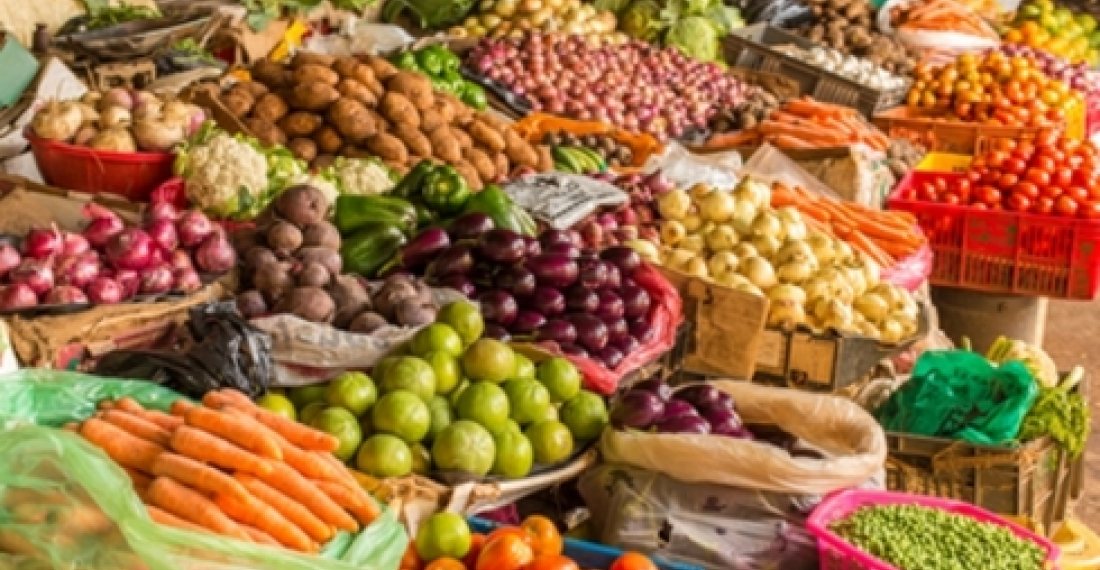
Армения желает увеличить экспорт сельскохозяйственной продукции в Россию

Армянские власти рассматривают возможность расширения экспорта сельскохозяйственной продукции в Россию в связи с решением  российского правительства по запрету или ограничению импорта продовольствия из Европейского Союза и других стран. Запрет является ответом России на экономические санкций ЕС, которые были объявлены в ответ на аннексию Россией Крыма и дестабилизации ситуации в Украине.

Российское информационное агентство ИТАР-ТАСС сообщает, что премьер-министр Армении Овик Абрамян обсудил вопрос увеличения экспорта Армении в Россию на специальном совещании с руководителями ведущих производителей продовольствия в стране. "Увеличение объемов экспорта армянских продуктов питания в другие страны, в том числе на рынок России, даст мощный импульс национальной экономики", заявил Абрамян. "Правительство готово, в пределах своих возможностей, содействовать  осуществлению различных экспортных программ."

По данным Министерства экономики Армении, страна производит 37 из 57 позиции, попавших под российские санкций, и 31 из них уже экспортируются в Россию. Экспорт 37 видов товаров оценивается в $84,5 миллионов в год, из которых $61 млн приходится на Россию.

В санкционный список России попали говядина, свинина, фрукты и овощи, сыр, молочные продукты, мясо птицы, орехи и другие продукты.

На прошлой неделе министр сельского хозяйства Армении Серж Карапетян встретился с руководителями консервных заводов и призвал их к увеличению экспорта овощей и фруктов в Россию. Министр Серж Карапетян заявил на этой встрече, что "традиционно около 70% сельскохозяйственной продукции Армении экспортируется в Россию." Министр выразил надежду, что армянский экспорт продовольствия в Россию удвоится в результате нынешней ситуации.

Однако, некоторые потребители уже выразили обеспокоенность тем, что увеличение экспорта сельскохозяйственной продукции  Армении на российский рынок может привести к дефициту или искусственному завышению цен внутри страны.

источник: commonspace.eu по материалам агентств.

Related articles

Editor's choice
News
(Updated) European leaders arrive in Armenia for Monday's summit of the European Political Community

(Updated) European leaders arrive in Armenia for Monday's summit of the European Political Community

Updated at 1700 CEST. European leaders are arriving in Armenia on Sunday, for the 8th summit of the European Political Community (EPC), which is expected to take place in Yerevan on Monday 4 April. This is the biggest gathering of European leaders in the South Caucasus ever. This afternoon, British Prime Minister, Sir Keir Starmer, and Polish prime minister Donald Tusk where amongst those arriving. Sir Keir was welcomed at Zvarnots International Airport by Vahagn Khachaturyan, the president of Armenia Also among those arriving will be French President, Emanuel Macron, European Commission president, Ursula von der Leyen and European Council president, Antonio Costa. Ukrainian president Volodmyr Zelenski is also expected to attend and he is already in the Armenian capital. Turkish Vice president, Turkish Vice President Cevdet Yilmaz will represent his country in the summit. Also present will be Canadian prime minister, Mark Carney. The European Political Community (EPC) is an intergovernmental forum for political and strategic discussions about the future of Europe established in 2022 after the Russian invasion of Ukraine The group first met in October 2022 in Prague. The 47 EPC participating states are home to 689.5 million people, constitute 8.7 percent of the world's population and represent about 23.5 percent of the global GDP.

Popular

Editor's choice
Interview
Thursday Interview: Murad Muradov

Thursday Interview: Murad Muradov

Today, commonspace.eu starts a new regular weekly series. THURSDAY INTERVIEW, conducted by Lauri Nikulainen, will host  persons who are thinkers, opinion shapers, and implementors in their countries and spheres. We start the series with an interview with Murad Muradov, a leading person in Azerbaijan's think tank community. He is also the first co-chair of the Action Committee for a new Armenian-Azerbaijani Dialogue. Last September he made history by being the first Azerbaijani civil society activist to visit Armenia after the 44 day war, and the start of the peace process. Speaking about this visit Murad Muradov said: "My experience was largely positive. My negative expectations luckily didn’t play out. The discussions were respectful, the panel format bringing together experts from Armenia, Azerbaijan, and Turkey was particularly valuable during the NATO Rose-Roth Seminar in Yerevan, and media coverage, while varied in tone, remained largely constructive. Some media outlets though attempted to represent me as more of a government mouthpiece than an independent expert, which was totally misleading.  Overall, I see these initiatives as important steps in rebuilding trust and normalising professional engagement. The fact that soon a larger Azerbaijani civil society visits to Armenia followed, reinforces the sense that this process is moving in the right direction." (click the image to read the interview in full)


