Беженцы не должны стать незабываемой проблемой. Сотни тысяч людей стали вынужденными переселенцами в результате конфликтов на Кавказе за последние двадцать пять лет. О них в значительной степени забыли.

О результатах многочисленных конфликтов в Кавказском регионе за последние двадцать пять лет часто судят по территориям и их политическим статусам. Тем не менее, в основе этих конфликтов лежат люди и жертвы, количество которых перевалило за сотни тысяч людей - по некоторым оценкам это цифра достигает 1,2 млн. перемещенных в результате этих конфликтов. Страдания, которые эти люди испытали за два десятилетия, вынужденные покинуть свои дома, трудно понять тем, кто никогда не проходил через тоже самое.

Проблема беженцев и вынужденных переселенцев (внутренне перемещенных лиц) в результате конфликта в Нагорном Карабахе была обсуждена за круглым столом, который состоялся в Центре европейской политики в Брюсселе во вторник (читайте отчет на сайте Commonspace). Деннис Саммут, директор LINKS, призвал Европейский Союз быть более активным в этом вопросе и заявил, что это может быть сделано в то же время по-прежнему придерживаясь позиции поддержки решения на основе Мадридских принципов и способствовать Минскому процессу ОБСЕ, в который ЕС вовлечен. Деннис Саммут сослался на положение азербайджанских беженцев и вынужденных переселенцев и заявил, что в то время как правительство Азербайджана сделало многое за последние годы, чтобы решить некоторые социальные и экономические проблемы беженцев, невозможность их возвращения в свои дома по-прежнему является серьезной проблемой для них.

Эта тема была подхвачена Гюльшан Пашаевой, заместителем директора ЦИС, Центра стратегических исследований Азербайджана, которая похвалила ЕС за гуманитарную помощь в первые годы после конфликта 1994 года, но подчеркнула, о продолжающемся гуманитарном кризисе вокруг перемещенных лиц. Пашаева призвала ЕС взять на себя ведущую роль в обеспечении возвращения этнических азербайджанцев в Нагорный Карабах, где, по ее словам, они составляли меньшинство, и где ЕС с его многолетним опытом работы с национальными меньшинствами могло бы помочь в их переселении.

Ни одна страна не обладает иммунитетом к проблеме беженцев. Тысячи армян были изгнаны из Азербайджана из-за конфликта, и наоборот. Более двухсот тысяч грузин были вынуждены переселиться из-за конфликта в Абхазии.

Вопрос возвращения беженцев не должен стоять в стороне при любом развитии конфликта. Люди, а не территория должна быть главной заботой всех и каждого.

Источник: commonspace.eu

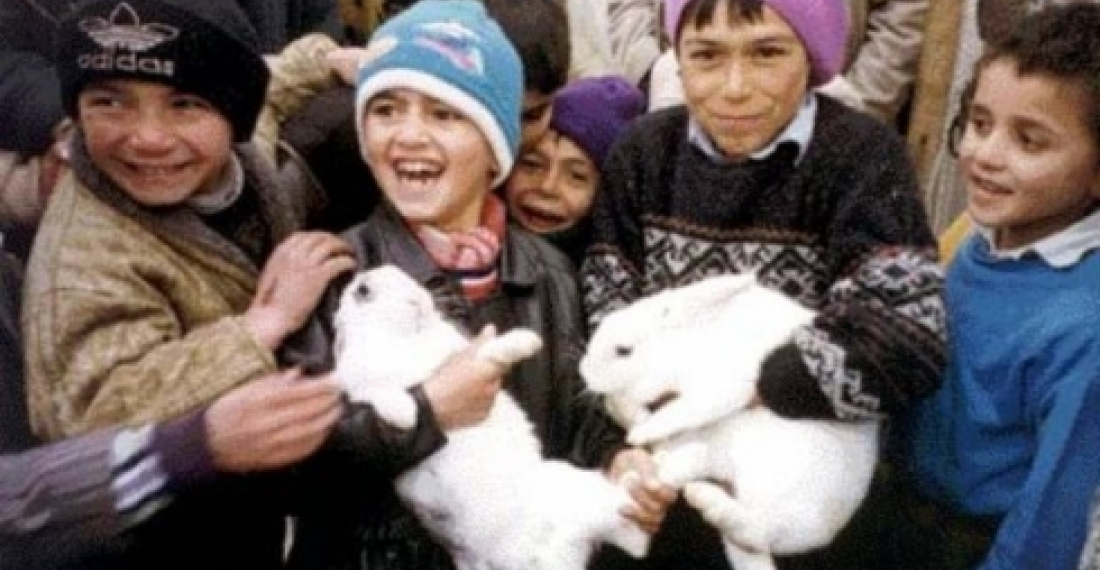
Фото: Азербайджанские дети, перемещенные в результате нагорно-карабахского конфликта (фото из архива).

Related articles

Editor's choice
News
European leaders outline position on current situation in the Middle East

European leaders outline position on current situation in the Middle East

The leaders of the 27 member states of the European Union met in Brussels on Thursday, 19 March 2026, to discuss the current global situation, and, in particular, the crisis in the Gulf, and the wider Middle East. EU leaders adopted conclusions on Ukraine, the Middle East, competitiveness and the single market, European defence and security, migration, multilateralism, strengthening Europe's democratic resilience, protecting children online, the EU's eastern regions and Dniester river. The leaders also met UN Secretary-General António Guterres to discuss the geopolitical situation and multilateralism. In their decision the EU leaders said, "Developments in Iran and the wider region threaten regional and global security. The European Council calls for de-escalation and maximum restraint, the protection of civilians and civilian infrastructure and full respect of international law by all parties, including the principles of the United Nations Charter and international humanitarian law. In this regard, it calls for a moratorium on strikes against energy and water facilities." The statement adds, "The European Union will continue to protect its security and interests, working with regional and global partners to counter the impact of the ongoing hostilities. The European Union and its Member States are taking all necessary steps to ensure the safety of EU citizens in the region, including by providing conditions for their safe departure." (Click the image above to read more).

Popular

Editor's choice
Interview
Thursday Interview: Murad Muradov

Thursday Interview: Murad Muradov

Today, commonspace.eu starts a new regular weekly series. THURSDAY INTERVIEW, conducted by Lauri Nikulainen, will host  persons who are thinkers, opinion shapers, and implementors in their countries and spheres. We start the series with an interview with Murad Muradov, a leading person in Azerbaijan's think tank community. He is also the first co-chair of the Action Committee for a new Armenian-Azerbaijani Dialogue. Last September he made history by being the first Azerbaijani civil society activist to visit Armenia after the 44 day war, and the start of the peace process. Speaking about this visit Murad Muradov said: "My experience was largely positive. My negative expectations luckily didn’t play out. The discussions were respectful, the panel format bringing together experts from Armenia, Azerbaijan, and Turkey was particularly valuable during the NATO Rose-Roth Seminar in Yerevan, and media coverage, while varied in tone, remained largely constructive. Some media outlets though attempted to represent me as more of a government mouthpiece than an independent expert, which was totally misleading.  Overall, I see these initiatives as important steps in rebuilding trust and normalising professional engagement. The fact that soon a larger Azerbaijani civil society visits to Armenia followed, reinforces the sense that this process is moving in the right direction." (click the image to read the interview in full)