


Август 2008 - войны, которая ничего не изменила и изменила все
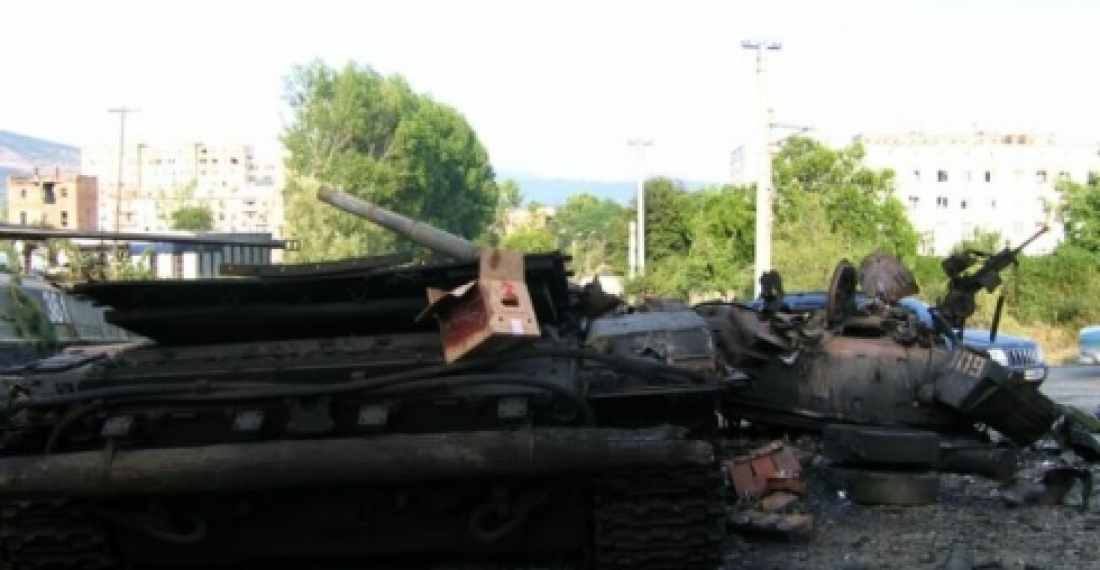
Сегодня исполняется третья годовщина с начала кратковременной войны между Грузией и Россией. Она длилась пять дней.

Столкновения первоначально начались в и вокруг территории Южной Осетии, которая с 1992 года была вне юрисдикции правительства Грузии. Россия обвинила Грузию в развязывании боевых действий и в нападении на миротворцев. Она вмешалась в военную операцию против грузинских войск на всей территории Грузии.

В некотором смысле война ничего не изменила. Два региона Грузии, которые отделились вскоре после распада СССР, остаются вне юрисдикции Грузии. Сотни тысяч, в основном грузинского населения, перемещенных в результате конфликта, остаются далеко от своих домов, их число было дополнено, недавно перемещенными лицами из-за войны 2008 года.

С другой стороны война положила конец постсоветской эпохе. Впервые со времен распада Советского Союза русские войска открыто вышли за пределы своих границ. Вслед за военным успехом Россия признала независимость Абхазии и Южной Осетий, тем самым уничтожая пост советский строй, который был основан по границам 15 союзных республик СССР. Грузия вышла из Содружества Независимых Государств и разорвала дипломатические отношения с Россией. Абхазия и Южная Осетия через ряд подписанных военных, дипломатических и экономических соглашении стали более зависимыми от России, чем когда-либо.

Хотя боевые действия были давно остановлены, последствия войны между Грузией и Россией по-прежнему не в полной мере ощутимы и осознаны.

Новый статус-кво не является устойчивым, и представляет долгосрочный источник нестабильности для всего региона. Новые усилия должны быть приложены к нормализации ситуации, которая на данный момент является ненормальной. Сегодня хороший день, чтобы вспомнить тех, кто умер в Грузино-Российской войне - грузины, осетины, русские и другие. Это также хорошее время, чтобы подумать о будущем.


Материал подготовлен редакторской группой commonspace.eu

Фото:
уничтоженный грузинский танк в Цхинвали

Related articles

Editor's choice
News
The British prime minister says Europe must "stand on its own two feet" when it comes to defence

The British prime minister says Europe must "stand on its own two feet" when it comes to defence

The UK will deploy a carrier strike group, led by the aircraft carrier HMS Prince of Wales to the Arctic and the High North as part of efforts to bolster security against Russian threats. British prime minister, Sir Keir Starmer announced the deployment in a speech on Saturday (14 February) at the Munich Security Conference. Europe must be ready to fight to protect its people, values, and way of life,  Sir Keir told the Conference. Starmer also called for deeper links and cooperation, including economic ties, between the UK and EU. The PM stressed the continent must "stand on its own two feet" when it comes to defence commitments. "We must build our hard power, because that is the currency of the age," he told the conference. (Click image to read the full story).

Popular

Editor's choice
Interview
Thursday Interview: Murad Muradov

Thursday Interview: Murad Muradov

Today, commonspace.eu starts a new regular weekly series. THURSDAY INTERVIEW, conducted by Lauri Nikulainen, will host  persons who are thinkers, opinion shapers, and implementors in their countries and spheres. We start the series with an interview with Murad Muradov, a leading person in Azerbaijan's think tank community. He is also the first co-chair of the Action Committee for a new Armenian-Azerbaijani Dialogue. Last September he made history by being the first Azerbaijani civil society activist to visit Armenia after the 44 day war, and the start of the peace process. Speaking about this visit Murad Muradov said: "My experience was largely positive. My negative expectations luckily didn’t play out. The discussions were respectful, the panel format bringing together experts from Armenia, Azerbaijan, and Turkey was particularly valuable during the NATO Rose-Roth Seminar in Yerevan, and media coverage, while varied in tone, remained largely constructive. Some media outlets though attempted to represent me as more of a government mouthpiece than an independent expert, which was totally misleading.  Overall, I see these initiatives as important steps in rebuilding trust and normalising professional engagement. The fact that soon a larger Azerbaijani civil society visits to Armenia followed, reinforces the sense that this process is moving in the right direction." (click the image to read the interview in full)



