


Армения и Азербайджан позитивно отзываются о встрече президентов

Высокопоставленные армянские и азербайджанские чиновники и страны-сопредседатели Минской группы ОБСЕ положительно высказались о прошедшей в понедельник в Вене встрече между президентами двух противоборствующих стран.

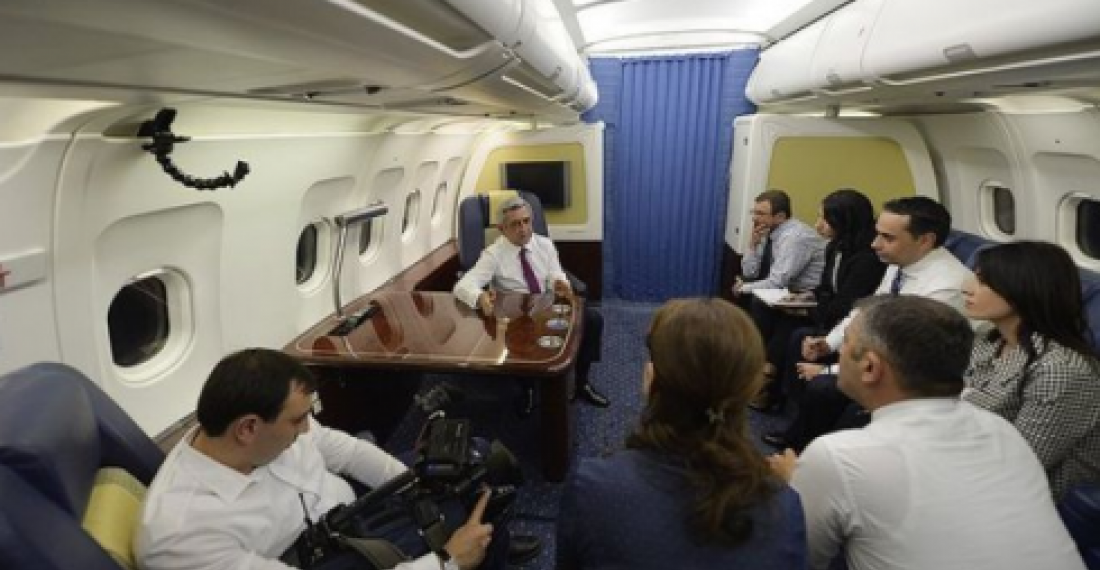
"В целом, я и мои коллеги довольны результатами переговоров. В ходе переговоров президент Азербайджана заверил, что он лично не преследуют цели достичь решения каких-либо проблем путем военных действий", сказал журналистам на обратном пути из австрийской столицы президент Армении, Серж Саргсян.

Встреча между президентами Армении и Азербайджана стало первой после вспышки тяжелых боевых столкновений в начале апреля, худших за последние два десятилетия, унесших жизни десятков людей.

"Давайте посмотрим, как будут развиваться события. Конечно, наше желание заключается в том, чтобы этот исход был мирным", сказал президент Армении, который помимо Алиева, также провел встречи с государственным секретарем США Джоном Керри и главой внешней политики Европейского Союза Федерикой Могерини.

Президенты двух стран договорились завершить в кратчайшие сроки работу над механизмом ОБСЕ по проведению расследований инцидентов,
договорились о расширении офиса личного представителя действующего председателя ОБСЕ, согласились продолжить обмен данными о пропавших без вести лиц, а также о том, что следующий раунд переговоров должен состояться в июне.

Эльмар Мамедъяров, министр иностранных дел Азербайджана, также положительно оценил состоявшиеся переговоры. "Я согласен с оценкой министра иностранных дел России Сергея Лаврова о том, что состоявшиеся вчера переговоры создают хорошие возможности для начала субстантивных переговоров на основе известного подхода о поэтапном урегулировании", сказал он.

Переговоры также приветствовали Франция, Россия и США, три страны-сопредседателя Минской группы ОБСЕ, которая пытается найти долгосрочное решение данного конфликта.

"Мы очень воодушевлены итогами вчерашних встреч", сказал Джеймс Уорлик, посол США в Минской группе. "Оба президента обязались соблюдать режим прекращения огня, реализовать важные меры по укреплению доверия, и начать переговоры уже в следующем месяце, что может привести к всеобъемлющему урегулированию".

"Эти обязательства очень важны. Франция призывает стороны к их выполнению и в качестве страны-сопредседателя Минской группы совместно с российскими и американскими партнерами Франция будет продолжать действовать в роли посредника", сказал Ромен Надаль, представитель французского министерства иностранных дел.

Пока еще предстоит выяснить, будут ли небольшие дипломатические шаги, предпринятые в Вене, способствовать укреплению режима прекращения огня в долгосрочной перспективе.

"Можно сказать, что острая фаза конфликта прошла", сказал Дмитрий Песков, пресс-секретарь президента РФ. Во вторник вечером президент России Владимир Путин обсудил нагорно-карабахский вопрос с членами Совета безопасности РФ.

Россия поставляет оружие и Армении, и Азербайджану, но Армения приобретает его по заниженным ценам, потому что является членом Евразийского экономического союза. Хрупкое соглашение о прекращении огня было достигнуто 5 апреля при посредничестве России.

источник: commonspace.eu по материалам агентств

фото: Саргсян общается с журналистами после встречи, фото любезно предоставлено Арменпресс

 

Related articles

Editor's choice
News
Germany accuses Russia of cyberattacks and disinformation campaign

Germany accuses Russia of cyberattacks and disinformation campaign

The German government holds Russia responsible for a cyberattack on German air traffic control, and for targeted disinformation campaigns before the last federal election. According to the German Foreign Office in Berlin, the incidents could be clearly attributed to the Russian military intelligence service, the GRU. In response, the Russian ambassador to Berlin was summoned to the Foreign Ministry. "We have been observing a massive increase in threatening hybrid activities by Russia for some time now," a spokesperson for the Foreign Ministry stated. These range from disinformation campaigns and espionage to cyberattacks and sabotage attempts. The aim is to divide society, sow distrust, and undermine confidence in democratic institutions. The spokesperson added that with these actions, Russia is "very concretely threatening our security, not only through its war of aggression against Ukraine, but also here in Germany."  The Foreign Ministry spokesperson explained that the cyberattack on air traffic control in August 2024 was clearly attributed to the hacker collective "APT28," known as "Fancy Bear," and to the responsibility of the Russian military intelligence service, the GRU. Furthermore, it could now be "conclusively stated" that Russia had attempted "to influence and destabilize both the last Federal election and the ongoing internal affairs of the Federal Republic of Germany." There was "absolutely irrefutable evidence" for this". The so-called "Storm 1516" campaign, which has been running since 2024, is allegedly backed by "reliable information" that the Moscow-based think tank "Center for Geopolitical Expertise" is behind it. The Center is also said to be supported by Russian military intelligence. Its primary aim is to influence democratic elections in the West. (Click the image to read more).
Editor's choice
News
NATO Chief says war is on Europe's doorstep, and warns against complacency

NATO Chief says war is on Europe's doorstep, and warns against complacency

Russia could attack a NATO country within the next five years, the Secretary General of NATO, Mark Rutte, said in a stark new warning. "NATO's own defences can hold for now," Rutte warned in Berlin, but conflict was "next door" to Europe, and he feared "too many are quietly complacent, and too many don't feel the urgency, too many believe that time is on our side. "Russia is already escalating its covert campaign against our societies," Rutte said in a speech in Germany. "We must be prepared for the scale of war our grandparents or great-grandparents endured." Earlier this month, Russia's President Vladimir Putin said his country was not planning to go to war with Europe, but it was ready "right now" if Europe wanted to - or started a war. But similar reassurances were given by Moscow in 2022, just before 200,000 Russian troops crossed the border and invaded Ukraine. Putin has accused European countries of hindering US efforts to bring peace in Ukraine - a reference to the role Ukraine's European allies have recently played in trying to change a US peace plan to end the war, whose initial draft was seen as favouring Russia. But Putin was not sincere, Nato's secretary-general said in the German capital, Berlin. Supporting Ukraine, he added, was a guarantee for European security. "Just imagine if Putin got his way; Ukraine under the boot of Russian occupation, his forces pressing against a longer border with Nato, and the significantly increased risk of an armed attack against us." Russia's economy has been on a war footing for more than three years now - its factories churn out ever more supplies of drones, missiles and artillery shells. According to a recent report by the Kiel Institute for the World Economy, Russia has been producing each month around 150 tanks, 550 infantry fighting vehicles, 120 Lancet drones and more than 50 artillery pieces. The UK, and most of its Western allies, are simply not anywhere near this point. Analysts say it would take years for Western Europe's factories to come close to matching Russia's mass-production of weapons. "Allied defence spending and production must rise rapidly, our armed forces must have what they need to keep us safe," the Nato chief said.

Popular

Editor's choice
News
Germany accuses Russia of cyberattacks and disinformation campaign

Germany accuses Russia of cyberattacks and disinformation campaign

The German government holds Russia responsible for a cyberattack on German air traffic control, and for targeted disinformation campaigns before the last federal election. According to the German Foreign Office in Berlin, the incidents could be clearly attributed to the Russian military intelligence service, the GRU. In response, the Russian ambassador to Berlin was summoned to the Foreign Ministry. "We have been observing a massive increase in threatening hybrid activities by Russia for some time now," a spokesperson for the Foreign Ministry stated. These range from disinformation campaigns and espionage to cyberattacks and sabotage attempts. The aim is to divide society, sow distrust, and undermine confidence in democratic institutions. The spokesperson added that with these actions, Russia is "very concretely threatening our security, not only through its war of aggression against Ukraine, but also here in Germany."  The Foreign Ministry spokesperson explained that the cyberattack on air traffic control in August 2024 was clearly attributed to the hacker collective "APT28," known as "Fancy Bear," and to the responsibility of the Russian military intelligence service, the GRU. Furthermore, it could now be "conclusively stated" that Russia had attempted "to influence and destabilize both the last Federal election and the ongoing internal affairs of the Federal Republic of Germany." There was "absolutely irrefutable evidence" for this". The so-called "Storm 1516" campaign, which has been running since 2024, is allegedly backed by "reliable information" that the Moscow-based think tank "Center for Geopolitical Expertise" is behind it. The Center is also said to be supported by Russian military intelligence. Its primary aim is to influence democratic elections in the West. (Click the image to read more).


