


Европейско-азербайджанское общество отметило День Независимости Азербайджана мероприятием в Европейском Парламенте
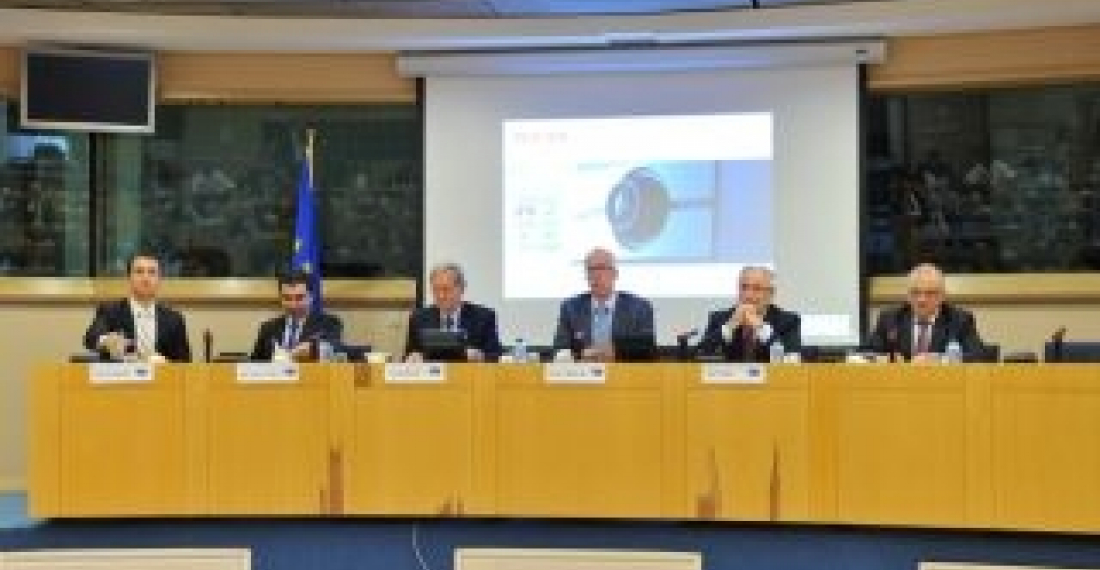
Европейско-азербайджанское общество организовало мероприятие в Европейском парламенте на прошлой неделе по случаю 20-летия независимости Азербайджана. Члены Европейского парламента Тунне Келам, Евгений Кирилов и Иво Вайгль  присоединились к Эмину Эюбову, послу Азербайджана в европейских институтах, давая оптимистичный прогноз стране. Они подчеркнули необходимость мира в армяно-азербайджанском конфликта вокруг Нагорного Карабаха и непрерывность ускоренного экономического развития. Другим членом группы был Тале Гейдаров, председатель и основатель Европейско-азербайджанского общества, и Йоран Линдблад, бывший вице-президент Парламентской Ассамблеи Совета Европы (ПАСЕ) и председатель Комиссии по политическим вопросам ПАСЕ, который выступал в роли арбитра дискуссии.

Посол Эйюбов подвел итоги азербайджанского демократического развития и объяснил, что его страна является "древним народом", хоть и "молодым государством". После периода беспорядка в 1991-93, из-за войны с Арменией, в сочетании с экономическим спадом, ситуация быстро совершенствуются и была достигнута стабильность. Он подчеркнул потенциальные экономические выгоды для Армении, в случае, если мир будет достигнут, так как это позволило бы перевозить углеводородные ресурсы через ее территорию.

Посол подчеркнул, что, начиная с 1994 года, Азербайджан превратился в "локомотив" для углеводородных ресурсов, становясь надежным источником энергии для Западной Европы. Он привел цифры из The Economist, которая пришла к выводу, что Азербайджан пережил наибольший рост ВВП в мире в течение последнего десятилетия, в настоящее время на него приходится 83 процента всего ВВП Южного Кавказа. Что касается безопасности, он подчеркнул, участие его страны в различных миротворческих миссиях НАТО, в том числе в Афганистане. Он признал, что самой большой проблемой остается достижение "конструктивного решения" по Нагорному Карабаху. Он пригласил всех присутствующих принять участие в Евровидении в Баку в мае 2012 года.

Источник: commonspace.eu по материалам агентств

Фото: Участники дискуссии на мероприятии в Европейском парламенте 20 октября 2011 года. (Фото любезно предоставлено Европейско-азербайджанским обществом)

Related articles

Editor's choice
News
The British prime minister says Europe must "stand on its own two feet" when it comes to defence

The British prime minister says Europe must "stand on its own two feet" when it comes to defence

The UK will deploy a carrier strike group, led by the aircraft carrier HMS Prince of Wales to the Arctic and the High North as part of efforts to bolster security against Russian threats. British prime minister, Sir Keir Starmer announced the deployment in a speech on Saturday (14 February) at the Munich Security Conference. Europe must be ready to fight to protect its people, values, and way of life,  Sir Keir told the Conference. Starmer also called for deeper links and cooperation, including economic ties, between the UK and EU. The PM stressed the continent must "stand on its own two feet" when it comes to defence commitments. "We must build our hard power, because that is the currency of the age," he told the conference. (Click image to read the full story).

Popular

Editor's choice
Interview
Thursday Interview: Murad Muradov

Thursday Interview: Murad Muradov

Today, commonspace.eu starts a new regular weekly series. THURSDAY INTERVIEW, conducted by Lauri Nikulainen, will host  persons who are thinkers, opinion shapers, and implementors in their countries and spheres. We start the series with an interview with Murad Muradov, a leading person in Azerbaijan's think tank community. He is also the first co-chair of the Action Committee for a new Armenian-Azerbaijani Dialogue. Last September he made history by being the first Azerbaijani civil society activist to visit Armenia after the 44 day war, and the start of the peace process. Speaking about this visit Murad Muradov said: "My experience was largely positive. My negative expectations luckily didn’t play out. The discussions were respectful, the panel format bringing together experts from Armenia, Azerbaijan, and Turkey was particularly valuable during the NATO Rose-Roth Seminar in Yerevan, and media coverage, while varied in tone, remained largely constructive. Some media outlets though attempted to represent me as more of a government mouthpiece than an independent expert, which was totally misleading.  Overall, I see these initiatives as important steps in rebuilding trust and normalising professional engagement. The fact that soon a larger Azerbaijani civil society visits to Armenia followed, reinforces the sense that this process is moving in the right direction." (click the image to read the interview in full)


