


Аналитик: Не стоит ожидать драматических изменений в политике США в отношении Южного Кавказа

Ереван, 23.11.12. АрмИнфо.

Не стоит ожидать драматических изменений в политике США в отношении Южного Кавказа. Об этом в интервью вашингтонскому корреспонденту агентства Turan заявил директор Института европейских и евразийских исследований Карлтонского университета  Джеф Сахадео.
 
По его словам, события на Ближнем Востоке, в секторе Газа, в Сирии, вывод войск из Афганистана будут занимать большую часть внешней
 
политики администрации.  Вашингтон продолжит усилия по поиску решения карабахского конфликта, но вряд ли они принесут что-то принципиально новое к уже существующей схеме. "В лучшем случае, можно говорить об оказании давления на заинтересованные стороны, чтобы подтолкнуть их вперед. Я  думаю, что Вашингтон и раньше не брал на себя инициативу, кроме  поощрения к  диалогу в рамках Минского процесса. Я не уверен, что и сейчас администрация США готова к чему- то большему.  Что касается  турецко-армянского примирения, то Вашингтон хочет распутать эту сложную ситуацию. Однако любые изменения, которые произойдут в этих вопросах, будут исходить от самих стран", - отметил аналитик.
 
Говоря об отношениях США-Азербайджан, то, как заметил аналитик, рост внутреннего производства нефти и газа означает, что США будут  меньше заинтересованы в Азербайджане.  Однако Азербайджан будет важен в вопросе материально-технического обеспечения войск в Афганистане, а также  чрезвычайно важным партнером при решении проблемы Ирана. Права человека всегда очень важны в политике США, но часто они теряются, когда дело доходит до сложных геостратегических переговоров. Правительство США считает, что учить страны региона и читать им лекции о правах человека может быть контрпродуктивным, ибо это мало влияет на ситуацию.  В то же время, Азербайджан считается страной с наихудшими показателями по правам человека и демократии. Странам, считающим нормой нападки на  западные правозащитные организации, будет очень трудно найти друзей в Конгрессе США. Американская общественность мало знает об Азербайджане, кроме того, что это бывшая советская республика с авторитарным и наследственным режимом.  Многие западные ученые, которые пытались работать в этой стране, сталкиваются с проблемой получения  долгосрочных виз. Если азербайджанское правительство хочет улучшить свой имидж, чтобы развивать туризм и отношения с Западом, то конкретные шаги в обеспечении плюрализма в стране просто необходимы.
Related articles

Editor's choice
News
Indian Foreign Minister meets Aliyev in Baku

Indian Foreign Minister meets Aliyev in Baku

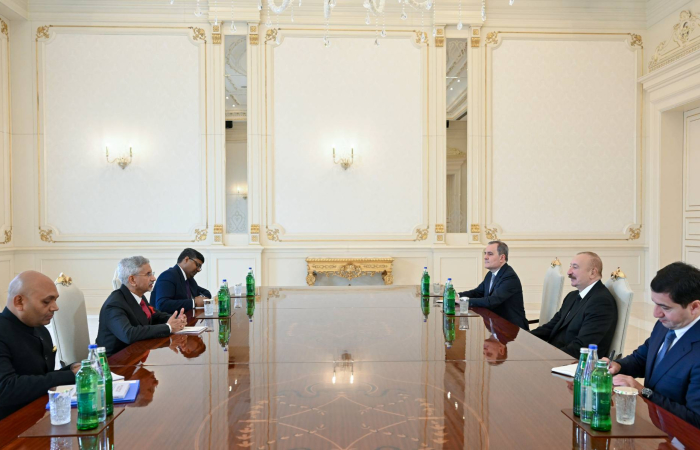
On October 23, the president of Azerbaijan Ilham Aliyev met in Baku with Subrahmanyam Jaishankar, Minister of External Affairs of India. This was the highest level visit by an Indian official to Azerbaijan in a long time. According to the website of the Azerbaijani president, Aliyev fondly recalled his meeting with Indian Prime Minister Narendra Modi in Bishkek and the exchange of views during that meeting. President Ilham Aliyev highly appreciated the visit of India’s Minister of External Affairs to Azerbaijan on the instructions of Prime Minister Narendra Modi, stressing its importance for discussing the current state and prospects of bilateral relations. During the meeting, the sides held an extensive exchange of views on the current state of relations between Azerbaijan and India, highlighting ample opportunities to develop cooperation in areas of mutual interest. The sides noted that Azerbaijan and India, as members of the Global South, share similar positions on a number of issues on the international agenda, including matters of concern to countries of the Global South. In this regard, they discussed prospects for bilateral cooperation in political, trade and economic, high-tech, cultural, humanitarian and other fields. The conversation also touched upon the importance of cooperation within international organizations. The sides emphasized the need to intensify political contacts and organize reciprocal visits at various levels, including exchanges involving economic and business delegations, to further advance bilateral relations.

Popular

Editor's choice
Interview
Thursday Interview: Murad Muradov

Thursday Interview: Murad Muradov

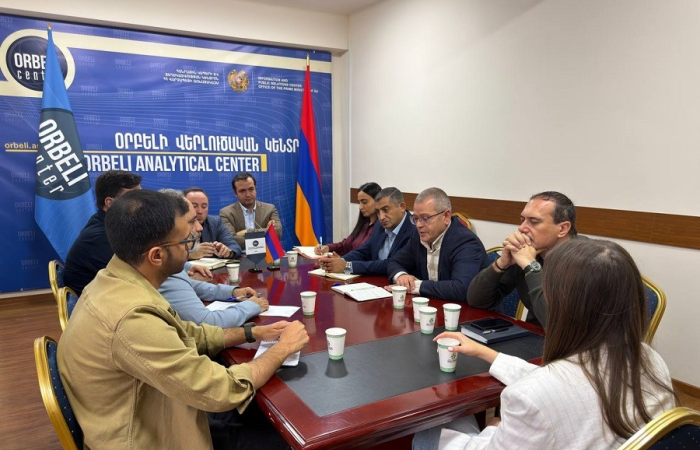
Today, commonspace.eu starts a new regular weekly series. THURSDAY INTERVIEW, conducted by Lauri Nikulainen, will host  persons who are thinkers, opinion shapers, and implementors in their countries and spheres. We start the series with an interview with Murad Muradov, a leading person in Azerbaijan's think tank community. He is also the first co-chair of the Action Committee for a new Armenian-Azerbaijani Dialogue. Last September he made history by being the first Azerbaijani civil society activist to visit Armenia after the 44 day war, and the start of the peace process. Speaking about this visit Murad Muradov said: "My experience was largely positive. My negative expectations luckily didn’t play out. The discussions were respectful, the panel format bringing together experts from Armenia, Azerbaijan, and Turkey was particularly valuable during the NATO Rose-Roth Seminar in Yerevan, and media coverage, while varied in tone, remained largely constructive. Some media outlets though attempted to represent me as more of a government mouthpiece than an independent expert, which was totally misleading.  Overall, I see these initiatives as important steps in rebuilding trust and normalising professional engagement. The fact that soon a larger Azerbaijani civil society visits to Armenia followed, reinforces the sense that this process is moving in the right direction." (click the image to read the interview in full)

