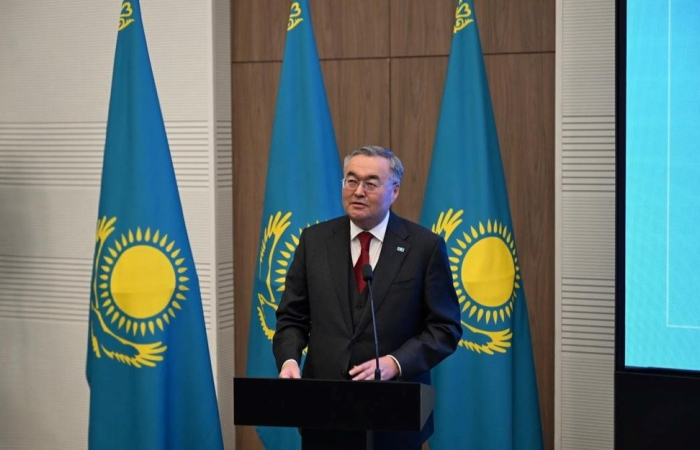
Абхазия отвергает утверждение, что она была аннексирована Россией. Заместитель министра иностранных дел Абхазии, Кан Тания, заявил commonspace.eu, что новый договор с Россией не имеет ничего общего с аннексией.

Заместитель министра иностранных дел Абхазии, Кан Тания, заявил commonspace.eu, что новый договор с Россией не имеет ничего общего с аннексией.

Автор Джозеф Александр Смит

24 ноября этого года Абхазия подписала "Договор о союзе и стратегическом партнерстве" с Российской Федерацией, который в дальнейшем укрепит уже и так прочные отношения между ними. Договор подвергся критике со стороны международного сообщества, особенно со стороны европейских партнеров Грузии, которые опасаются повторению кризиса как это было в этом году в Крыму. Подписание данного договора стало причиной многотысячных демонстрации на улицах Тбилиси в знак протеста против "аннексии" Абхазии со стороны Кремля.

Договор предусматривает создание совместных командных структур для сил безопасности и правоохранительных органов, расширение некоторых социальных льгот в Абхазию и скоординированную внешнюю политику совместно с Москвой и Сухуми.

В эксклюзивном интервью для Commonspace.eu заместитель министра иностранных дел Абхазии, Кан Тания, рассказал о том, как его правительство смотрит на данный договор и действительно ли это является «аннексией» Абхазии со стороны России.

Commonspace.eu: Что было главной причиной подписания Абхазией еще одного договора с Москвой?

Кан Тания: Цель этого соглашения заключается в ... создании более лучших условий для торговли и экономического развития между нашими двумя странами ... Это подписание стало важным историческим событием для Абхазии, поскольку, как вы знаете, между ... двумя нашими народами существует огромная история, которая объединяет нас, и мы должны продолжать это сотрудничество с Россией, потому что для нас нет другой альтернативы.

Мы считаем, что Россия снова подтвердила и продемонстрировала нам свою приверженность к равноправному сотрудничеству с Абхазией, и это пример уважения международного права. Также мы заинтересованы в расширении международного признания Абхазии и новый договор будет способствовать укреплению участия России в [набирающем ход] международном признании  Абхазии.

Последнее, но не менее важное, безопасность и стабильность Абхазии зависит от отношений с Россией, и новый договор и далее будет способствовать развитию отношении ... между двумя нашими министерствами внутренних дел. Таким образом, для Абхазии и для стабильности всего Кавказского региона, этот договор имеет важное значение.

Commonspace.eu: Как этот договор поможет в получении международного признания Абхазии?

Кан Тания: У нас будет что-то вроде более тесной координации между нашими двумя министерствами иностранных дел. Мы всегда сотрудничали с Россией, и теперь мы будем укреплять это сотрудничество, и мы постараемся найти пути - может быть, не всегда официальные для того, чтобы добиться признания - я имею в виду не только размещение послов или визиты министра иностранных дел или его заместителей в другие страны, но, возможно, это может быть дипломатия второго уровня ... но всегда с помощью России, потому как у нее имеются огромные ресурсы в других странах и посольствах и этот договор  подтверждает ее [готовность] помочь нам в этом процессе,

Commonspace.eu: Что этот договор предлагает в плане гарантий безопасности?

Кан Тания: С точки зрения безопасности мы создадим общий координационный центр и общее пространство безопасности. Это поможет нашим гражданам сохранять спокойствие [зная,] что грузинское правительство не решит атаковать Абхазию снова ... Как вы знаете, мы официально находимся в состоянии войны с Грузией. До подписания договора о неприменении силы Грузией, мы должны всячески защищать себя и этот договор является одним из таких вариантов.

Commonspace.eu: Как бы вы ответили на то, что этот договор представляет собой «аннексию» Абхазии со стороны России?

Кан Тания: Если бы мы действительно хотели присоединиться к России, это [был бы] вопросом нескольких дней. Мы просто попросим, и это будет сделано. Россия является нашим главным союзником и партнером, так что... мы смеемся, когда смотрим на демонстрацию в Грузии против аннексии Абхазии со стороны России. Если вы прлчитаете [новый договор], то увидите, что в нем нет ничего общего с аннексией. Это договор между двумя суверенными государствами.

В то время как Министерство иностранных дел Абхазии настаивает на том, что новый договор усиливает, а не грозит, суверенитету Абхазии, у некоторых есть более амбивалентные взгляды. Commonspace.eu также поговорил с людьми на улицах Сухуми, и узнал их мнение по поводу данного договора.

"Я думаю, что Россия является сильным государством, и, если она захочет, то сможет [аннексировать Абхазию]", говорит Нала, 22-летний ландшафтный архитектор. "Я не знаю. Мы маленькая страна, и если мы не будем отстаивать нашу независимость, никто другой не может сделать это за нас."

Эсма Лагвилава 32-летний журналист, которой был задан вопрос о том, не угрожает ли договор независимости Абхазии. "Независимость чего?" парировала она. "Сегодня Абхазия в принципе не в состоянии обеспечить собственную защиту и достойный уровень жизни для своих граждан. Что касается независимости, ну, мы не говорим о становлении частью России, мы говорим об отношениях ... взаимовыгодные отношения".

"Независимость наших граждан самое главное", говорит Янсух, 31. "На самом деле первая версия, которую мы видели этого договора была не такой хорошей, как мы хотели, но наш парламент, наше правительство ... сделали все возможное, чтобы изменить Основные разделы и, как следствие, теперь он стал лучше для нас."

"Я считаю, что Абхазия не утеряет свой суверенитет", сказал Темур Цвишба, 23-летний строитель. "В договоре нет такого пункта [о присоединении] - .. По крайней мере, это не написано прямым текстом. Влияние России на нас было очевидно и до этого договора. Этот договор является лишь формальностью."

Источник: Джозеф Александр Смит специально для commonspace.eu

фото: заместитель министра иностранных дел Абхазии, Кан Тания.

Latest

Editor's choice
Monday Commentary
Monday Commentary: PEACE IN OUR TIME?

Monday Commentary: PEACE IN OUR TIME?

Making peace between Armenia and Azerbaijan was never going to be simple, nor easy, nor quick. It is taking time, writes Dennis Sammut in this Monday Commentary. “There is a sense of realism coming from the leaders of the two countries – President Ilham Aliyev of Azerbaijan and prime minister Nikol Pashinyan of Armenia, that frankly, is necessary and welcome”, he writes. At a time when conflicts are raging all over the world – from Ukraine to the Gulf, from Africa to South Asia, the prospect that Armenia and Azerbaijan had finally, after decades of conflict that left thousands of dead and many more displaced, decided on embarking on a journey of peace was welcomed. Peace between Armenia and Azerbaijan can be top-down up to a point. Both leaders have spent political capital preparing for a peace deal. But both are aware that their people are not ready for peace yet. In fact, in Armenia, most of the elite are negative toward a peace deal with Azerbaijan. Pashinyan needs time to persuade his countryfolk. That is why 2031 is realistic. Ilham Aliyev runs a tighter shop, but he is also not immune to public opinion. Every time someone hits a landmine in Karabakh, which unfortunately happens often, peace comes into question. Which is why Aliyev chooses to sound hardline, more often than not. In pursuing the peace agenda, both Aliyev and Pashinyan need to proceed cautiously. But they are right in making peace the central issue in their agenda. It is the main issue, and the one that will define them in history. So forward, cautiously but resolutely! In pursuing the peace agenda, Aliyev and Pashinyan need to be supported clearly and unambiguously. There are too many people in Baku and Yerevan who are sitting on the sides, waiting. The international community is not doing enough. It is time to be counted. Otherwise, the spoilers will win, and the region will go back to its bad habits. (Click the image to read the full commentary).

Popular

Editor's choice
Monday Commentary
Monday Commentary: European-Azerbaijan relations need an intensive and multifaceted dialogue that is frank and honest

Monday Commentary: European-Azerbaijan relations need an intensive and multifaceted dialogue that is frank and honest

Last week I visited Baku, Azerbaijan. My visit was relatively short, but very intensive, and had many meetings with stakeholders and colleagues. When I arrived in Baku first time in 1996,  Azerbaijan was a different country: weak, poor, and shaken by defeat in war. For thirty year the Karabakh issue dominated the agenda: the political agenda but also the popular mindset. Now, thirty years later, Azerbaijan has returned to Karabakh, and peace with Armenia is on the horizon. It is a new era for Armenia-Azerbaijan relations, for the South Caucasus, but also for Europe.  But we cannot be complacent: the Peace agreement has been initialed but not signed; borders remain closed; TRIPP is ambitious but remains an idea; and there are spoilers who want to turn the clock back. We must not allow them, and in this Europe and Azerbaijan must work together. Europe’ vanguard organization is the European Union – it is a free union of 27 member states; it is a strong global economic force, and increasingly a diplomatic and military force too. But it remains “work in progress” and can often appear dysfunctional. It often lacks collective and institutional memory. In its dealings with Azerbaijan the EU has made many mistakes – not least opening the delegation here late – in 2008. It sometimes appears condescending. Some utterances from the European Parliament and from some quarters in some member states are not understandable even for me. They irritate the Azerbaijanis, but serve no other purpose But Azerbaijan has also not handled relations with the EU well. It has failed to respond when the hand of friendship reached out; and it confused irritating actions, sometimes by well-meaning people; sometimes by outright spoilers, with strategic action. In short, EU-Azerbaijan relations have suffered from a lack of proper dialogue. This dialogue must be frank, honest and multi-faceted involving different segments of society on both sides.   Is Azerbaijan Europe? When Azerbaijan applied to join the Council of Europe in the 1990s, there were some who opposed, saying this was not Europe. I was one of the people who argued that Armenia and Azerbaijan may be on the periphery of the continent geographically, but were European in essence. Certainly their elites. During the discussion on 4 September in Baku, my friend Farhad Mammedov, mentioned that Azerbaijan is not interested in joining the EU, and was now close to the Central Asian countries in the 5 plus 1 format. Neither things mean that Azerbaijan is not Europe. There are several European countries that are not in the EU, and do not want to be, for example Norway and Switzerland. Iceland has recently voted to stay out of the EU. The UK was a member and left. Europe is bigger than the EU, and the holding of the European Political Community summit in Baku in 2027 proves that. Despite all the rhetoric, I never heard the president of Azerbaijan  saying that Azerbaijan is not Europe, nor have I heard any European president say it either. Not wanting to join the EU and forging close relations with neighbouring regions does not make Azerbaijan any less European. It is only logical that when Europeans talk to Azerbaijan they talk like family. The conversation is often frank. It must also be honest, and Europeans need always to remember this too. A frank, honest and multi-faceted dialogue A frank, honest and multifaceted dialogue will contribute to relations between Azerbaijan and the rest of Europe: it will avoid misperception, which unfortunately is very common on both sides; it will provide a forum where problems can be discussed and resolved, and it will increase mutual trust, so that together common problems can be addressed. (click image to read the full Monday Commentary)
Editor's choice
Monday Commentary
Monday Commentary: “The barren rocks of Aden” and “These lands of Yemen are so ruthless”

Monday Commentary: “The barren rocks of Aden” and “These lands of Yemen are so ruthless”

There are two early 20th-century tunes that mark foreign attempts to occupy and “pacify” Yemen. The Scottish tune “The barren rocks of Aden” marks the mobilisation of Highland soldiers, enlisted to be deployed to the Yemeni port of Aden, that in 1837 became the last colony to be incorporated into the British Empire. The tune talks of the harshness of the terrain, but is celebratory, It was even played as a farewell tune to Sir William Luce at the parade in Sharjah celebrating his end as “British Viceroy” in the Middle East in 1966. The second tune is an Anatolian lament. As Ilker Sezer reminded us this weekend, in his weekly feature on “Turkiye Today”, it “mourns the tragic fate of Ottoman soldiers dispatched to the harsh, remote deserts of Yemen during the fall of the empire, young men who marched away from their villages and never returned home. Most of their names, and numbers, were never recorded. Yet, their fate left a mark on the Turkish psyche.” Subsequent invaders have discovered that Yemen is a grave that cannot be overcome by the strength of modern technology, and that whilst Yemeni society is splintered and divided, building a reliable alliance with Yemeni factions is difficult. These are the harsh lessons facing Saudi Arabia, as the Kingdom faces its biggest challenge in its modern history. The leadership of the Kingdom now has to respond decisively. At stake is their very credibility. This is likely to be a long and messy conflict. Saudi military objectives need to be focused: to box in the Houthis rather than destroy them. This is likely to include: (a) regaining territory lost on the Red Sea coast; (b) control over Bab el Mandeb Strait; (c) some kind of cordon sanitaire on the Saudi-Yemeni border; and if things go well (d) the capture of Sanaa. All this would not eliminate the Houthi problem, but it will contain it. In the end the Saudis will have to continue managing Yemen with a mixture of carrot and stick. For the moment, the stick is likely, but the carrot cannot be forgotten either. (click the image to read the Monday Commentary in full)