STRATFOR:

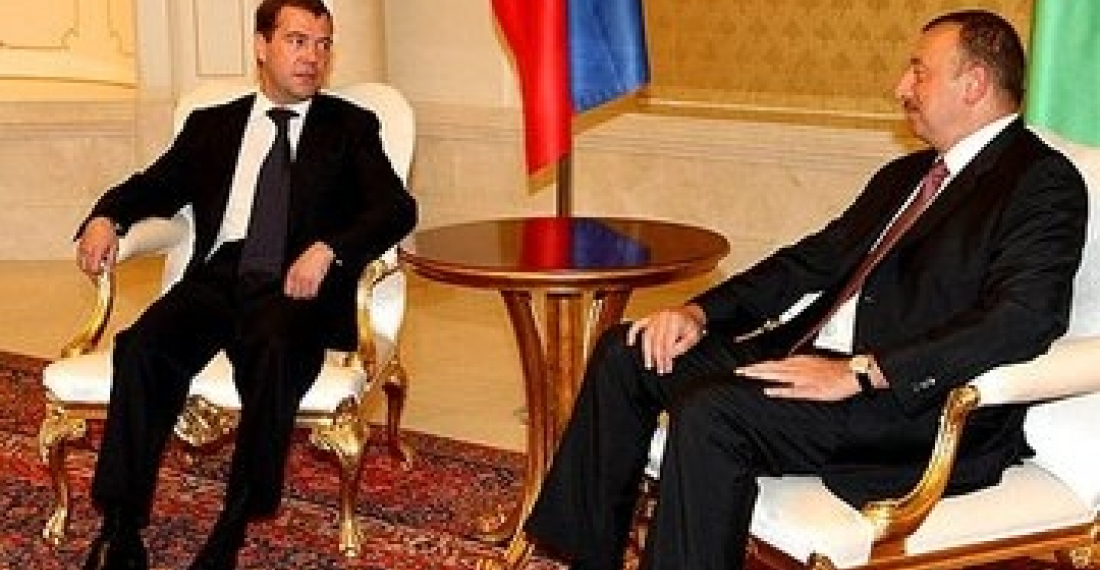
9 августа президент Азербайджана Ильхам Алиев посетил Россию, чтобы встретиться российским президентом Дмитрием Медведевым. Накануне этого визита СМИ говорили в основном о том, что Россия продолжает свои попытки разрешить конфликт между Азербайджаном и Арменией из-за Нагорного Карабаха. Между тем круг вопросов, которые могут обсуждать Россия и Азербайджан, намного шире. Об этом пишет американский глобальный исследовательский центр STRATFOR.

Российские источники STRATFOR утверждают, что в целом отношения между США и Россией стремительно портятся. Кавказ служит для Москвы и Вашингтона одним из  полей противостояния, и происходящее в этом регионе уже давно может служить показателем позиций, которые занимают по отношению друг к другу Вашингтон и Москва. Россия хочет использовать свои связи с Азербайджаном, чтобы напомнить США о влиянии, которым Москва обладает на Кавказе. В свою очередь попытки Азербайджана надавить на Вашингтон и помочь Москве – это часть его обычной стратегии. Он постоянно старается  играть на противоречиях зарубежных стран в собственных интересах.

Россия, вновь обретшая уверенность в своем геополитическом значении, в последний год начала вести в отношении Соединенных Штатов двойственную политику, подразумевающую одновременно сотрудничество и конфронтацию. Хотя в некоторых областях Вашингтон и Москва сотрудничают, Россия недовольна Америкой в целом ряде вопросов. В частности ее тревожат планы Вашингтона разместить в Центральной Европе системы обороны против баллистических ракет.

Недавно Конгресс США предпринял ряд антироссийских шагов, всерьез взволновавших Москву.  26 июля Сенат США принял закон, запрещающий выдачу виз примерно 60 российским чиновникам, которые обвиняются в причастности к гибели юриста Сергея Магнитского. 29 июля он же принял резолюцию, призывающую Москву вывести войска из Южной Осетии и Абхазии. Наконец, 29 июля ЦРУ представило Конгрессу доклад, в котором Россия обвинялась в организации в 2010 году серии взрывов в Грузии, включая попытку подрыва американского посольства в Тбилиси. Хотя законы, принимаемые Конгрессом, могут не отражать позицию администрации, Россия начинает опасаться, что некоторые крайне антироссийски настроенные политики могут по итогам предстоящего США избирательного сезона приобрести еще больше власти.

Нерешенные вопросы, осложняющие отношения между Вашингтоном и Москвой, будут более отчетливо сформулированы в ходе ряда предстоящих этой осенью двусторонних мероприятий, в число которых входят очередная встреча Медведева с президентом США Бараком Обамой и новый раунд переговоров между Россией и НАТО по проблеме ПРО. Россия использует визит Алиева, чтобы подчеркнуть в преддверии этих встреч свои связи с Азербайджаном. Напоминая Соединенным Штатам о своем влиянии на Кавказе, Москва показывает Вашингтону, что любые агрессивные действия США в грузинском вопросе не останутся без ответа.

У Азербайджана есть свои причины сотрудничать с Россией. Его отношения с США трудно назвать простыми. Среди прочего, в Соединенных Штатах действует большое и влиятельное армянское лобби, которое временами может заставлять Вашингтон действовать в интересах Армении, пренебрегая интересами Азербайджана (как в случае с сохраняющимся до сих пор американским эмбарго на поставки оружия Азербайджану).

Впрочем, несмотря на разногласия между Вашингтоном и Баку, Соединенные Штаты крайне интересует азербайджанский энергетический сектор. После распада Советского Союза, США вложили в азербайджанскую энергетику немало денег. Хотя Вашингтон позднее отвлекся на конфликты в исламском мире, геополитические интересы, которые заставили его инвестировать средства в энергетический сектор Азербайджана, никуда не исчезли, и сейчас Соединенные Штаты хотели бы влиять на его развитие. На фоне продолжающегося восстановления российского могущества,  Соединенные Штаты хотели бы, чтобы Азербайджан играл ключевую роль в развитии систем добычи и транспортировки энергоносителей, способных помочь европейским рынкам избавиться от зависимости от поставок из России. Если Россия и Азербайджан заключат соглашение, в результате которого Баку начнет концентрироваться на энергетических проектах, не мешающих России сохранять господствующую роль, это станет ударом по интересам США в регионе.

Азербайджан в большей степени, чем другие кавказские страны, играет на противоречиях крупных держав, преследуя собственные интересы. Причем в первую очередь его интересует развитие нефтегазового сектора. Азербайджан вряд ли когда-нибудь полностью встанет на сторону России или любой другой страны, так как Баку не хочет, чтобы будущее его энергетической промышленности зависело от какого-либо одного игрока. Однако и Москва, и Баку, демонстрируя, что между ними возможно сотрудничество, получают преимущество на переговорах с другими странами. Примером этой же стратегии  служит и российский визит Алиева. Москва и Баку используют его, чтобы напомнить Соединенным Штатам о том, что Россия и Азербайджан в любой момент могут начать сотрудничать – в ущерб интересам США.

Related articles

Editor's choice
News
Germany accuses Russia of cyberattacks and disinformation campaign

Germany accuses Russia of cyberattacks and disinformation campaign

The German government holds Russia responsible for a cyberattack on German air traffic control, and for targeted disinformation campaigns before the last federal election. According to the German Foreign Office in Berlin, the incidents could be clearly attributed to the Russian military intelligence service, the GRU. In response, the Russian ambassador to Berlin was summoned to the Foreign Ministry. "We have been observing a massive increase in threatening hybrid activities by Russia for some time now," a spokesperson for the Foreign Ministry stated. These range from disinformation campaigns and espionage to cyberattacks and sabotage attempts. The aim is to divide society, sow distrust, and undermine confidence in democratic institutions. The spokesperson added that with these actions, Russia is "very concretely threatening our security, not only through its war of aggression against Ukraine, but also here in Germany."  The Foreign Ministry spokesperson explained that the cyberattack on air traffic control in August 2024 was clearly attributed to the hacker collective "APT28," known as "Fancy Bear," and to the responsibility of the Russian military intelligence service, the GRU. Furthermore, it could now be "conclusively stated" that Russia had attempted "to influence and destabilize both the last Federal election and the ongoing internal affairs of the Federal Republic of Germany." There was "absolutely irrefutable evidence" for this". The so-called "Storm 1516" campaign, which has been running since 2024, is allegedly backed by "reliable information" that the Moscow-based think tank "Center for Geopolitical Expertise" is behind it. The Center is also said to be supported by Russian military intelligence. Its primary aim is to influence democratic elections in the West. (Click the image to read more).
Editor's choice
News
NATO Chief says war is on Europe's doorstep, and warns against complacency

NATO Chief says war is on Europe's doorstep, and warns against complacency

Russia could attack a NATO country within the next five years, the Secretary General of NATO, Mark Rutte, said in a stark new warning. "NATO's own defences can hold for now," Rutte warned in Berlin, but conflict was "next door" to Europe, and he feared "too many are quietly complacent, and too many don't feel the urgency, too many believe that time is on our side. "Russia is already escalating its covert campaign against our societies," Rutte said in a speech in Germany. "We must be prepared for the scale of war our grandparents or great-grandparents endured." Earlier this month, Russia's President Vladimir Putin said his country was not planning to go to war with Europe, but it was ready "right now" if Europe wanted to - or started a war. But similar reassurances were given by Moscow in 2022, just before 200,000 Russian troops crossed the border and invaded Ukraine. Putin has accused European countries of hindering US efforts to bring peace in Ukraine - a reference to the role Ukraine's European allies have recently played in trying to change a US peace plan to end the war, whose initial draft was seen as favouring Russia. But Putin was not sincere, Nato's secretary-general said in the German capital, Berlin. Supporting Ukraine, he added, was a guarantee for European security. "Just imagine if Putin got his way; Ukraine under the boot of Russian occupation, his forces pressing against a longer border with Nato, and the significantly increased risk of an armed attack against us." Russia's economy has been on a war footing for more than three years now - its factories churn out ever more supplies of drones, missiles and artillery shells. According to a recent report by the Kiel Institute for the World Economy, Russia has been producing each month around 150 tanks, 550 infantry fighting vehicles, 120 Lancet drones and more than 50 artillery pieces. The UK, and most of its Western allies, are simply not anywhere near this point. Analysts say it would take years for Western Europe's factories to come close to matching Russia's mass-production of weapons. "Allied defence spending and production must rise rapidly, our armed forces must have what they need to keep us safe," the Nato chief said.

Popular

Editor's choice
News
Germany accuses Russia of cyberattacks and disinformation campaign

Germany accuses Russia of cyberattacks and disinformation campaign

The German government holds Russia responsible for a cyberattack on German air traffic control, and for targeted disinformation campaigns before the last federal election. According to the German Foreign Office in Berlin, the incidents could be clearly attributed to the Russian military intelligence service, the GRU. In response, the Russian ambassador to Berlin was summoned to the Foreign Ministry. "We have been observing a massive increase in threatening hybrid activities by Russia for some time now," a spokesperson for the Foreign Ministry stated. These range from disinformation campaigns and espionage to cyberattacks and sabotage attempts. The aim is to divide society, sow distrust, and undermine confidence in democratic institutions. The spokesperson added that with these actions, Russia is "very concretely threatening our security, not only through its war of aggression against Ukraine, but also here in Germany."  The Foreign Ministry spokesperson explained that the cyberattack on air traffic control in August 2024 was clearly attributed to the hacker collective "APT28," known as "Fancy Bear," and to the responsibility of the Russian military intelligence service, the GRU. Furthermore, it could now be "conclusively stated" that Russia had attempted "to influence and destabilize both the last Federal election and the ongoing internal affairs of the Federal Republic of Germany." There was "absolutely irrefutable evidence" for this". The so-called "Storm 1516" campaign, which has been running since 2024, is allegedly backed by "reliable information" that the Moscow-based think tank "Center for Geopolitical Expertise" is behind it. The Center is also said to be supported by Russian military intelligence. Its primary aim is to influence democratic elections in the West. (Click the image to read more).