


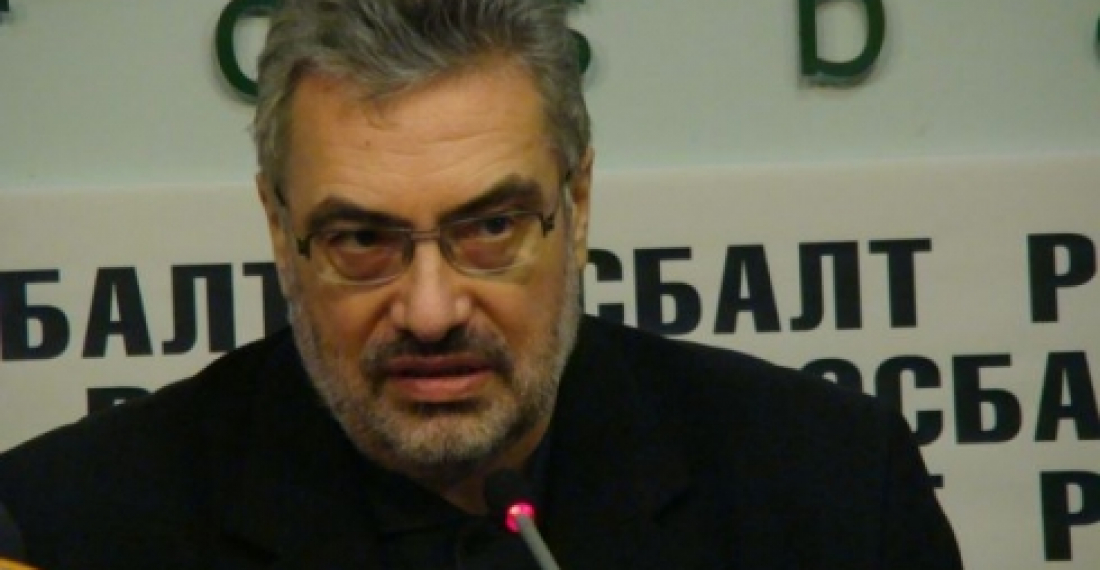
Российский военный эксперт:

Стороны конфликта активно готовятся к войне, причем готовятся и азербайджанская, и армянская стороны.  Нельзя думать, что какая-то одна сторона будет сидеть и спокойно ждать, что противник активно готовится к войне, конечно, готовятся обе. Подобное мнение выразил "Азатутюн" российский военный эксперт Павел Фельгенгауэр.

"При этом, позитивность происходящего на сегодняшний день в том, что все основные игроки, которые, так или иначе, вовлечены в переговорный процесс прекрасно это понимают и пытаются сдержать стороны, пытаются снизить накал страстей. И Евросоюз и Россия  исходят из той позиции, что нужно сделать все, чтобы исключить возобновление военных действий. Если в процессе этого Россия разместит в зоне конфликта свои миротворческие силы, конечно, это хорошо для России. Россия этого хотела всегда, начиная с 1994 года", - заметил он.

По мнению Фельгенгауэра, о каком-либо мирном договоре сегодня даже говорить не приходится, так как ни одна из сторон сегодня не готова пойти на серьезные и принципиальные уступки. По словам военного эксперта, роль посредников сегодня сводится лишь к сдерживанию сторон, поскольку конфликт может перерасти в крупномасштабную региональную войну, а этого нельзя допускать, что, к счастью, понимают сегодня все. При этом, он добавил, что сравнительное затишье в зоне конфликта внушает ему опасение, согласно которому стороны просто стараются особо не шуметь.

"Что же касается российско-армянских и российско-азербайджанских отношений, то они сегодня не безоблачны. При этом, Россия продолжает считать регион зоной своего исторического влияния и, конечно же, делает все, для укрепления своих позиций и своего влияния. Но выбрать ту или иную сторону конфликта Москва не может. Российская база в Армении в ситуации, когда у республики нет наземной границы с Россией, по сути, находится на птичьих правах, так как даже воздушный путь не всегда может быть открыт.  Для Армении же российская база имеет стратегическое значение, учитывая, что она находятся на границе с Турцией", - подытожил российский военный эксперт


Related articles

Editor's choice
News
The British prime minister says Europe must "stand on its own two feet" when it comes to defence

The British prime minister says Europe must "stand on its own two feet" when it comes to defence

The UK will deploy a carrier strike group, led by the aircraft carrier HMS Prince of Wales to the Arctic and the High North as part of efforts to bolster security against Russian threats. British prime minister, Sir Keir Starmer announced the deployment in a speech on Saturday (14 February) at the Munich Security Conference. Europe must be ready to fight to protect its people, values, and way of life,  Sir Keir told the Conference. Starmer also called for deeper links and cooperation, including economic ties, between the UK and EU. The PM stressed the continent must "stand on its own two feet" when it comes to defence commitments. "We must build our hard power, because that is the currency of the age," he told the conference. (Click image to read the full story).

Popular

Editor's choice
Interview
Thursday Interview: Murad Muradov

Thursday Interview: Murad Muradov

Today, commonspace.eu starts a new regular weekly series. THURSDAY INTERVIEW, conducted by Lauri Nikulainen, will host  persons who are thinkers, opinion shapers, and implementors in their countries and spheres. We start the series with an interview with Murad Muradov, a leading person in Azerbaijan's think tank community. He is also the first co-chair of the Action Committee for a new Armenian-Azerbaijani Dialogue. Last September he made history by being the first Azerbaijani civil society activist to visit Armenia after the 44 day war, and the start of the peace process. Speaking about this visit Murad Muradov said: "My experience was largely positive. My negative expectations luckily didn’t play out. The discussions were respectful, the panel format bringing together experts from Armenia, Azerbaijan, and Turkey was particularly valuable during the NATO Rose-Roth Seminar in Yerevan, and media coverage, while varied in tone, remained largely constructive. Some media outlets though attempted to represent me as more of a government mouthpiece than an independent expert, which was totally misleading.  Overall, I see these initiatives as important steps in rebuilding trust and normalising professional engagement. The fact that soon a larger Azerbaijani civil society visits to Armenia followed, reinforces the sense that this process is moving in the right direction." (click the image to read the interview in full)

