


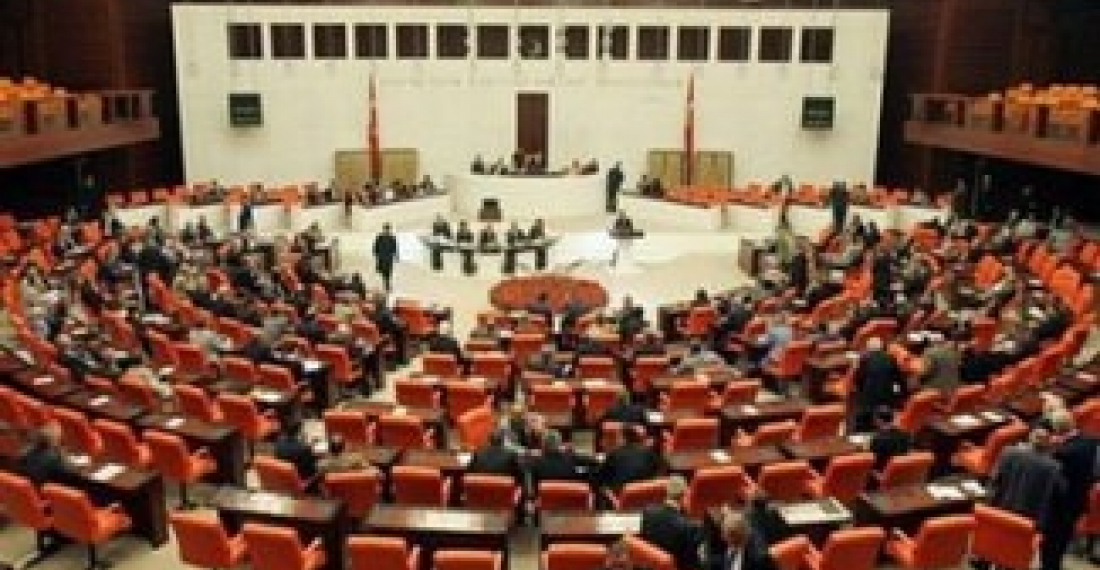
Парламент Турции:

Тихий раскол между Турцией и Францией теперь рискует превратится в бурные дебаты между турецкими чиновниками и президентом Франции в споре за членство Турции в ЕС. Армянский вопрос вновь возник на переднем плане в отношениях между Турцией и Францией из-за решения провести на следующей неделе в Национальном Собрании Франции голосование по резолюции, предусматривающей наказание за отрицание Геноцида армян, что вызвало ярость в Анкаре. Об этом пишет турецкая газета «Заман».

Газета пишет, что Турция предупредила Париж, что принятие резолюции нанесет непоправимый ущерб двусторонним отношениям. Анкара повторила свое предупреждение с тем, чтобы парламент Франции пересмотрел вопрос о голосовании по резолюции. Накануне, Анкара обнародовала заявление на веб-сайте посольства Турции в Париже, в котором усилила тон предупреждения. В заявлении отмечается, что "французские руководители должны оставить историю историкам", и что французский парламент должен воздержаться от принятия решений по историческим событиям.

Предупреждения Анкары опираются на доклад французской парламентской комиссии по расследованию, который вынес в 2008 году решение, что парламенты не должны «писать об исторических инцидентах или назначать наказания». Если такая резолюция будет принята, то она будет предусматривать наказание в качестве тюремного заключения сроком на год, а также штраф в размере 45 тыс. евро для лиц, которые не признают убийства армян в 1915 году во время падения Османской империи Геноцидом.

Французский парламент юридически назвал известные события Геноцидом в 2001 году, но несколько попыток принять резолюцию о наказании за отрицание Геноцида потерпели неудачу, так и не дойдя до Сената. Дебаты во Франции о необходимости такого закона была изначально возобновлена французским президентом Николя Саркози, пригрозившим Турции во время своего визита в Ереван в октябре. Саркози сказал в Ереване, что станет инициатором подобной меры, чтобы оказать давление на Турцию признать Геноцид. Турция отнесла ультиматум Саркози к предвыборной риторике. Анкара предупредила президента Франции не затрагивать очень чувствительный для народов Армении и Турции вопрос.

Тем не менее, неоднократные утверждения Саркози, что Турция не принадлежит к ЕС, потому что это не европейская страна вызвала еще большее беспокойство Турции.

В ответ на замечания Саркози о том, что Турция должна быть "мостом между Востоком и Западом, вместо того, чтобы претендовать на место с обеих сторон", турецкий министр по делам ЕС и главный переговорщик Эгемен Багис ответил во вторник, заявив, что Саркози "падает все ниже и ниже", пытаясь исправить свою ошибку.

"Некоторые политики, возможно, занимаются риторикой, обеспокоенные предстоящими выборами в своих странах", - заявил Багис, не придавая прямого значения комментариям Саркози. Он добавил, что Турция заботится о развитии своей страны, и реформы проводились не с тем, что угодить европейцам, но и улучшить качество жизни турецкого народа.

Турция ведет переговоры, чтобы стать частью блока 27 европейских государств в течение многих лет, но был достигнут очень незначительный прогресс. Саркози остается известным противником вступления Турции в ЕС, хотя он первоначально предусматривал возможность, что Турция в конечном итоге присоединится к ЕС.

Дипломатические источники во вторник заявили, что считают Саркози ответственным за голосование по резолюции 19 декабря, что делается президентов ради стремленя укрепить свои позиции в среде армянской диаспоры Франции в преддверии президентских выборов.

Соперник Саркози от социалистической партия Франсуа Холланд также в пользу принятия законодательства, предусматривающее уголовную ответственность за отрицание Геноцида.

Между тем, спикер парламента Турции Джемиль Чичек обратился с письмом к своему французскому коллеге Бернару Аккуайе, в котором выразил беспокойство Турции по поводу законопроекта. Чичек предупредил, что принятие подобного законопроекта может навредить отношениям между Турцией и Францией. Чичек отметил в своем письме, что обязанность национальных парламентов не писать историю, и что вопрос должен быть оставлен на изучение историкам и исследователям.


Related articles

Editor's choice
News
Israeli parliament votes to bring back the death penalty, but only for Palestinians

Israeli parliament votes to bring back the death penalty, but only for Palestinians

srael’s parliament approved a bill on Monday that would allow the execution of Palestinians convicted on terror charges for deadly attacks, a move that has been criticized as discriminatory and immediately drew a court challenge. Sixty-two lawmakers, including Prime Minister Benjamin Netanyahu, voted in favor and 48 against the bill, championed by far-right National Security Minister Itamar Ben Gvir. There was one abstention and the rest of the lawmakers were not present. Ben Gvir in the run-up to the vote had worn a lapel pin in the shape of a noose, symbolising his support for the legislation. “We made history!!! We promised. We delivered,” he posted on X after the vote. The bill would make the death penalty the default punishment for Palestinians in the Israeli-occupied West Bank found guilty of intentionally carrying out deadly attacks deemed “acts of terrorism” by an Israeli military court. The bill says that the sentence may be reduced to life imprisonment under “special circumstances.” Palestinians in the West Bank are automatically tried in Israeli military courts. Meanwhile, under the bill, in Israeli criminal courts anyone “who intentionally causes the death of a person with the aim of harming an Israeli citizen or resident out of an intention to put an end to the existence of the State of Israel shall be sentenced to death or life imprisonment.” Criminal courts try Israeli nationals, including Palestinian citizens and residents of east Jerusalem. The bill sets the execution method as hanging, adding that it should be carried out within 90 days of the sentencing, with a possible postponement of up to 180 days. - ‘Parallel tracks’ - The bill appears to conflict with Israel’s Basic Laws, which prohibit arbitrary discrimination, and shortly after it was passed, a leading human rights group announced that it had filed a petition with the Supreme Court demanding the legislation’s annulment. “The law creates two parallel tracks, both designed to apply to Palestinians,” the Association for Civil Rights in Israel said in a statement. “In military courts — which have jurisdiction over West Bank Palestinians — it establishes a near-mandatory death sentence,” the rights group said. In civilian courts, the law’s stipulation that defendants must have acted “with the aim of negating the existence” of Israel “structurally excludes Jewish perpetrators,” the group added. The association argued the law should be annulled on both jurisdictional and constitutional grounds. During the debate in parliament, opposition lawmaker and former deputy Mossad director, Ram Ben Barak, expressed outrage at the legislation. “Do you understand what it means that there is one law for Arabs in Judea and Samaria, and a different law for the general public for which the State of Israel is responsible?” he asked fellow parliamentarians, using the Israeli name for the West Bank. “It says that Hamas has defeated us. It has defeated us because we have lost all our values.” - ‘Discriminatory application’ - Lawmaker Limor Son Har-Melech from Ben Gvir’s party, who years ago survived an attack by Palestinian militants in which her husband was killed, urged fellow parliamentarians to approve the bill. “For years, we endured a cruel cycle of terror, imprisonment, release in reckless deals, and the return of these human monsters to murder Jews again ... And today, my friends, this cycle has come full circle.” The Palestinian Authority condemned the law’s adoption, saying that “Israel has no sovereignty over Palestinian land.” “This law once again reveals the nature of the Israeli colonial system, which seeks to legitimize extrajudicial killing under legislative cover,” it added. In February, Amnesty International had urged Israeli lawmakers to reject the legislation, citing its “discriminatory application against Palestinians.” On Sunday, Britain, France, Germany and Italy expressed “deep concern” over the bill, which they said risked “undermining Israel’s commitments with regards to democratic principles.” While the death penalty exists for a small number of crimes in Israel, it has become a de facto abolitionist country — the Nazi Holocaust perpetrator Adolf Eichmann was the last person to be executed in 1962. Israel has occupied the West Bank since 1967 and violence there has soared since Hamas’s October 7, 2023 attack on Israel triggered the Gaza war. (read more by clicking the image above).

Popular

Editor's choice
Interview
Thursday Interview: Murad Muradov

Thursday Interview: Murad Muradov

Today, commonspace.eu starts a new regular weekly series. THURSDAY INTERVIEW, conducted by Lauri Nikulainen, will host  persons who are thinkers, opinion shapers, and implementors in their countries and spheres. We start the series with an interview with Murad Muradov, a leading person in Azerbaijan's think tank community. He is also the first co-chair of the Action Committee for a new Armenian-Azerbaijani Dialogue. Last September he made history by being the first Azerbaijani civil society activist to visit Armenia after the 44 day war, and the start of the peace process. Speaking about this visit Murad Muradov said: "My experience was largely positive. My negative expectations luckily didn’t play out. The discussions were respectful, the panel format bringing together experts from Armenia, Azerbaijan, and Turkey was particularly valuable during the NATO Rose-Roth Seminar in Yerevan, and media coverage, while varied in tone, remained largely constructive. Some media outlets though attempted to represent me as more of a government mouthpiece than an independent expert, which was totally misleading.  Overall, I see these initiatives as important steps in rebuilding trust and normalising professional engagement. The fact that soon a larger Azerbaijani civil society visits to Armenia followed, reinforces the sense that this process is moving in the right direction." (click the image to read the interview in full)

