Moscow Parade celebrates victory over Nazi Germany

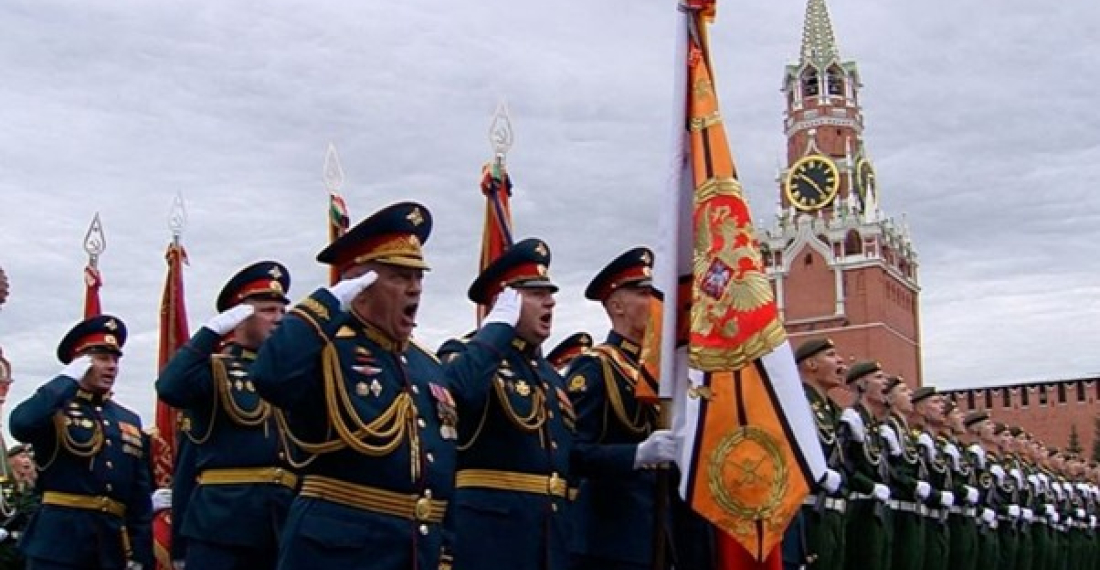
Russia has held its annual Victory Day military parade in Moscow to mark the defeat of Nazi Germany during the second world war.

The parade, scaled back this year due to security concerns, started at about 10am (07:00 GMT) in Red Square, with a military formation bearing the Russian flag.

Security was tight as President Vladimir Putin spoke at the event, viewed as Russia’s most significant secular holiday.

“Victory has always been and will be ours,” said Putin, as columns of troops lined up on the square. “The key to success is our moral strength, courage and valour, our unity and ability to endure anything and overcome any challenge.”

Putin, in power for more than a quarter-century, has regularly used Victory Day to showcase the country’s military might and rally support for his war in Ukraine, now in its fifth year. But this year, for the first time in nearly 20 years, the parade took place without tanks missiles and other heavy weapons, aside from a traditional flyover of combat jets.

Instead, the 45-minute parade showed a video of Russian military equipment deployed to Ukraine.

Officials said the event’s change of format was due to the “current operational situation” and pointed to the threat of Ukrainian attacks. Kremlin spokesperson Dmitry Peskov said the authorities have taken “additional security measures”.

United States President Donald Trump announced on Friday that Russia and Ukraine had  agreed on a cease fire running from Saturday through Monday and an exchange of prisoners, declaring that the break in fighting could be the “beginning of the end” of the war. 

In Putin’s address to the parade, attended by Russian military units as well as soldiers from North Korea, the Russian president invoked the Soviet victory over Nazi Germany to rally support for his army in Ukraine.

“The great feat of the generation of victors inspires the soldiers carrying out the goals of the special military operation today,” Putin said. “They are confronting an aggressive force armed and supported by the entire NATO bloc. And despite this, our heroes move forward.

“I firmly believe that our cause is just,” he later said.

Victory Day is also observed in other former Soviet states such as Belarus and Kazakhstan. The Soviet Union lost 27 million people in 1941-45 in what it calls the Great Patriotic War, an enormous sacrifice that left a deep scar in the national psyche and remains a rare point of consensus in the nation’s divisive history.

source: commonspace.eu with Al Jazeera (Doha) and agencies
Related articles

Editor's choice
News
Ghalibaf in Baku for 20th session of the Conference of the Parliamentary Union of the Member States of the Organization of Islamic Cooperation (OIC)

Ghalibaf in Baku for 20th session of the Conference of the Parliamentary Union of the Member States of the Organization of Islamic Cooperation (OIC)

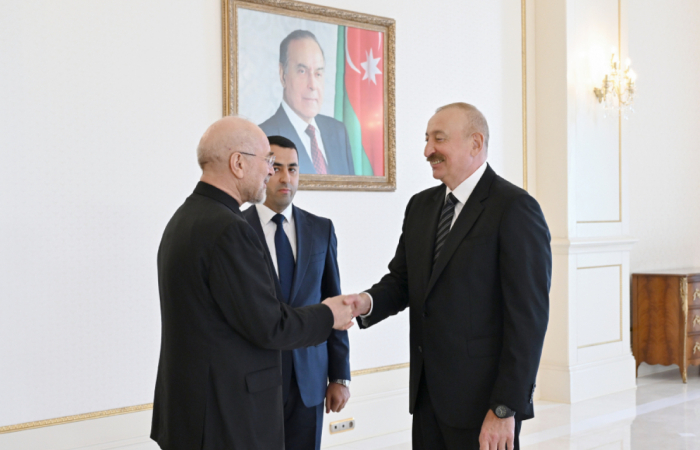
The 20th session of the Conference of the Parliamentary Union of the Member States of the Organization of Islamic Cooperation (OIC), was held in Baku. Among those attending was the Speaker of the Iranian Parliament (Chairman of the Islamic Consultative Assembly of Iran) Mohammad Bagher Ghalibaf. On Wednesday (24 June) Ghalibaf also met the Azerbaijan  president Ilham Aliyev Aliyev, emphasized that the fraternal Iranian people have recently experienced enormous suffering, and wished peace to the souls of tallen. Noting that the Azerbaijani people and state stood by the Iranian people and state during the war, Aliyev described telephone conversations with Iranian President Masoud Pezeshkian, as well as other contacts at various levels and manifestations of solidarity, as clear examples of this. Stressing that the suspension of the war was greeted with joy by the Azerbaijani side,  Aliyev said that Baku issued an fficial statement welcoming the end of hostiliities “ I wish there were no wars in the region ,” said President Aliyev, noting that both Azerbaijan and Iran suffered from wars in their time. Recalling with satisfaction Mohammad Bagher Ghalibaf's previous visits, preisdent Aliyev touched upon the significance of his participation in the 20th session of the Conference of the Parliamentary Union of Member States of the Organization of Islamic Cooperation (OIC). He expressed hope that this event would contribute to the development of Islamic solidarity. He announced that our country will host the OIC Summit next year and noted that preparatory work has already begun. Aliyev emphasized that Mohammad Bagher Ghalibaf's visit will create a good opportunity to discuss issues related to the bilateral agenda. Ghalibaf expressed gratitude for the support provided by Aliyev, the Azerbaijani state and people during difficult times for Iran. He also expressed gratitude to the Azerbaijani leader for visiting the Iranian embassy in Bakuand expressing condolences over the death of the Supreme Leader of the Islamic Republic of Iran Ayatollah Seyed Ali Khamenei and numerous civilians, as well as for the congratulatory message sent to Ayatollah Seyed Mojtaba Hosseini Khamenei on the occasion of his election as Supreme Leader of the Islamic Republic of Iran. Noting that the war was a great misfortune and tragedy, the Galibaf emphasized that during that period, our country remained committed to good-neighborly relations with Iran, provided humanitarian aid, and the Azerbaijani people stood by Iran. He added that this will forever remain in the memory of the Iranian people. Emphasizing that Azerbaijan and Iran have always stood by each other, even in difficult times, Mohammad Bagher Ghalibaf described this as yet another example of the unity and solidarity of our countries. The guest stated that this war also demonstrated to Iran the importance of contacts with Muslim countries. Mohammad Bagher Ghalibaf noted that during the war, Iran learned who its friends and enemies were. Azerbaijan, as a friendly country, stood by Iran. During the conversation, confidence was expressed in the even more dynamic development of Azerbaijani-Iranian relations in the future, and it was emphasized with satisfaction that the construction of the Agbend-Kelale bridge has already been completed and that the Araz corridor, which runs through Iran, will also serve to expand transport opportunities in the region. At the meeting, an exchange of views took place on the prospects for bilateral relations, including issues of interparliamentary cooperation, and the activities of the intergovernmental commission were touched upon.

Popular

Editor's choice
Interview
Thursday Interview: Murad Muradov

Thursday Interview: Murad Muradov

Today, commonspace.eu starts a new regular weekly series. THURSDAY INTERVIEW, conducted by Lauri Nikulainen, will host  persons who are thinkers, opinion shapers, and implementors in their countries and spheres. We start the series with an interview with Murad Muradov, a leading person in Azerbaijan's think tank community. He is also the first co-chair of the Action Committee for a new Armenian-Azerbaijani Dialogue. Last September he made history by being the first Azerbaijani civil society activist to visit Armenia after the 44 day war, and the start of the peace process. Speaking about this visit Murad Muradov said: "My experience was largely positive. My negative expectations luckily didn’t play out. The discussions were respectful, the panel format bringing together experts from Armenia, Azerbaijan, and Turkey was particularly valuable during the NATO Rose-Roth Seminar in Yerevan, and media coverage, while varied in tone, remained largely constructive. Some media outlets though attempted to represent me as more of a government mouthpiece than an independent expert, which was totally misleading.  Overall, I see these initiatives as important steps in rebuilding trust and normalising professional engagement. The fact that soon a larger Azerbaijani civil society visits to Armenia followed, reinforces the sense that this process is moving in the right direction." (click the image to read the interview in full)