G7 ministers discuss access to critical mineral supplies and impending US tariffs in Brussels

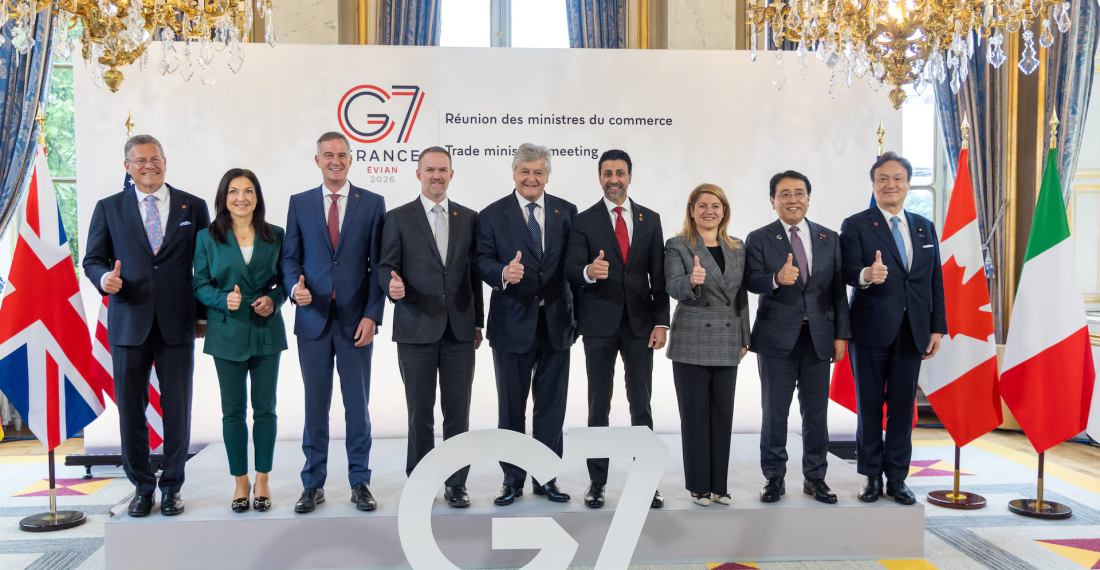
Group of Seven (G7) trade ministers met in Paris on Wednesday (6 May) to discuss common interests in securing critical mineral supplies, controlled by China and now threatened by looming US tariffs on European Union-made cars.

In a statement made on Wednesday (6 May), Foreign Trade Minister Nicolas Forissier said that France aims to secure critical mineral supplies as some of its most concrete deliverables during its G7 presidency.

"I believe we will make very concrete progress on rare earths and critical minerals, securing our ​supply chains and ensuring we are not held hostage by certain countries," he said.

G7 ministers involved in discussions indicated a general consensus on reducing reliance on China, yet disagreements remained over how to achieve sufficiency.

The unity of the G7 bloc is being further tested by US President Donald Trump, who plans to raise US tariffs on European Union-made cars from 15% to 25%, contending that Brussels has not been complying with a trade deal reached in Turnberry, Scotland, last year.

German Economy Minister Katherina Reiche said that she had been in intensive discussions with US officials regarding the change in tariff rates. For Germany, the heightened tariffs put increased strain on its export-dependent automotive sector, already struggling from waning demands in China, stagnating global growth, and high input and labour costs.

According to EU Trade Commissioner Maros ​Sefcovic, he and the US Trade Representative Jamieson Greer engaged in discussions regarding the Turnberry agreement at a meeting in Paris on Tuesday (5 May). Sefcovic added that he would be going to the European Parliament later in the day on Wednesday (6 May) to participate in ​negotiations on EU legislation in response to the US trade deal.

"We both clearly concluded that it's important to respect the deal from Turnberry from both sides, so we have to deliver on what was promised in Scotland," Sefcovic said.

The trade ​ministers also plan to review industrial overcapacity from China ​and reforms for the World Trade Organisation, Foressier said.

Source: commonspace.eu with Reuters
Related articles

Editor's choice
News
President of Turkmenistan visits Azerbaijan

President of Turkmenistan visits Azerbaijan

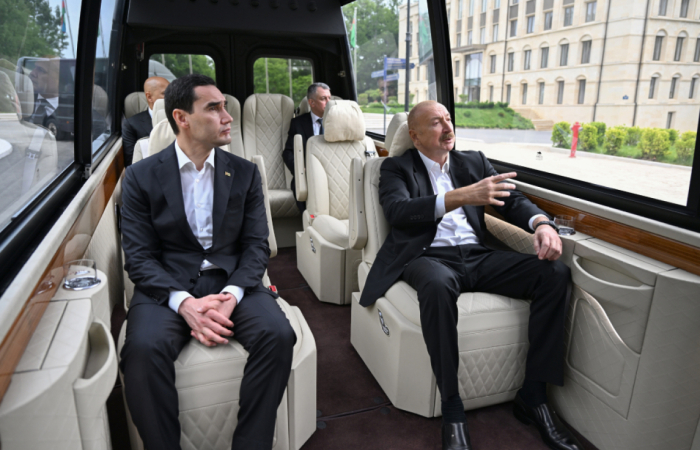
In a short, but highly significant visit, the President of Turkmenistan Serdar Berdimuhamedov, arrived in the Fuzuli district on June 23. Serdar Berdimuhamedov was welcomed by President Ilham Aliyev.. During his visit, which lasted only a few hours, the Turkmen president, accompanied by his Azerbaijani host visited Fuzuli and Shusha.. Ilham Aliyev and President of Turkmenistan Serdar Berdimuhamedov visited Jidir Duzu plain in Shusha. President Ilham Aliyev presented a Garabagh horse named “Merd” to the President of Turkmenistan as a gift..

Popular

Editor's choice
Interview
Thursday Interview: Murad Muradov

Thursday Interview: Murad Muradov

Today, commonspace.eu starts a new regular weekly series. THURSDAY INTERVIEW, conducted by Lauri Nikulainen, will host  persons who are thinkers, opinion shapers, and implementors in their countries and spheres. We start the series with an interview with Murad Muradov, a leading person in Azerbaijan's think tank community. He is also the first co-chair of the Action Committee for a new Armenian-Azerbaijani Dialogue. Last September he made history by being the first Azerbaijani civil society activist to visit Armenia after the 44 day war, and the start of the peace process. Speaking about this visit Murad Muradov said: "My experience was largely positive. My negative expectations luckily didn’t play out. The discussions were respectful, the panel format bringing together experts from Armenia, Azerbaijan, and Turkey was particularly valuable during the NATO Rose-Roth Seminar in Yerevan, and media coverage, while varied in tone, remained largely constructive. Some media outlets though attempted to represent me as more of a government mouthpiece than an independent expert, which was totally misleading.  Overall, I see these initiatives as important steps in rebuilding trust and normalising professional engagement. The fact that soon a larger Azerbaijani civil society visits to Armenia followed, reinforces the sense that this process is moving in the right direction." (click the image to read the interview in full)