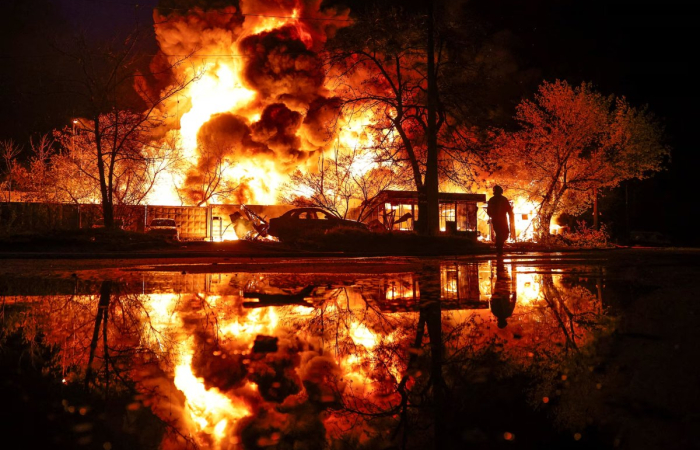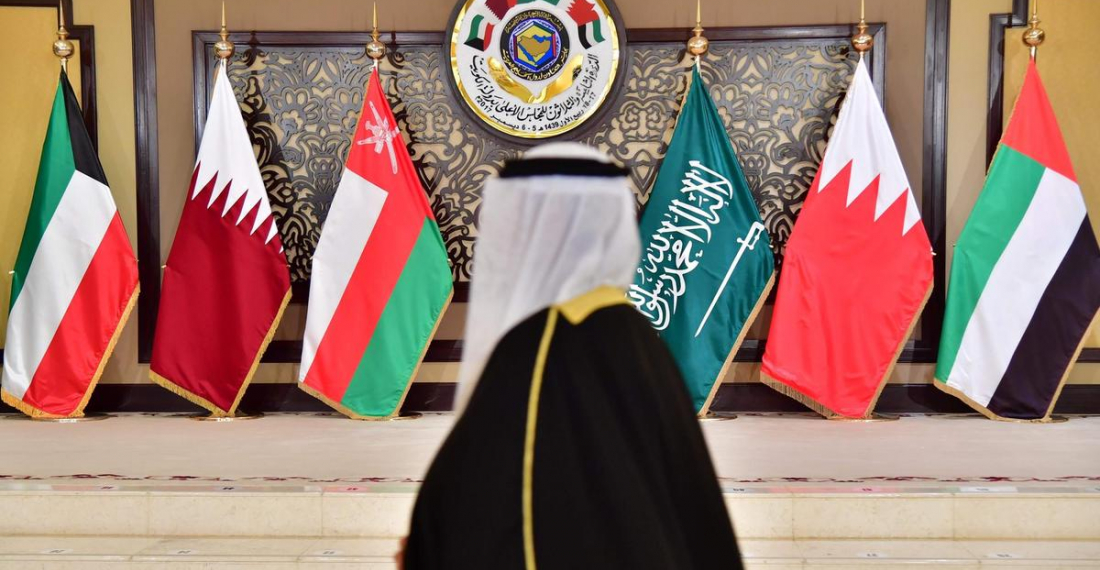
The six Gulf countries members of the Gulf Co-operation Council (GCC), namely Bahrain, Kuwait, Qatar, Oman, Saudi Arabia, and the United Arab Emirates (UAE), have been caught in the war waged by the United States and Israel against Iran since 28 February.
Ostensibly, because they host US military facilities, they were relentlessly attacked by Iran in the period before the two-week ceasefire, announced a week ago. The Gulf countries have not retaliated, but they have made strong requests to Iran to desist.
They were very supportive of the efforts to end the conflict, especially the talks hosted by Pakistan in Islamabad over the weekend. The 21 hours of talks were intense, but according to all accounts, unsuccessful. But this was the first direct contact at a high political level between Iran and the US since the 1979 Iranian revolution, so their importance should not be underestimated either.
The opening of the Strait of Hormuz for unimpeded movement of shipping is a top priority. In resolving this issue, the GCC countries must be involved directly.
For the six GCC countries, the conflict in Iran is not only unwelcome. They tried to stop the war from starting. They face a serious problem, which is not yet existential, but may well change their way of life forever.
First, the conflict has disrupted and stopped to a large extent their exports of oil and gas, on which the six countries depend. In some cases, the damage done to their energy infrastructure will take years to repair.
Secondly, the conflict has impacted very negatively on those activities that they had painstakingly developed to complement and eventually replace their dependence on hydrocarbons. Tourism evaporated overnight; foreign investment was scared by the instability; and the delicate internal harmony came under stress. The conflict, at best, dented the “Dubai” dream.
Thirdly, the internal cohesion of the six GCC states was tested. The tourists have left, and so have some of the bankers, but most of the large expatriate community remain, hoping the problem will go away soon, or because they have no choice.
Whatever comes next, this has been the most testing moment for the reasonably young six Gulf countries. Every day that passes with the conflict unresolved makes the challenge bigger.
But, despite the bleakness of the current situation, the Gulf must prepare for tomorrow.
Three areas are of importance:
Defence and Security
The war in Iran has exposed serious shortcomings in the defence and security posture of the Gulf states. Despite having spent over the years trillions of dollars on defence, the conflict underlined their vulnerabilities. The Gulf needs a new security model that must take into account different factors. The complete dependence on the United States has not served them well. The blind trust in Donald Trump was a misjudgment. Trump embarked on the war with Iran because it served Israel. He did not bother to consult the Gulf countries before, nor was their welfare taken into account. Trump strongly believed in the power of the US military; the Iran war also showed its weakness and its blind spots. A new security architecture for the Gulf will require a stronger, more cohesive GCC. The Gulf countries must also develop a new way to engage with Iran. Iran is not going anywhere: it will always be a neighbour. After the dust of war settles, the GCC countries need to have a coordinated plan for managing their relations with Iran.
Developing a new security architecture for the Gulf is a long-term, ten-year project. It should not be rushed, but neither should complacency be allowed. Thinking and discussion on these issues must start now.
Foreign Policy
The GCC countries, most of them anyway, have made some effort to diversify their foreign policy. In the Gulf, they like to say that the US is their partners of choice on military and security issues, whilst China is their partner of choice on business and trade issues. Last week, at the UN Security Council, Russia and China vetoed a much watered-down Bahraini resolution on keeping the Strait of Hormuz open.
The missing piece has for a long time been Europe. EU-GCC relations have, by and large, been transactional. They must become strategic! As one commentator put it, up to now, EU-GCC relations have been a matter of choice. Now they have become a necessity. Wider Europe (EU plus UK) should be more active in the Gulf, and vice versa, and it is time to have a much deeper discussion of how this can be done.
National Cohesion
The six GCC countries are hereditary monarchies. Many consider this to be an anachronism in the 21st century. But this is only part of the story. Many of the ruling families have legitimacy built on history and tribal loyalties, and some are visionary. But the war in Iran has put stress on national cohesion, and they should not ignore it. But foreigners should not interfere with this process. A good dialogue will strengthen the countries.
Testing time, but internal resilience will ensure that GCC countries can weather the current storm
This is a testing time for the six GCC countries, but they have internal resilience and enough financial cushion to weather the storm. And I am sure they also have the creativity and the will to reconstruct, and reconstruct better.
source: Monday Commentary is written every week by Dr Dennis Sammut, Director of LINKS Europe, and Managing Editor of commonspace.eu