Nature as a defence asset: “It’s very difficult for big tanks to go through”

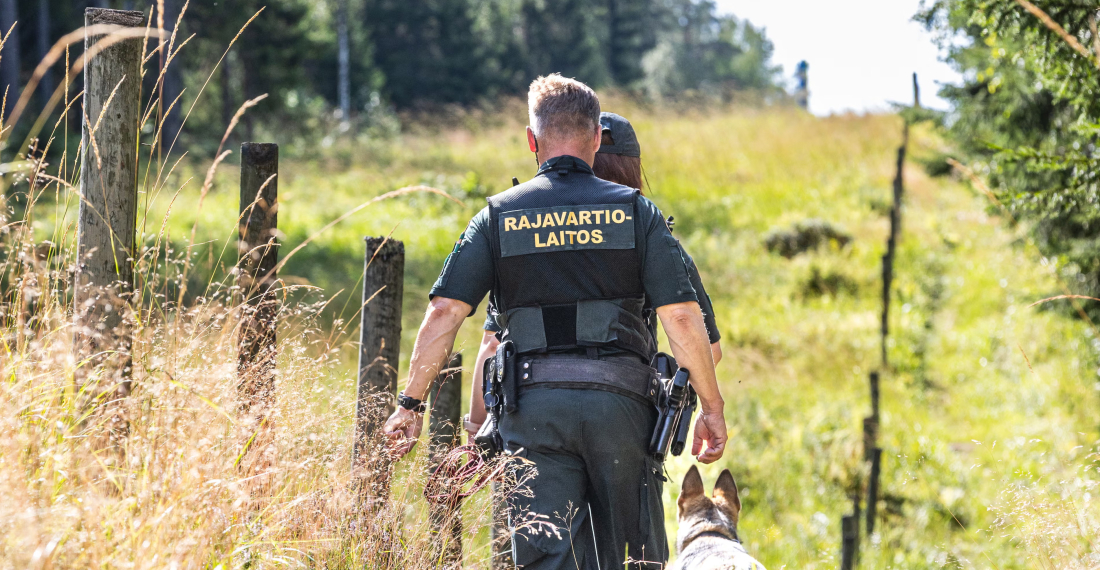
Since Russia launched its full-scale invasion of Ukraine in 2022, Poland and Finland have increasingly explored the restoration of wetlands and natural border terrain as a way to strengthen both defence and climate resilience. These two countries, which share borders with Russia and Russian ally Belarus, seek to implement EU Commissioner for the Environment Jessika Roswall's suggestion to treat nature as a defence asset. Focusing on rewilding techniques to boost defence infrastructure indicates intertwined national and climate security for these states on Europe’s eastern flank.

In both Poland and Finland, rewilding techniques for security center around wetlands and peatlands near their borders. Many of the border wetlands are peatlands or bogs, where waterlogged conditions allow partially decomposed plant matter to accumulate into carbon-rich soil known as peat. These peatlands act as effective carbon sinks, absorbing excess CO2, a key dimension for their role in Europe’s climate change policy. However, peatlands have been threatened by drainage that comes from agricultural demands for land. EU countries reported 124 million tons of greenhouse gas pollution from drained peatlands in 2022, close to the annual emissions of the Netherlands.

From a defence perspective, waterlogged peatlands can make movement difficult for troops, military trucks and tanks. Peatland geography has limited troop mobility throughout European history, with Finland’s treacherous swamps entrapping the Soviets in the 1940s, to the marshes north of Kyiv that halted military operations in both World Wars. While restoring border wetlands would not replace conventional defence, it could make some areas harder to cross and channel military movement into narrower, more defensible corridors.

Along peatland-rich Eastern European borderlands, restoration projects have been set in motion. Poland’s Eastern Shield fortification project, launched in 2024, aims to restore wetlands and forests for both climate and national security.

EU Commissioner for the Environment Jessika Roswall has promoted rewilding border areas as a way to deter potential invasions and strengthen natural defences, according to an article published by The Guardian on Monday (9 March). Roswall said that restoring forests, bushes, and wetlands near national borders can make it more difficult for people and military vehicles to cross. She argued that nature should increasingly be treated as a defence asset, linking environmental protection to broader security concerns such as food supply and water security. Roswall also suggested that environmental degradation, including the drainage of wetlands, should be viewed not only as an ecological problem but also as a potential national security risk.


Source: commonspace.eu with The Guardian and Politico
Related articles

Editor's choice
News
Thousands join Pope on his last day in Cameroon, his second stop on his African tour

Thousands join Pope on his last day in Cameroon, his second stop on his African tour

More than 120,000 people joined Pope Leo XIV in Cameroon for an open-air Mass on Friday (17 April), the biggest crowd so far during his 11-day Africa tour. Arriving in the economic city of Douala on Friday, the Pope reiterated his message of peace after visiting the country's Anglophone region hit by a decade-long rebellion the day before. He later warned of the dangers of artificial intelligence (AI), which he said was leading to the spread of "polarisation, conflict, fear and violence". Jubliant crowds welcomed the Pope as he arrived at the Japoma Stadium. Standing in his vehicle - known as the Popemobile - the pontiff waved at the droves of people waiting for his entrance. Some worshippers camped outside the premises on Thursday night in a bid to get a prime spot for the pontiff's address, with some having been there for more than 24 hours By Friday, tens of thousands of people of all ages, including several from the priesthood, braved the heat to participate in the occasion. “Do not give in to distrust and discouragement,” he said. “Reject every form of abuse or violence, which deceives by promising easy gains but hardens the heart and makes it insensitive. Do not forget that your people are even richer than this land, for your treasure lies in your values: faith, family, hospitality, and work.” Pope Leo invited African youth to follow the vocation that God sets out for them, so that they may be protagonists of their own future. “Do not let yourselves be corrupted by temptations that waste your energies and do not serve the progress of society,” he said.
Editor's choice
News
Russian attacks on Kyiv and other Ukrainian cities highlights need of strengthening European resolve

Russian attacks on Kyiv and other Ukrainian cities highlights need of strengthening European resolve

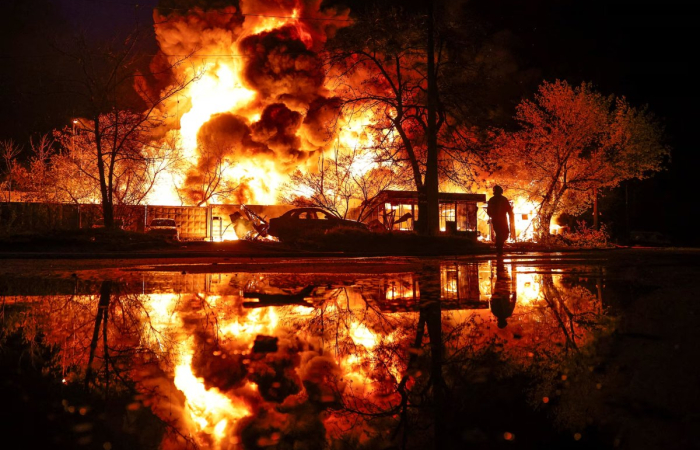
Ukrainian President Volodymyr Zelensky condemned the attack, writing on X that it proved that US and European sanctions against Russia should not be weakened. Russia launched more than 700 drones and missiles at Ukraine in multiple waves overnight from Wednesday to Thursday, killing at least 18 people in what local officials said was the deadliest attack in months. Ukraine's air force said on Thursday morning that Russia had launched 659 drones and 44 cruise and ballistic missiles in the prior 24 hours. It said that 636 drones and 31 missiles had been shot down - but there had been direct hits in 26 locations. (click picture to read more)

Popular

Editor's choice
Interview
Thursday Interview: Murad Muradov

Thursday Interview: Murad Muradov

Today, commonspace.eu starts a new regular weekly series. THURSDAY INTERVIEW, conducted by Lauri Nikulainen, will host  persons who are thinkers, opinion shapers, and implementors in their countries and spheres. We start the series with an interview with Murad Muradov, a leading person in Azerbaijan's think tank community. He is also the first co-chair of the Action Committee for a new Armenian-Azerbaijani Dialogue. Last September he made history by being the first Azerbaijani civil society activist to visit Armenia after the 44 day war, and the start of the peace process. Speaking about this visit Murad Muradov said: "My experience was largely positive. My negative expectations luckily didn’t play out. The discussions were respectful, the panel format bringing together experts from Armenia, Azerbaijan, and Turkey was particularly valuable during the NATO Rose-Roth Seminar in Yerevan, and media coverage, while varied in tone, remained largely constructive. Some media outlets though attempted to represent me as more of a government mouthpiece than an independent expert, which was totally misleading.  Overall, I see these initiatives as important steps in rebuilding trust and normalising professional engagement. The fact that soon a larger Azerbaijani civil society visits to Armenia followed, reinforces the sense that this process is moving in the right direction." (click the image to read the interview in full)