


В Ереване прошли обсуждения мер по укреплению доверия в поддержку процесса мирного урегулирования нагорно-карабахского конфликта

В понедельник (16 октября), в Ереване, на мероприятии, организованном Центром региональных исследований (ЦРИ), независимый аналитический центр Армении, была представлена недавно созданная т.н. "Рабочая группа" по разработке, продвижению и реализации идей, которые могут способствовать укреплению доверия в поддержку процесса мирного урегулирования нагорно-карабахского конфликта. Мероприятие совпало со встречей президентов Армении и Азербайджана, которая проходила в тот же день в Женеве.

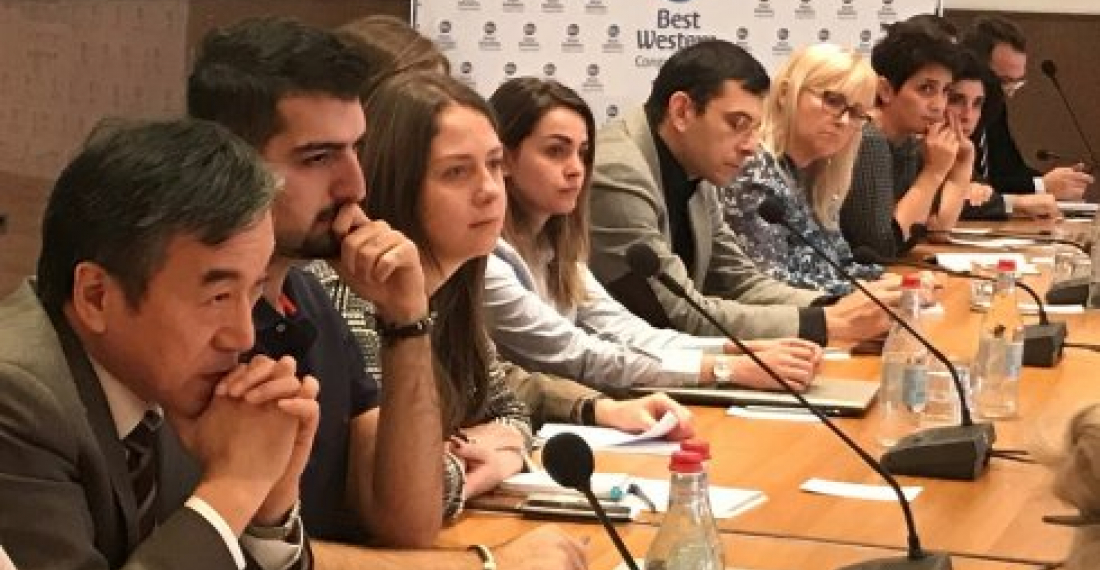
Среди участников мероприятия были Защитник прав человека (Омбудсмен) Армении, Арман Татоян, председатель Ассоциации политических наук Армении, генерал-лейтенант профессор Гайк Котанджян, послы Греции, Японии и Казахстана, а также представители Организации Объединенных Наций, Европейского союза и Международный комитет Красного Креста (МККК). Также присутствовали представители посольств Болгарии, Грузии, Германии, Литвы, Польши, Румынии и Украины, в дополнение к группе армянских аспирантов, гражданских активистов и молодых специалистов.

Директор ЦРИ, Ричард Киракосян, пояснил, что обсуждения является частью более широких усилий недавно сформированной т.н. "Рабочей группы", в которую вошли эксперты из Армении и Азербайджана, приверженные к "разработке" следующего поколения "идей и мер", которые могут положительно повлиять на процесс урегулирования карабахского конфликта. Рабочая группа работает в рамках инициативы Европейского союза за мирное урегулирование конфликта вокруг Нагорного Карабаха (EPNK), инициативы Европейского Союза.

Д-р Деннис Саммут, директор LINKS («Диалог, анализ и исследования»), один из партнеров EPNK, рассказал о конкретных целях Рабочей группы и подчеркнул сферы для совместной работы на сегодняшний день для исследования и изучения того, как меры по укреплению доверия (CBMs) могут способствовать прочному миру в контексте нагорно-карабахского конфликта посредством деятельности, которая способствует укреплению доверия между армянами и азербайджанцами в зоне конфликта, а также в регионе и в мире в целом. Он добавил, что помимо этих усилий по разработке идей и предложений по различным МД, эти обсуждения являются также частью информационно-пропагандистских усилий, направленных на распространение информации о мерах укрепления доверия между заинтересованными сторонами, в том числе посредством проведения семинаров и презентаций в регионе, посредством публикаций и новых СМИ и социальных медиа.

В ходе встречи Ричард Киракосян также представил двух других членов рабочей группы Армении, д-ра Бениамина Погосяна из Ассоциации политических наук Армении и экономиста и аналитика Центра региональных исследований, Ашхена Григоряна.

Более подробную информацию о Рабочей группе и сфере ее деятельности читайте на commonspace.eu здесь

источник: commonspace.eu

фото: Участники встречи мер по укреплению доверия в контексте нагорно-карабахского конфликта, состоявшейся в Ереване в понедельник, 16 октября 2017 года (фотография предоставлена Центром региональных исследований, Ереван)


Related articles

Editor's choice
News
Borrell tells the European Parliament that the situation in Afghanistan was critical, but the EU will remain engaged

Borrell tells the European Parliament that the situation in Afghanistan was critical, but the EU will remain engaged

Borrell underlined that the European Union will make every effort to support the peace process and to remain a committed partner to the Afghan people. "Of course, we will have to take into account the evolving situation, but disengagement is not an option.  We are clear on that: there is no alternative to a negotiated political settlement, through inclusive peace talks.
Editor's choice
News
Germany accuses Russia of cyberattacks and disinformation campaign

Germany accuses Russia of cyberattacks and disinformation campaign

The German government holds Russia responsible for a cyberattack on German air traffic control, and for targeted disinformation campaigns before the last federal election. According to the German Foreign Office in Berlin, the incidents could be clearly attributed to the Russian military intelligence service, the GRU. In response, the Russian ambassador to Berlin was summoned to the Foreign Ministry. "We have been observing a massive increase in threatening hybrid activities by Russia for some time now," a spokesperson for the Foreign Ministry stated. These range from disinformation campaigns and espionage to cyberattacks and sabotage attempts. The aim is to divide society, sow distrust, and undermine confidence in democratic institutions. The spokesperson added that with these actions, Russia is "very concretely threatening our security, not only through its war of aggression against Ukraine, but also here in Germany."  The Foreign Ministry spokesperson explained that the cyberattack on air traffic control in August 2024 was clearly attributed to the hacker collective "APT28," known as "Fancy Bear," and to the responsibility of the Russian military intelligence service, the GRU. Furthermore, it could now be "conclusively stated" that Russia had attempted "to influence and destabilize both the last Federal election and the ongoing internal affairs of the Federal Republic of Germany." There was "absolutely irrefutable evidence" for this". The so-called "Storm 1516" campaign, which has been running since 2024, is allegedly backed by "reliable information" that the Moscow-based think tank "Center for Geopolitical Expertise" is behind it. The Center is also said to be supported by Russian military intelligence. Its primary aim is to influence democratic elections in the West. (Click the image to read more).

Popular

Editor's choice
News
Germany accuses Russia of cyberattacks and disinformation campaign

Germany accuses Russia of cyberattacks and disinformation campaign

The German government holds Russia responsible for a cyberattack on German air traffic control, and for targeted disinformation campaigns before the last federal election. According to the German Foreign Office in Berlin, the incidents could be clearly attributed to the Russian military intelligence service, the GRU. In response, the Russian ambassador to Berlin was summoned to the Foreign Ministry. "We have been observing a massive increase in threatening hybrid activities by Russia for some time now," a spokesperson for the Foreign Ministry stated. These range from disinformation campaigns and espionage to cyberattacks and sabotage attempts. The aim is to divide society, sow distrust, and undermine confidence in democratic institutions. The spokesperson added that with these actions, Russia is "very concretely threatening our security, not only through its war of aggression against Ukraine, but also here in Germany."  The Foreign Ministry spokesperson explained that the cyberattack on air traffic control in August 2024 was clearly attributed to the hacker collective "APT28," known as "Fancy Bear," and to the responsibility of the Russian military intelligence service, the GRU. Furthermore, it could now be "conclusively stated" that Russia had attempted "to influence and destabilize both the last Federal election and the ongoing internal affairs of the Federal Republic of Germany." There was "absolutely irrefutable evidence" for this". The so-called "Storm 1516" campaign, which has been running since 2024, is allegedly backed by "reliable information" that the Moscow-based think tank "Center for Geopolitical Expertise" is behind it. The Center is also said to be supported by Russian military intelligence. Its primary aim is to influence democratic elections in the West. (Click the image to read more).

