


Пашинян говорит о наследии Карабаха, которое ему досталось от Сержа Саргсяна

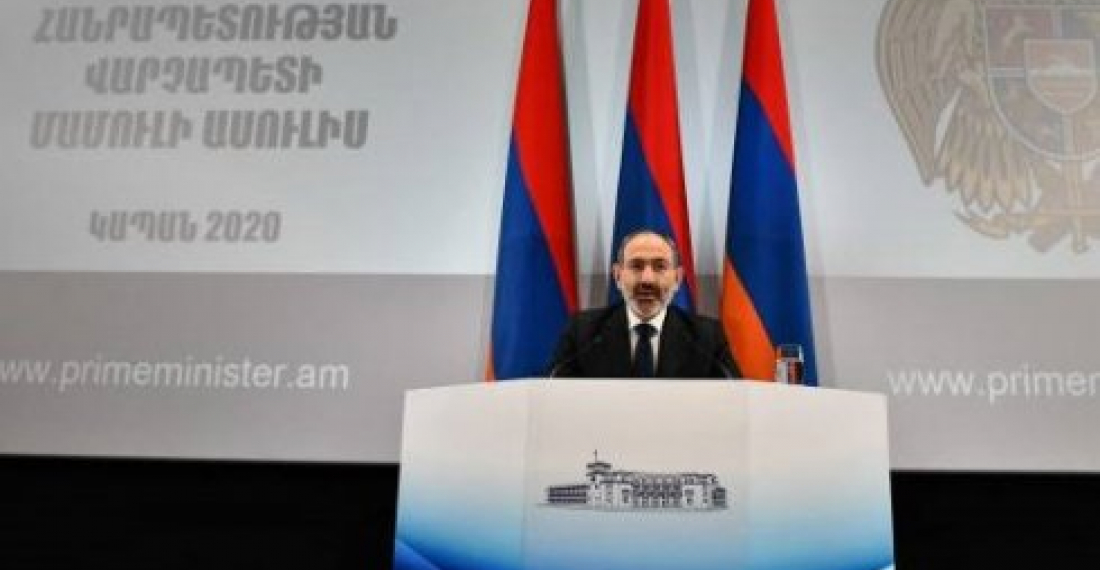
На марафонской пресс-конференции в городе Капан премьер-министр Армении Никол Пашинян затронул ряд внутренних вопросов, а также карабахский конфликт. Пашинян сказал, что никакой официальной встречи с президентом Азербайджана Ильхамом Алиевым не было запланировано на полях Мюнхенской конференции по безопасности, которая пройдет в следующем месяце, но он не исключил, что неформальная встреча может состояться.

В ходе пресс-конференции Пашинян также коснулся того, что он назвал «карабахским наследием», унаследованным от предыдущего армянского лидера Сержа Саргсяна. Премьер-министр сказал, что оппозиция часто обвиняет его в разбазаривании наследия Саргсяна в Карабахе. Он сказал, что теперь хочет, чтобы те, кто участвует в предстоящих президентских выборах в Карабахе, публично заявили, поддерживают ли они это наследие или нет.

Затем Никол Пашинян резюмировал то, что он назвал позицией Армении, когда вступил в должность. Это, по его словам, также было опубликовано в средствах массовой информации и не опровергнуто официальными лицами предыдущего правительства.

Он сказал:

"Итак, что оставил Саргсян за столом переговоров? Три основных пункта.

Во-первых, я цитирую конечные цели всеобъемлющего урегулирования карабахского конфликта, поскольку они связаны друг с другом. Эти цели - наследие, оставленное Сержем Саргсяном. Возвращение семи регионов - Агдама, Физули, Джабраила, Зангилана, Губадли, Кельбаджара и Лачина - Азербайджану при условии сохранения коридора, связывающего Нагорный Карабах и Армению.

Следующий момент заключается в том, что необходимо провести голосование для определения окончательного правового статуса Карабаха, голосование будет выражением воли всего населения Нагорного Карабаха под эгидой ООН или ОБСЕ в сроки, согласованные сторонами, которые будут юридически обязательными и при соблюдении норм и принципов международного права. Полное регулирование политических, торгово-экономических и гуманитарных связей в регионе, восстановление добрососедского сотрудничества, обеспечение полной стабильности на Южном Кавказе.

Во-вторых, перемещенные лица при содействии международного сообщества вернутся на территории пяти районов, упомянутых в первом пункте. Гражданские власти Азербайджана войдут на эти территории после развертывания международных миротворческих сил и вывода вооруженных сил, находящихся сейчас в этих районах. Международные миротворческие силы будут развернуты вдоль административных границ бывшего автономного района Нагорного Карабаха, за исключением участков, которые являются частью районов Кельбаджар и Лачин. Кельбаджарский регион будет находиться под наблюдением ОБСЕ в переходный период.

В-третьих, одновременно с принятием вышеуказанных мер, пока не будет найдено окончательное решение, Нагорному Карабаху должен быть предоставлен временный статус, который будет гарантировать организацию повседневной жизни".

Говоря о нынешнем состоянии переговоров, Пашинян сказал:

"Мы готовы к конструктивной, нормальной работе, понимая, насколько трудной является эта работа".

"Но это наша ответственность в регионе. Я сказал моим коллегам, что теперь мы - Президент Азербайджана, Президент Республики Арцах и Премьер-министр Республики Армения - лично несем ответственность за будущее мира и стабильности в регионе. Это личная ответственность, и в некоторой степени также общая ответственность, и нести эту ответственность и [с честью] справляться с ней очень трудно", - сказал он.

На просьбу подробно остановиться на переговорах по Карабаху, Пашинян подчеркнул, что в переговорах нет секретности. "О них я рассказал в моем выступлении на совместном заседании Совета безопасности Армении и Арцаха в Степанакерте в марте 2019 года", - сказал Пашинян. "В этой речи я обрисовал наш круг дискуссий в переговорном процессе. Именно об этом круге мы сейчас и говорим. В настоящее время на столе нет документов для обсуждения. И мы должны работать вместе, чтобы приблизиться к более конкретному, более обоснованному этапу обсуждения".

Он сказал, что этот период времени должен эффективно использоваться для приближения к этому этапу, но в то же время отметил, что он не использовался слишком эффективно по определенным объективным и субъективным причинам. В качестве наиболее важной причины он указал, что Азербайджан не ответил должным образом на его заявление о том, что "любой вариант урегулирования карабахского конфликта должен быть приемлемым для народа Армении, народа Арцаха и народа Азербайджана".

"Это, если бы мы выражались сегодня на концептуальном уровне, является самым большим препятствием на пути решения. Но наша позиция конструктивна, мы находим, что карабахская проблема должна быть решена, решена в рамках круга концепций и принципов, о которых я говорил в Степанакерте, в кругу логики моих выступлений в ООН и в рамках принципы, которые мы объявили ранее".

источник: commonspace.eu по материалам агентств

фото: Премьер-министр Никол Пашинян на пресс-конференции в Капане, 25 января 2020 года (фото любезно предоставлено armenpress.am, Ереван)

 

Related articles

Editor's choice
News
COP 17 in Armenia

COP 17 in Armenia

Armenia is currently hosting the COP17 conference of the Convention on Biological Diversity, which began earlier this week (19 October) and will run until 30 October, bringing around 15,000 participants from 196 different countries to Yerevan. At a leaders' summit held as part of COP17, Prime Minister Nikol Pashinyan expressed realistic ambitions: “We are halfway towards achieving these goals (Kunming-Montreal Global Biodiversity Framework), and we must honestly acknowledge that we are not yet moving in the right direction. Our task now is not to make new promises, but to fulfil the commitments we have already made.” Pashinyan pointed towards Armenia's own records, noting that the whitefish stock in Lake Sevan has increased substantially in the last ten years. Iranian President Masoud Pezeshkian and Georgian Prime Minister Irakli Kobakhidze also addressed the summit, with Turkiye sending its agriculture minister. However, there were no reports of Azerbaijani representatives attending. The conference has given Yerevan a valuable international platform, yet the absence of Azerbaijan is likely to be read as a sign that the peace process in the South Caucasus has not yet been translated into wider regional cooperation. The leaders' summit was opened by Armenian Prime Minister Nikol Pashinyan, who stressed that hosting the conference was a great honour for Armenia. He expressed hope that it would 'be productive and contribute to protecting our planet's biodiversity'. 'We – the citizens of Armenia, the government, state authorities and local governments – owe a debt to our nature,' the prime minister said. He noted that the international community had already developed the concept of 'living in harmony with nature’ and adopted the Kunming-Montreal Global Biodiversity Framework in 2022, setting out goals and specific targets to be achieved by 2030. 'We are halfway towards achieving these goals, and we must honestly acknowledge that we are not yet moving in the right direction. Our task now is not to make new promises, but to fulfil the commitments we have already made,' Nikol Pashinyan said. The COP17 conference is expected to adopt a declaration at leaders' level. More than 30 documents are scheduled for discussion. If approved, the commitments set out in them will become legally binding on countries that are parties to the Convention on Biological Diversity.”
Editor's choice
News
Landmines present to the European Union both a contradiction and a dilemma

Landmines present to the European Union both a contradiction and a dilemma

Finland’s decision to buy one million landmines creates a serious contradiction in the policy of the European Union, and is symbolic of a bigger dilemma facing European countries as they get used to the need to acquire “hard” power to face an increasing threat from Russia. Finland is seeking to acquire one million anti-personnel mines at a cost of 100 million euros. Finland, together with Poland, Latvia, Lithuania and Estonia last year abandoned the Ottawa agreement, the international framework that bans the use of anti-personnel mines, which the EU had been instrumental in establishing and supporting. All five countries cite the threat from Moscow as the reason. Colonel Riku Mikkonen of the Army Command told Finland’s national news agency STT that officials are now gathering information from suppliers regarding the deal, the AFP news agency reports. Helsinki would like domestic manufacturers to supply the mines, with contracts signed by the end of 2027 and production up and running by 2028. “It would be useful in many ways if Finnish companies produced the anti-personnel mines in Finland,” Mikkonen said. About half a dozen Finnish firms qualify, he told STT. “However, at this stage, buying the mines from abroad is not totally ruled out,” he added. LANDMINES PROVIDE THE EU WITH BOTH A CONTRADICTION, AND A DILEMMA Eliminating landmine contamination worldwide is one of the EU’s main soft power postures, and it basks in its record as the biggest funder of anti-landmine action in the world. But the fact that 5 of its 27 member states  have now left the Ottawa Treaty dents the EU moral high ground. It is a contradiction that is too big and important to be ignored. It also presents the European Union with a deeper dilemma. The threat from Russia is changing what the EU has stood for decades, namely a force for good able to mobilise its considerable soft power for the greater good of humanity. How the Union will implement this change will define its future. In the meantime landmines have not become any less lethal, benign, or unimportant. They remain in many parts of the world a major threat to life, an impediment to prosperity, and a potential trigger to further conflict. The 22 EU members states that still adhere to the Ottawa treaty must regroup, and be more assertive in their quest against anti-personnel land mines. All the reasons why they supported the Ottawa treaty in the first place still exist. The message must be clear: NO TO LANDMINES!

Popular

Editor's choice
Interview
Thursday Interview: Murad Muradov

Thursday Interview: Murad Muradov

Today, commonspace.eu starts a new regular weekly series. THURSDAY INTERVIEW, conducted by Lauri Nikulainen, will host  persons who are thinkers, opinion shapers, and implementors in their countries and spheres. We start the series with an interview with Murad Muradov, a leading person in Azerbaijan's think tank community. He is also the first co-chair of the Action Committee for a new Armenian-Azerbaijani Dialogue. Last September he made history by being the first Azerbaijani civil society activist to visit Armenia after the 44 day war, and the start of the peace process. Speaking about this visit Murad Muradov said: "My experience was largely positive. My negative expectations luckily didn’t play out. The discussions were respectful, the panel format bringing together experts from Armenia, Azerbaijan, and Turkey was particularly valuable during the NATO Rose-Roth Seminar in Yerevan, and media coverage, while varied in tone, remained largely constructive. Some media outlets though attempted to represent me as more of a government mouthpiece than an independent expert, which was totally misleading.  Overall, I see these initiatives as important steps in rebuilding trust and normalising professional engagement. The fact that soon a larger Azerbaijani civil society visits to Armenia followed, reinforces the sense that this process is moving in the right direction." (click the image to read the interview in full)

