


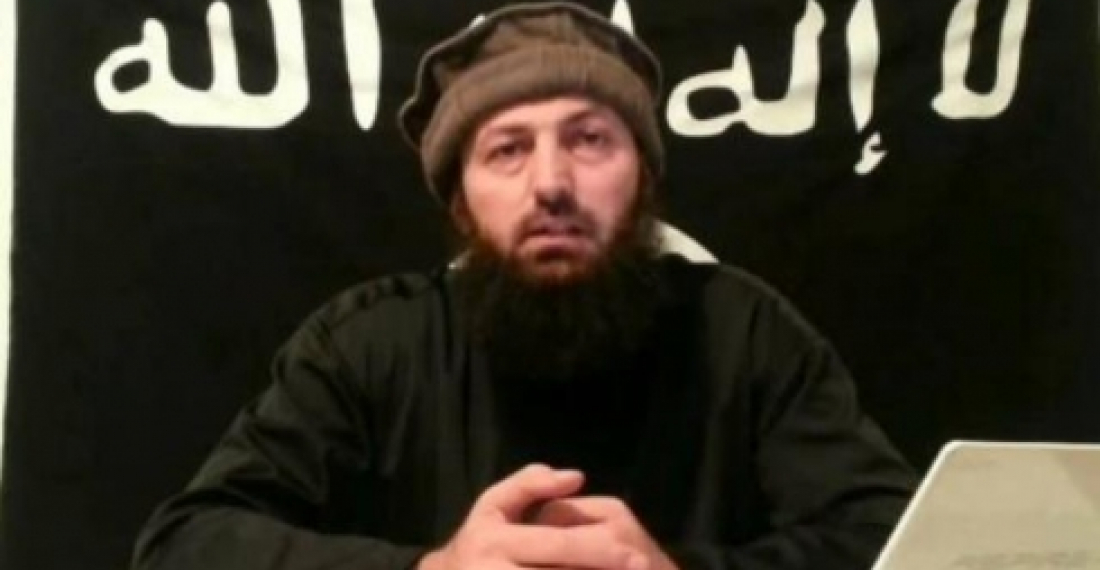
На Северном Кавказе убит лидер исламистов.

Лидер террористической организации "Имарат Кавказ", действующей на Северном Кавказе, был убит во время спецоперации в горах, в ходе которой наносились  удары с боевых вертолетов, об этом сообщили в четверг российские спецслужбы.

Министр внутренних дел Дагестана сообщил, что в ходе операции российских спецслужб были убиты четыре человека. Недавно возглавивший террористическую организацию "Имарат Кавказ", Магомед Сулейманов, был среди убитых, сказано в заявлении Национального антитеррористического комитета для российских информ агентств.

Веб-сайт мятежников также сообщает, что Сулейманов был убит в ходе двухдневной операции рядом с горным селением Гимры, в ходе которой наносились удары с воздуха с боевых вертолетов.

"Имарат Кавказ" взял на себя ответственность за несколько крупных терактов, совершенных на территории России за последние годы, включая взрыв в аэропорту Домодедово, который унес жизни 27 человек, и двойной взрыв в Волгограде, который унес жизни 34 человек.

В последнее время боевики на Северном Кавказе повязли во внутренних разногласиях, так как поклялись в верности различным группам, в том числе ИГИЛ (ISIL).

Боевики исламисты на Северном Кавказе изначально группировались в Чечне, но в поздние 1990-е они начали распространяться на другие российские регионы, в частности в Дагестане. "Имарат Кавказ" превратился в ведущую организацию для мятежников на тот момент. Организация в последствии была значительно ослаблена как усилиями со стороны российских спецслужб, так и внутренними спорами.

источник: commonspace.eu по материалам агентств.

фото: Магомед Сулейманов, лидер повстанческого движения исламистов на Северном Кавказе был убит российским спецназом 11 августа 2015 (фото из архива).


 

Related articles

Editor's choice
News
The British prime minister says Europe must "stand on its own two feet" when it comes to defence

The British prime minister says Europe must "stand on its own two feet" when it comes to defence

The UK will deploy a carrier strike group, led by the aircraft carrier HMS Prince of Wales to the Arctic and the High North as part of efforts to bolster security against Russian threats. British prime minister, Sir Keir Starmer announced the deployment in a speech on Saturday (14 February) at the Munich Security Conference. Europe must be ready to fight to protect its people, values, and way of life,  Sir Keir told the Conference. Starmer also called for deeper links and cooperation, including economic ties, between the UK and EU. The PM stressed the continent must "stand on its own two feet" when it comes to defence commitments. "We must build our hard power, because that is the currency of the age," he told the conference. (Click image to read the full story).

Popular

Editor's choice
Interview
Thursday Interview: Murad Muradov

Thursday Interview: Murad Muradov

Today, commonspace.eu starts a new regular weekly series. THURSDAY INTERVIEW, conducted by Lauri Nikulainen, will host  persons who are thinkers, opinion shapers, and implementors in their countries and spheres. We start the series with an interview with Murad Muradov, a leading person in Azerbaijan's think tank community. He is also the first co-chair of the Action Committee for a new Armenian-Azerbaijani Dialogue. Last September he made history by being the first Azerbaijani civil society activist to visit Armenia after the 44 day war, and the start of the peace process. Speaking about this visit Murad Muradov said: "My experience was largely positive. My negative expectations luckily didn’t play out. The discussions were respectful, the panel format bringing together experts from Armenia, Azerbaijan, and Turkey was particularly valuable during the NATO Rose-Roth Seminar in Yerevan, and media coverage, while varied in tone, remained largely constructive. Some media outlets though attempted to represent me as more of a government mouthpiece than an independent expert, which was totally misleading.  Overall, I see these initiatives as important steps in rebuilding trust and normalising professional engagement. The fact that soon a larger Azerbaijani civil society visits to Armenia followed, reinforces the sense that this process is moving in the right direction." (click the image to read the interview in full)

