


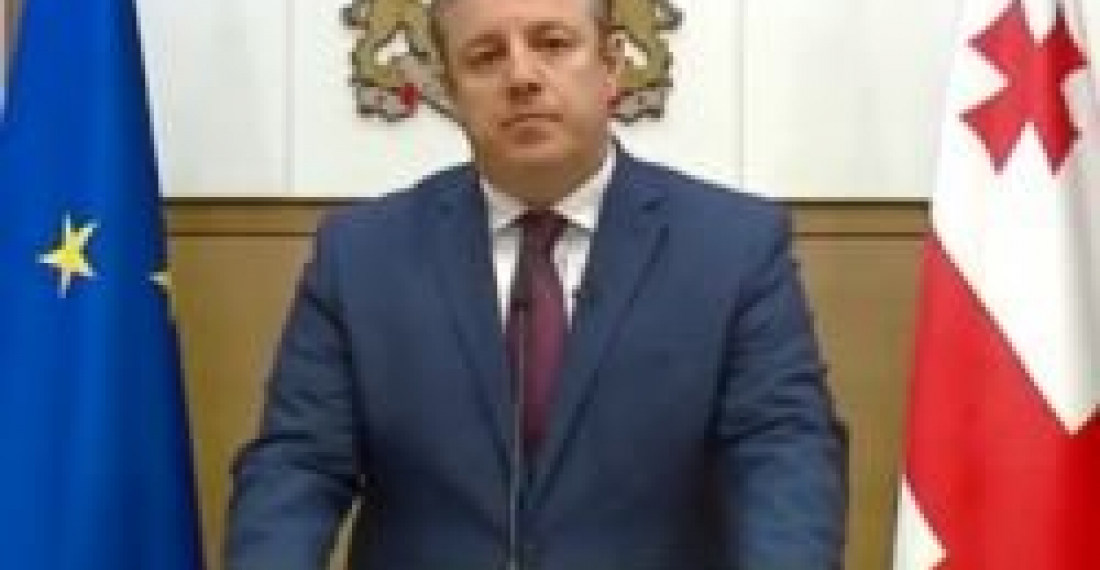
Квирикашвили представил состав нового правительства Грузии

Премьер-министр Грузии Георгий Квирикашвили объявил о формировании нового кабинета министров после прошедших парламентских выборов.

Большинство министров сохранили свои посты. Изменения в основном коснулись экономического блока правительства. Георгия Гахариа назначен на пост министра экономики и устойчивого развития, в то время как его предшественник, Димитрий Кумсишвили, займет пост министра финансов; он также сохранит пост первого вице-премьера.

Каха Каладзе вернется в Министерство энергетики, а также займет пост заместителя премьер-министра. Новым министром регионального развития и инфраструктуры Грузии назначен Зураб Алавидзе.

Виктор Долидзе заменит Давида Бакрадзе на посту государственного министра по европейской и евро-атлантической интеграции.

Аппарат государственного министра Грузии по вопросам диаспоры был расформирован, и теперь вопросами, касающиеся грузин, проживающих за рубежом, будет заниматься министр иностранных дел.

Среди других министров вновь назначенных на свои прежние посты - министр иностранных дел Михаил Джанелидзе, министр здравоохранения, Давид Сергеенко, министр ВПЛ и беженцев Созар Субари, министр образования Александр Джеджелава, министр сельского хозяйства Леван Давиташвили, министр культуры Михаил Георгадзе, министр спорта и по делам молодежи Тариэл Хечикашвили, министр обороны Леван Изория, министр юстиции Тэа Тцулукиани, министр внутренних дел Георгий Мгебришвили, министр по исполнению наказаний и пробации Каха Кахишвили, министр окружающей среды Гигла Агулашвили, министра по вопросам примирения и гражданского равенства Кетеван Цихелашвили.

Новые министры в скором времени будут представлены на утверждение парламенту.

источник: commonspace.eu по материалам агентств

фото: Премьер-министр Грузии Георгий Квирикашвили

 

Related articles

Editor's choice
News
The British prime minister says Europe must "stand on its own two feet" when it comes to defence

The British prime minister says Europe must "stand on its own two feet" when it comes to defence

The UK will deploy a carrier strike group, led by the aircraft carrier HMS Prince of Wales to the Arctic and the High North as part of efforts to bolster security against Russian threats. British prime minister, Sir Keir Starmer announced the deployment in a speech on Saturday (14 February) at the Munich Security Conference. Europe must be ready to fight to protect its people, values, and way of life,  Sir Keir told the Conference. Starmer also called for deeper links and cooperation, including economic ties, between the UK and EU. The PM stressed the continent must "stand on its own two feet" when it comes to defence commitments. "We must build our hard power, because that is the currency of the age," he told the conference. (Click image to read the full story).

Popular

Editor's choice
Interview
Thursday Interview: Murad Muradov

Thursday Interview: Murad Muradov

Today, commonspace.eu starts a new regular weekly series. THURSDAY INTERVIEW, conducted by Lauri Nikulainen, will host  persons who are thinkers, opinion shapers, and implementors in their countries and spheres. We start the series with an interview with Murad Muradov, a leading person in Azerbaijan's think tank community. He is also the first co-chair of the Action Committee for a new Armenian-Azerbaijani Dialogue. Last September he made history by being the first Azerbaijani civil society activist to visit Armenia after the 44 day war, and the start of the peace process. Speaking about this visit Murad Muradov said: "My experience was largely positive. My negative expectations luckily didn’t play out. The discussions were respectful, the panel format bringing together experts from Armenia, Azerbaijan, and Turkey was particularly valuable during the NATO Rose-Roth Seminar in Yerevan, and media coverage, while varied in tone, remained largely constructive. Some media outlets though attempted to represent me as more of a government mouthpiece than an independent expert, which was totally misleading.  Overall, I see these initiatives as important steps in rebuilding trust and normalising professional engagement. The fact that soon a larger Azerbaijani civil society visits to Armenia followed, reinforces the sense that this process is moving in the right direction." (click the image to read the interview in full)


