К вопросам охраны здоровья и техники безопасности на Южном Кавказе надо подходить всерьез

Инцидент, произошедший на грузинском горнолыжном курорте в Гудаури, стал одним из последних в ряде серьезных происшествий в регионе за последнее время, которые, по мнению многих, можно было бы избежать, утверждает Деннис Саммут в своем еженедельном комментарий по понедельникам. Настало время сделать вопросы охраны здоровья и безопасности приоритетом!

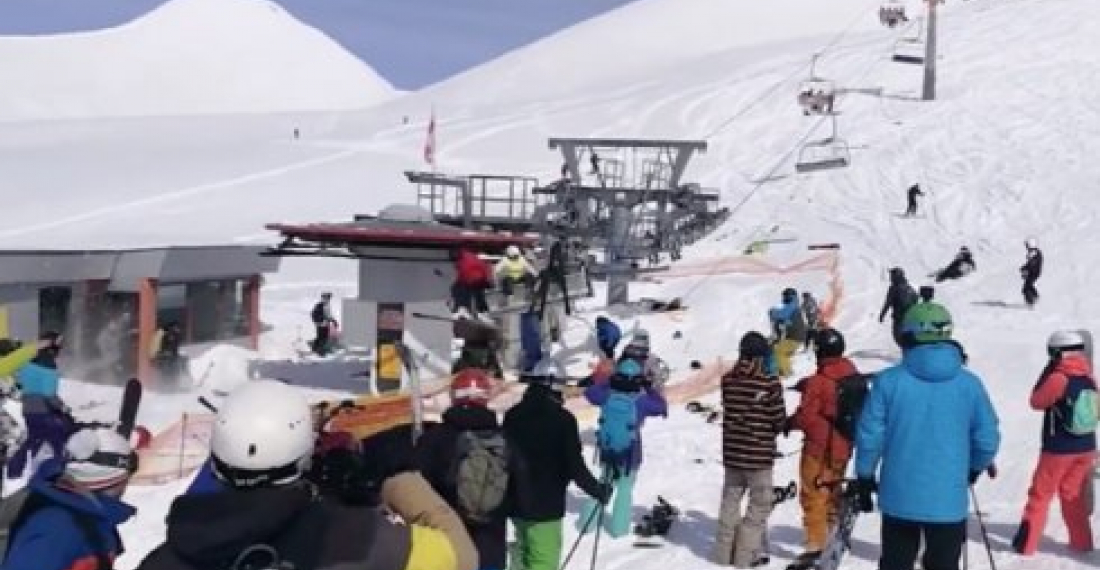
Кадры с горнолыжного курорта Грузии Гудаури на прошлой неделе очень сильно расстроили грузинское правительство. Видеокадры, свидетельствующие об инциденте, в результате которого несколько человек получили ранения в момент, когда подъемник внезапно остановился и затем стремительно начал работать в обратном направлении, облетели весь мир. Некоторые из туристов, находившихся в тот момент на подъемнике успели вовремя спрыгнуть, другие же были выброшены со стульев, многие получили ранения. Этот инцидент в настоящий момент расследуется, и грузинское правительство пообещало наказать виновных в случившемся. Но этот инцидент еще раз выдвинул на передний план вопросы охраны здоровья и техники безопасности на всем Южном Кавказе.

Проблемы с охраной здоровья и безопасности в Армении, Азербайджане и Грузии имеют множество форм, начиная от проблем с неисправными приборами и заканчивая пожарами, охватившими целые здания. За последнее десятилетие в трех странах наблюдалось быстрое экономическое развитие, и это привело к строительному буму. Но очень часто ради быстроты и прибыли, экономили на качестве.

Вопросы охраны здоровья и безопасности часто отвергаются как еще одна причудливая концепция, пришедшая из Европы. Это отчасти является результатом своего рода "мачо-мен" подхода многих мужчин в регионе. Западные компании, привыкшие работать в жестких законодательных рамках, которые налагают большие штрафы за отсутствие процедур охраны здоровья и безопасности, часто сталкиваются с проблемами, когда просят местных сотрудников следить за процедурами охраны здоровья и безопасности просто потому, что те считают их более сложными.

Но еще чаще проблема заключается в алчности. Некоторые бизнесмены просто не хотят тратить деньги на обеспечение надлежащих мер по охране здоровья и безопасности. Также вполне вероятно, что некоторые из инцидентов, которые произошли в последние годы, также были результатом коррупции, а муниципальные чиновники закрыли глаза на нарушения. Следствия по ряду инцидентов, похоже, ни к чему не привели.

Армения, Азербайджан и Грузия в настоящее время хорошо интегрированы в глобальные процессы. Все трое стремятся утвердиться в качестве популярных мест для туристов из Европы и других стран. Все три страны имеют или находятся в процессе переговоров по экономическим и торговым соглашениям с Европейским Союзом. Если когда-либо проблемы со здоровьем и безопасностью были «роскошью», то теперь это определенно уже не так.

Во всех трех странах должно произойти четыре вещи. Сначала необходимо укрепить нормативную базу. Аргумент о сокращении процедур в целях содействия бизнесу является сильным, и его часто слышат и в странах ЕС. Но регуляции касательно охраны здоровья и безопасности не должны быть ослаблены.

Вторая мера требует адекватной подготовки людей, чья работа связана со здоровьем и безопасностью других людей. В необходимости этого очень быстро убеждаются люди, посещающие регион.

В-третьих, в то время как все три страны имеют, по крайней мере, на бумаге, учреждения, которые отвечают за вопросы охраны здоровья и безопасности, очень часто распределяют обязанности между несколькими учреждениями, что затрудняет указание пальцем на того, кто несет ответственность, когда не соблюдаются процедуры, или что еще хуже когда происходят инциденты. В некоторых европейских странах существуют «органы по охране здоровья и безопасности», полномочия которых распределяются по правительственным учреждениям и которые наделены полномочиями и ресурсами. Необходимо внедрить передовую практику в этом отношении.

И последнее, но не менее важное: необходимо провести всенародные кампании, чтобы люди знали о рисках и мерах в области здравоохранения и безопасности. Часть проблемы находится в сознании, частично в недостаточной осведомленности. Правительствам необходимо взять на себя инициативу, и если они этого не хотят делать, то организации гражданского общества должны занятся этим.

Правительства Армении, Азербайджана и Грузии поглощены модернизацией своих обществ. Они прилагают огромные усилия для развития инфраструктуры и экономики. Эти процессы должны сопровождать меры по охране здоровья и безопасности, и не как раздражающее дополнение, а как неотъемлемая часть процесса. И когда дело доходит до выбора, ответ должен быть однозначным: «Безопасность в первую очередь».

источник: Деннис Саммут исполнительный директор LINKS (Диалог, Анализ и Исследования).

фото: фото с места инцидента на грузинском горнолыжном курорте Гудаури, 16 марта 2018 года

Related articles

Editor's choice
News
COP 17 in Armenia

COP 17 in Armenia

Armenia is currently hosting the COP17 conference of the Convention on Biological Diversity, which began earlier this week (19 October) and will run until 30 October, bringing around 15,000 participants from 196 different countries to Yerevan. At a leaders' summit held as part of COP17, Prime Minister Nikol Pashinyan expressed realistic ambitions: “We are halfway towards achieving these goals (Kunming-Montreal Global Biodiversity Framework), and we must honestly acknowledge that we are not yet moving in the right direction. Our task now is not to make new promises, but to fulfil the commitments we have already made.” Pashinyan pointed towards Armenia's own records, noting that the whitefish stock in Lake Sevan has increased substantially in the last ten years. Iranian President Masoud Pezeshkian and Georgian Prime Minister Irakli Kobakhidze also addressed the summit, with Turkiye sending its agriculture minister. However, there were no reports of Azerbaijani representatives attending. The conference has given Yerevan a valuable international platform, yet the absence of Azerbaijan is likely to be read as a sign that the peace process in the South Caucasus has not yet been translated into wider regional cooperation. The leaders' summit was opened by Armenian Prime Minister Nikol Pashinyan, who stressed that hosting the conference was a great honour for Armenia. He expressed hope that it would 'be productive and contribute to protecting our planet's biodiversity'. 'We – the citizens of Armenia, the government, state authorities and local governments – owe a debt to our nature,' the prime minister said. He noted that the international community had already developed the concept of 'living in harmony with nature’ and adopted the Kunming-Montreal Global Biodiversity Framework in 2022, setting out goals and specific targets to be achieved by 2030. 'We are halfway towards achieving these goals, and we must honestly acknowledge that we are not yet moving in the right direction. Our task now is not to make new promises, but to fulfil the commitments we have already made,' Nikol Pashinyan said. The COP17 conference is expected to adopt a declaration at leaders' level. More than 30 documents are scheduled for discussion. If approved, the commitments set out in them will become legally binding on countries that are parties to the Convention on Biological Diversity.”
Editor's choice
News
Landmines present to the European Union both a contradiction and a dilemma

Landmines present to the European Union both a contradiction and a dilemma

Finland’s decision to buy one million landmines creates a serious contradiction in the policy of the European Union, and is symbolic of a bigger dilemma facing European countries as they get used to the need to acquire “hard” power to face an increasing threat from Russia. Finland is seeking to acquire one million anti-personnel mines at a cost of 100 million euros. Finland, together with Poland, Latvia, Lithuania and Estonia last year abandoned the Ottawa agreement, the international framework that bans the use of anti-personnel mines, which the EU had been instrumental in establishing and supporting. All five countries cite the threat from Moscow as the reason. Colonel Riku Mikkonen of the Army Command told Finland’s national news agency STT that officials are now gathering information from suppliers regarding the deal, the AFP news agency reports. Helsinki would like domestic manufacturers to supply the mines, with contracts signed by the end of 2027 and production up and running by 2028. “It would be useful in many ways if Finnish companies produced the anti-personnel mines in Finland,” Mikkonen said. About half a dozen Finnish firms qualify, he told STT. “However, at this stage, buying the mines from abroad is not totally ruled out,” he added. LANDMINES PROVIDE THE EU WITH BOTH A CONTRADICTION, AND A DILEMMA Eliminating landmine contamination worldwide is one of the EU’s main soft power postures, and it basks in its record as the biggest funder of anti-landmine action in the world. But the fact that 5 of its 27 member states  have now left the Ottawa Treaty dents the EU moral high ground. It is a contradiction that is too big and important to be ignored. It also presents the European Union with a deeper dilemma. The threat from Russia is changing what the EU has stood for decades, namely a force for good able to mobilise its considerable soft power for the greater good of humanity. How the Union will implement this change will define its future. In the meantime landmines have not become any less lethal, benign, or unimportant. They remain in many parts of the world a major threat to life, an impediment to prosperity, and a potential trigger to further conflict. The 22 EU members states that still adhere to the Ottawa treaty must regroup, and be more assertive in their quest against anti-personnel land mines. All the reasons why they supported the Ottawa treaty in the first place still exist. The message must be clear: NO TO LANDMINES!

Popular

Editor's choice
Interview
Thursday Interview: Murad Muradov

Thursday Interview: Murad Muradov

Today, commonspace.eu starts a new regular weekly series. THURSDAY INTERVIEW, conducted by Lauri Nikulainen, will host  persons who are thinkers, opinion shapers, and implementors in their countries and spheres. We start the series with an interview with Murad Muradov, a leading person in Azerbaijan's think tank community. He is also the first co-chair of the Action Committee for a new Armenian-Azerbaijani Dialogue. Last September he made history by being the first Azerbaijani civil society activist to visit Armenia after the 44 day war, and the start of the peace process. Speaking about this visit Murad Muradov said: "My experience was largely positive. My negative expectations luckily didn’t play out. The discussions were respectful, the panel format bringing together experts from Armenia, Azerbaijan, and Turkey was particularly valuable during the NATO Rose-Roth Seminar in Yerevan, and media coverage, while varied in tone, remained largely constructive. Some media outlets though attempted to represent me as more of a government mouthpiece than an independent expert, which was totally misleading.  Overall, I see these initiatives as important steps in rebuilding trust and normalising professional engagement. The fact that soon a larger Azerbaijani civil society visits to Armenia followed, reinforces the sense that this process is moving in the right direction." (click the image to read the interview in full)