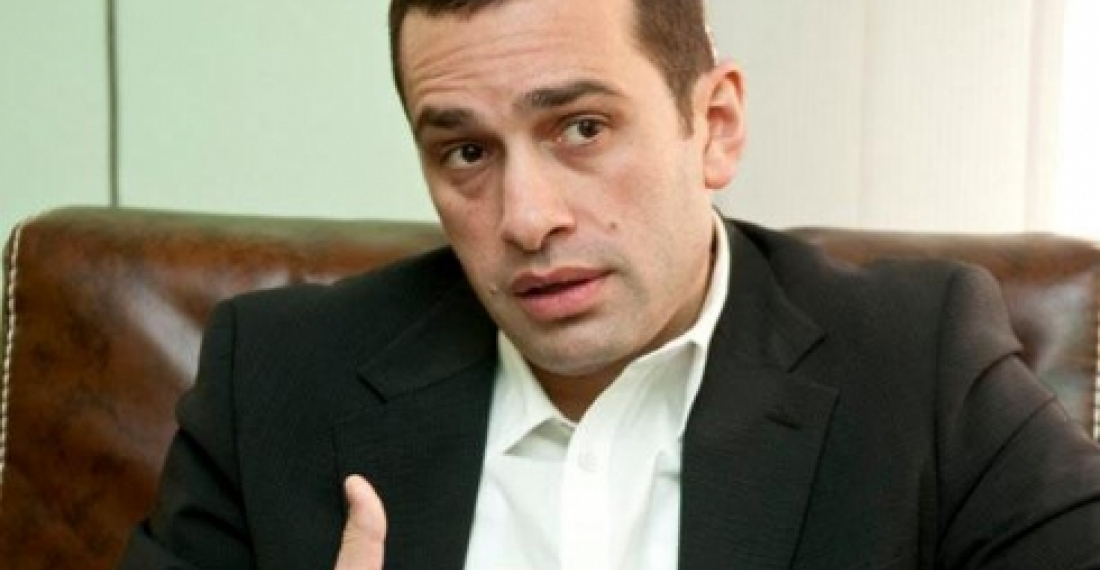
Ираклий Аласания говорит о необходимости переориентации внешней политики Грузии и о помощи своим соседям в урегулировании их разногласии.

Ираклий Аласания лидер партии "Наша Грузия-Свободные демократы", одна из основных партий в коалиционном блоке "Грузинская мечта", которая принимает участие в парламентских выборах намеченных в Грузии на 1 октября говорит о необходимости переориентации внешней политики Грузии для установления региональной стабильности в Кавказском регионе, и об оказании помощи соседям Грузии в  урегулировании своих разногласии и построении более интегрированного региона.

В обширном интервью для Caucasus Elections Watch, еженедельное издание с упором на избирательные процессы в регионе, Аласания подробно рассказал о социально-экономической политики своей партии.

Касательно внешней политики, Аласания сказал:

"Свободные демократы гарантируют прозападную ориентацию Грузии. Членство в НАТО и ЕС это судьба Грузии. Правительство Саакашвили не в состоянии достичь мирного соседства с Россией, что позволит Грузии защитить свои интересы и суверенитет, уменьшит угрозу войны, и увеличит торговлю и экономическое развитие. Установив стабильность в отношениях между Грузией с Россией, "Свободные демократы" смогут обеспечить дальнейшее укрепление связей Грузии с Западом, стать более интегрированными в позитивных тенденциях регионального экономического развития, и занять свое законное место в качестве региональной державы, играющей позитивную стратегическую роль для международной торговли и безопасности.

Внешняя политика Грузии должна быть переориентирована на создание региональной стабильности на Кавказе. Следует сосредоточиться на оказании помощи своим соседям в урегулировании разногласии и на создании более интегрированного региона."

Полное интервью с Ираклием Аласания доступно на сайте нашего партнера www.electionswatch.org
Related articles

Editor's choice
News
The British prime minister says Europe must "stand on its own two feet" when it comes to defence

The British prime minister says Europe must "stand on its own two feet" when it comes to defence

The UK will deploy a carrier strike group, led by the aircraft carrier HMS Prince of Wales to the Arctic and the High North as part of efforts to bolster security against Russian threats. British prime minister, Sir Keir Starmer announced the deployment in a speech on Saturday (14 February) at the Munich Security Conference. Europe must be ready to fight to protect its people, values, and way of life,  Sir Keir told the Conference. Starmer also called for deeper links and cooperation, including economic ties, between the UK and EU. The PM stressed the continent must "stand on its own two feet" when it comes to defence commitments. "We must build our hard power, because that is the currency of the age," he told the conference. (Click image to read the full story).

Popular

Editor's choice
Interview
Thursday Interview: Murad Muradov

Thursday Interview: Murad Muradov

Today, commonspace.eu starts a new regular weekly series. THURSDAY INTERVIEW, conducted by Lauri Nikulainen, will host  persons who are thinkers, opinion shapers, and implementors in their countries and spheres. We start the series with an interview with Murad Muradov, a leading person in Azerbaijan's think tank community. He is also the first co-chair of the Action Committee for a new Armenian-Azerbaijani Dialogue. Last September he made history by being the first Azerbaijani civil society activist to visit Armenia after the 44 day war, and the start of the peace process. Speaking about this visit Murad Muradov said: "My experience was largely positive. My negative expectations luckily didn’t play out. The discussions were respectful, the panel format bringing together experts from Armenia, Azerbaijan, and Turkey was particularly valuable during the NATO Rose-Roth Seminar in Yerevan, and media coverage, while varied in tone, remained largely constructive. Some media outlets though attempted to represent me as more of a government mouthpiece than an independent expert, which was totally misleading.  Overall, I see these initiatives as important steps in rebuilding trust and normalising professional engagement. The fact that soon a larger Azerbaijani civil society visits to Armenia followed, reinforces the sense that this process is moving in the right direction." (click the image to read the interview in full)