


"УМРЕМТЕ Ж ПОД МОСКВОЙ // КАК НАШИ БРАТЬЯ УМИРАЛИ!" Цитируя Лермонтова, Путин призвал ликующих сторонников к "новой битве за Россию".
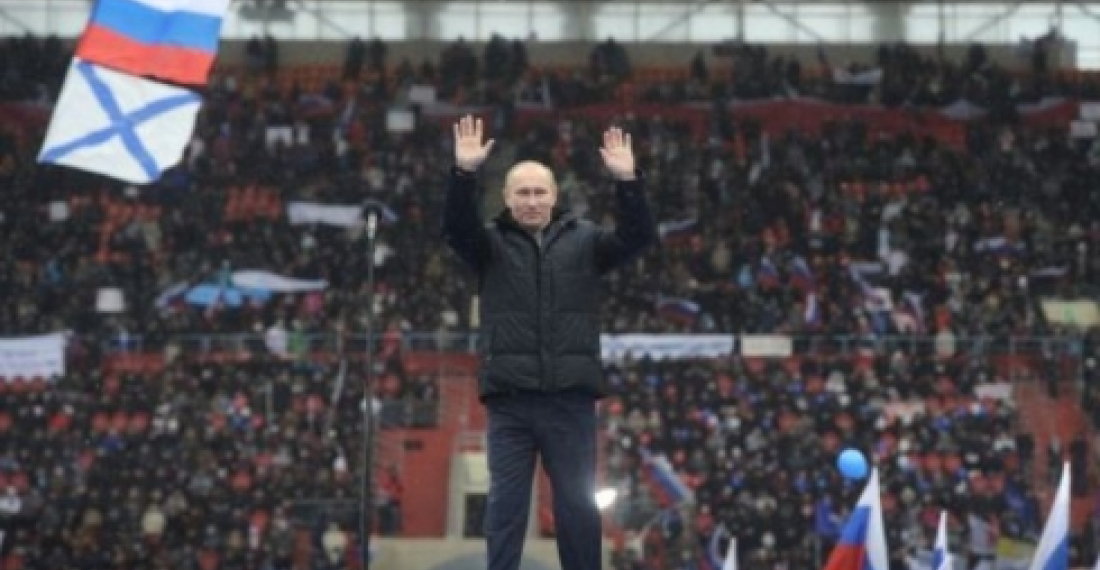
Всего за несколько дней до предстоящих президентских выборов премьер-министр России, Владимир Путин, вчера выступил перед десятками тысяч сторонниками в Лужниках, в Москве, и пообещал бороться за Россию в условиях неопределенных внешних врагов. "Мы защитники отечества!" Путин заявил примерно 130 000 своим сторонникам на митинге Лужниках. Это мероприятие было последним в серии публичных демонстраций, организованных, как сторонниками так и противниками Путина, и впервые после распада СССР Россия видит такие массовые общественно-политические события.

Повышая ставки, для привлечения националистических голосов, которые считаются решающим фактором на выборах 4 марта, Путин напомнил о Бородинском сражении, которое ознаменовало начало конца похода Наполеона на Россию в 1812 году . "Умремте ж под Москвой // Как наши братья умирали!", Путин процитировал стихотворение Михаила Лермонтова. Он добавил, что "Битва за Россию продолжается! Победа будет за нами!"

Политический редактор Commonspace.eu в своем комментарии сказал, что "использование националистической риторики стало одной из основных особенностей этой избирательной кампании в России и отражает текущие настроения в стране. Все кандидаты делают её основной частью их кампании. Путин первоначально был симпатичен националистам, но в последние четыре года, как он стал премьером, он потерял некоторую искринку, которая была у него, когда он был президентом. У Дмитрия Медведева никогда не было такой поддержки среди националистов, и это может быть одна из главных причин, что Путин, а не Медведев, является кандидатом на этих выборах, представляющим интересы Кремля".

Источник: commonspace.eu по материалам "Moscow Times" и "РИА НОВОСТИ"

Фото: Владимир Путин обращается к сторонникам в Лужниках, в Москве, 23 февраля 2012 года (любезно предоставлено РИА Новости)

Related articles

Editor's choice
News
The British prime minister says Europe must "stand on its own two feet" when it comes to defence

The British prime minister says Europe must "stand on its own two feet" when it comes to defence

The UK will deploy a carrier strike group, led by the aircraft carrier HMS Prince of Wales to the Arctic and the High North as part of efforts to bolster security against Russian threats. British prime minister, Sir Keir Starmer announced the deployment in a speech on Saturday (14 February) at the Munich Security Conference. Europe must be ready to fight to protect its people, values, and way of life,  Sir Keir told the Conference. Starmer also called for deeper links and cooperation, including economic ties, between the UK and EU. The PM stressed the continent must "stand on its own two feet" when it comes to defence commitments. "We must build our hard power, because that is the currency of the age," he told the conference. (Click image to read the full story).

Popular

Editor's choice
Interview
Thursday Interview: Murad Muradov

Thursday Interview: Murad Muradov

Today, commonspace.eu starts a new regular weekly series. THURSDAY INTERVIEW, conducted by Lauri Nikulainen, will host  persons who are thinkers, opinion shapers, and implementors in their countries and spheres. We start the series with an interview with Murad Muradov, a leading person in Azerbaijan's think tank community. He is also the first co-chair of the Action Committee for a new Armenian-Azerbaijani Dialogue. Last September he made history by being the first Azerbaijani civil society activist to visit Armenia after the 44 day war, and the start of the peace process. Speaking about this visit Murad Muradov said: "My experience was largely positive. My negative expectations luckily didn’t play out. The discussions were respectful, the panel format bringing together experts from Armenia, Azerbaijan, and Turkey was particularly valuable during the NATO Rose-Roth Seminar in Yerevan, and media coverage, while varied in tone, remained largely constructive. Some media outlets though attempted to represent me as more of a government mouthpiece than an independent expert, which was totally misleading.  Overall, I see these initiatives as important steps in rebuilding trust and normalising professional engagement. The fact that soon a larger Azerbaijani civil society visits to Armenia followed, reinforces the sense that this process is moving in the right direction." (click the image to read the interview in full)


