


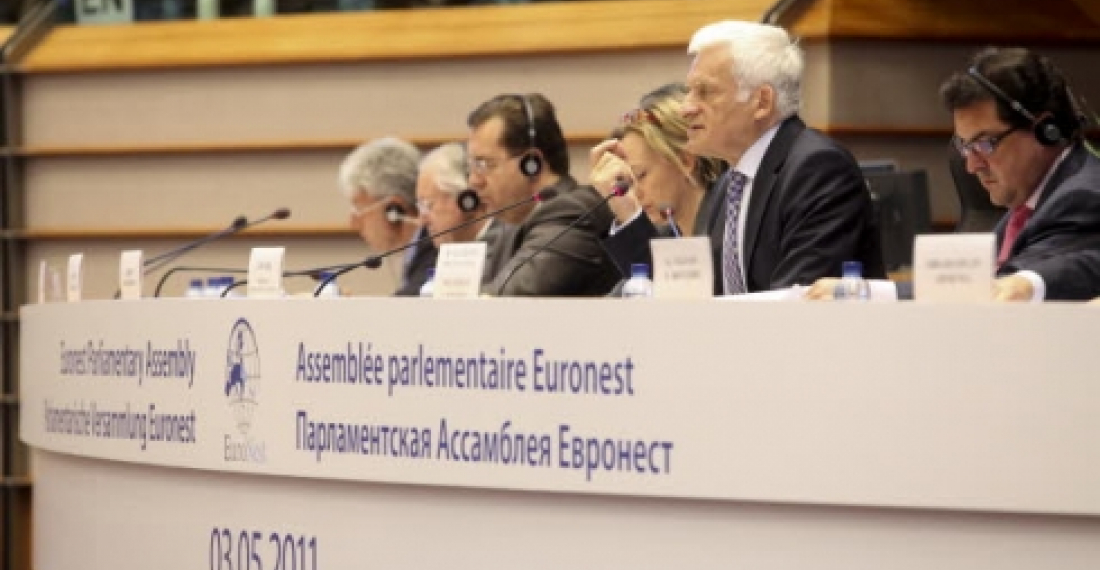
Парламентарии из Южного Кавказа объединяются для работы Парламентской Ассамблеи Евронест

Парламентарии из Южного Кавказа объединяются для работы Парламентской Ассамблеи Евронест
Брюссель, 3 мая 2011 года

Руководители парламентов Армении, Азербайджана и Грузии 3 мая присоединились к коллегам из Молдовы и Украины и членам Европейского Парламента для проведения Первой сессии Парламентской Ассамблеи (ПА) Евронест. Армянскую делегацию возглавил председатель Национального Собрания Овик Абраамян, азербайджанскую - первый вице-спикер Мелли Меджлиса Зияфат Аскеров, грузинскую - первый вице-спикер грузинского парламента Михаил Мачавариани.

Цель работы данного института заключается в создании парламентского формата Политики Восточного соседства ЕС. «Мы создали сегодня влиятельный инструмент», - сказал избранный со-председатель Евронест Кристиан Вигенин по завершении учредительного заседания.

Учредительное заседание ПА Евронест было открыто президентом Европарламента Ежи Бузеком, который отметил, что процесс демократических реформ в странах Восточного соседства необходимо укреплять. «Стабильными могут быть только демократичные страны; демократия - это единственный путь к стабильности», - сказал он. Бузек также добавил, что Парламентская Асамблея сыграла решающую роль в сближении народов региона. «Если мы стремимся к большему сотрудничеству и более глубокой интеграции, то мы должны начинать с парламентского сотрудничества, посколько оно представляет контакты между людьми», -  отметил со-председатель.

Закрывая заседание, со-председатель Кристиан Вигенин подчеркнул, что «эта ассамблея - один из двух равных компонентов, равных в правах и обязанностях», и выразил уверенность в том, что члены Евронест будут поддерживать оба компонента. В последующем заявлении для СМИ он подчеркнул, что «учреждение этого института - самый сильный сигнал, который мы могли послать» по поводу потенциала сотрудничества между Европарламентом и восточными партнерами. Со-председатель Борис Тарасюк (Украина) повторил выраженную точку зрения и обратился ко всем институтам Европейского Союза с призывом не поддаваться искушению отнимать внимание и средства, направляемые восточным соседям, в пользу южных.  

Принятые решения

Парламентская Ассамблея приняла и подписала учредительный документ, одобрила регламент, создала две рабочие группы (по Беларуси и Регламенту) и создала четыре комитета (один - по политическим вопросам, правам человека и демократии, второй - по экономическим вопросам, правовому сближению и соответствию с политикой ЕС, третий - по вопросам энергетической безопасности, четвертый - по вопросам культуры, образования и гражданского общества).

ПА выбрала двоих со-председателей, господ Вигенина и Тарасюка, а также восьми вице-президентов, которые войдут в состав Бюро: Ваан Ованнесян (Армения), Эльхан Сулейманов (Азербайджан), Давид Дарчиашвили (Грузия), Игорь Корман (Молдова), Трайан Унгуренау (Румыния), Ричард Чарнецкий (Польша), Гербен-Ян Гербранди (Нидерланды) и  Яцек Сарыуш-Вольски (Польша).

В состав Парламентской Ассамблеи Евронест входят 60 членов Европарламента и по 10 депутатов от  каждой из пяти стран из Восточного соседства. С Беларусью сложилась особая ситуация: несмотря на то, что она входит в Восточное соседство, активно обсуждался вопрос  ее членства в Евронест без признания режима Александра Лукашенко. В итоге учредительное собрание было проведено без участия представителей Беларуси.

Отчет подготовлен редакторским составом commonspace.eu с использованием материалов пресс-службы Европарламента.  

Related articles

Editor's choice
News
Borrell tells the European Parliament that the situation in Afghanistan was critical, but the EU will remain engaged

Borrell tells the European Parliament that the situation in Afghanistan was critical, but the EU will remain engaged

Borrell underlined that the European Union will make every effort to support the peace process and to remain a committed partner to the Afghan people. "Of course, we will have to take into account the evolving situation, but disengagement is not an option.  We are clear on that: there is no alternative to a negotiated political settlement, through inclusive peace talks.
Editor's choice
News
Germany accuses Russia of cyberattacks and disinformation campaign

Germany accuses Russia of cyberattacks and disinformation campaign

The German government holds Russia responsible for a cyberattack on German air traffic control, and for targeted disinformation campaigns before the last federal election. According to the German Foreign Office in Berlin, the incidents could be clearly attributed to the Russian military intelligence service, the GRU. In response, the Russian ambassador to Berlin was summoned to the Foreign Ministry. "We have been observing a massive increase in threatening hybrid activities by Russia for some time now," a spokesperson for the Foreign Ministry stated. These range from disinformation campaigns and espionage to cyberattacks and sabotage attempts. The aim is to divide society, sow distrust, and undermine confidence in democratic institutions. The spokesperson added that with these actions, Russia is "very concretely threatening our security, not only through its war of aggression against Ukraine, but also here in Germany."  The Foreign Ministry spokesperson explained that the cyberattack on air traffic control in August 2024 was clearly attributed to the hacker collective "APT28," known as "Fancy Bear," and to the responsibility of the Russian military intelligence service, the GRU. Furthermore, it could now be "conclusively stated" that Russia had attempted "to influence and destabilize both the last Federal election and the ongoing internal affairs of the Federal Republic of Germany." There was "absolutely irrefutable evidence" for this". The so-called "Storm 1516" campaign, which has been running since 2024, is allegedly backed by "reliable information" that the Moscow-based think tank "Center for Geopolitical Expertise" is behind it. The Center is also said to be supported by Russian military intelligence. Its primary aim is to influence democratic elections in the West. (Click the image to read more).

Popular

Editor's choice
News
Germany accuses Russia of cyberattacks and disinformation campaign

Germany accuses Russia of cyberattacks and disinformation campaign

The German government holds Russia responsible for a cyberattack on German air traffic control, and for targeted disinformation campaigns before the last federal election. According to the German Foreign Office in Berlin, the incidents could be clearly attributed to the Russian military intelligence service, the GRU. In response, the Russian ambassador to Berlin was summoned to the Foreign Ministry. "We have been observing a massive increase in threatening hybrid activities by Russia for some time now," a spokesperson for the Foreign Ministry stated. These range from disinformation campaigns and espionage to cyberattacks and sabotage attempts. The aim is to divide society, sow distrust, and undermine confidence in democratic institutions. The spokesperson added that with these actions, Russia is "very concretely threatening our security, not only through its war of aggression against Ukraine, but also here in Germany."  The Foreign Ministry spokesperson explained that the cyberattack on air traffic control in August 2024 was clearly attributed to the hacker collective "APT28," known as "Fancy Bear," and to the responsibility of the Russian military intelligence service, the GRU. Furthermore, it could now be "conclusively stated" that Russia had attempted "to influence and destabilize both the last Federal election and the ongoing internal affairs of the Federal Republic of Germany." There was "absolutely irrefutable evidence" for this". The so-called "Storm 1516" campaign, which has been running since 2024, is allegedly backed by "reliable information" that the Moscow-based think tank "Center for Geopolitical Expertise" is behind it. The Center is also said to be supported by Russian military intelligence. Its primary aim is to influence democratic elections in the West. (Click the image to read more).


