


Не совсем ослабление напряжения, но это начало.

Этот комментарий подготовлен редакцией commonspace.eu

Российские чиновники в восторге от встречи Керри и Путина, которая напомнила им времена дипломатии холодной войны, когда Россия обладала статусом сверхдержавы.

Среди высокопоставленных российских чиновников и дипломатов живет постоянная ностальгия к одному моменту времен холодной войны. Это время, когда США и СССР являлись двумя бесспорными сверхдержавами в этом мире, а лидеры этих двух стран могли встретиться и решить какой-угодно международный вопрос, при этом держа палец на ядерной кнопке в голове друг другу. "Ах, это были дни, когда русские и американцы могли говорить друг с другом на равных", можно услышать из уст некоторых таких чиновников. По мнению некоторых российских пропагандистов то, что произошло в 1991 году было одним большим недоразумением. Вскоре мир одумается, и российское влияние будет снова признано.

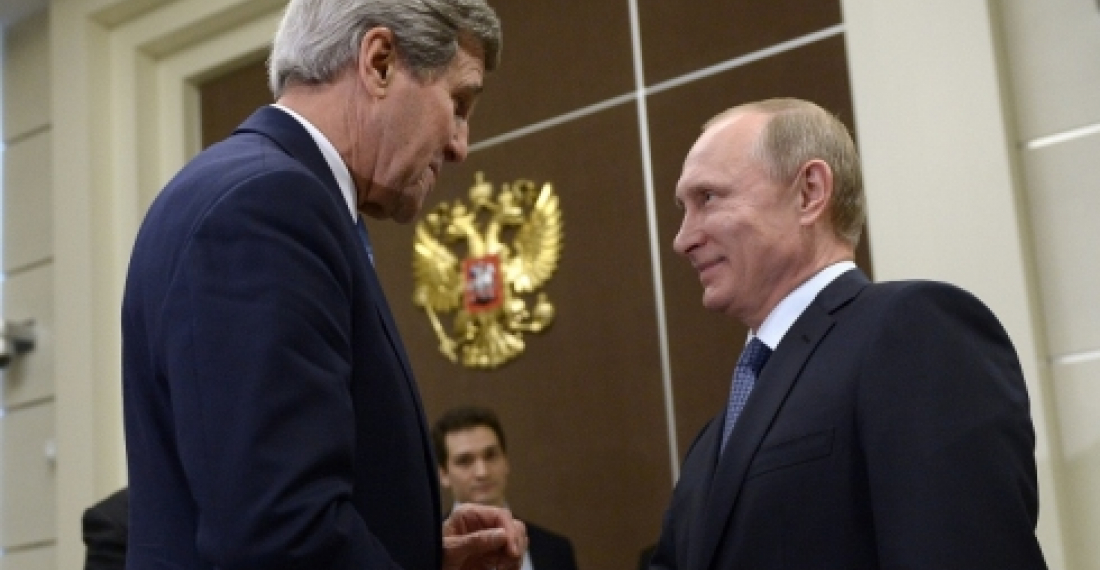
Такое мышление отчасти объясняет российское волнение и ликование касательно вчерашнего визита в Сочи госсекретаря США Джона Керри и его встречи с президентом Путиным - впервые после начала кризиса в Украине.

Официально Кремль не впадал в эйфорию, но едва ли мог скрыть свою радость. Российское агенство ИТАР-ТАСС сообщило, что по словам Ушакова, в Кремле расценивают контакт Путина с Керри как положительный, хотя это и не прорыв, появились первые признаки понимания того, что две великие страны должны вернуться к сотрудничеству. "Наш президент в беседе исходил из нашей принципиальной заинтересованности возвращения двусторонних отношений в нормальное русло, - отметил Ушаков. - Как было подчеркнуто, это отвечает интересам России, надеемся интересам США, и крайне важно с точки зрения обеспечения международной стабильности, безопасности", добавил он. "Исходя из этого мы расцениваем состоявшийся контакт как весьма полезный, нужный и положительный", - сказал Ушаков.

Ушаков заявил, что переговоры были продолжительными, открытыми, вполне доброжелательными и носили деловой характер. Он сообщил, что Керри передал устный привет Путину от президента США. Он процитировал Керри, который сказал, что президент Обама был очень заинтересован в том, чтобы Путин принял госсекретаря. Никакого письменного послания он не передавал, уточнил помощник президента. Ушаков также сообщил, что вопрос о проведении двусторонней встречи президентов РФ и США не обсуждался, хотя для этого есть возможности.

Ранее МИД России уже заявлял о российской позиции более четко, заявив, что Россия готова к конструктивному взаимодействию с Соединенными Штатами, но на равноправной основе.

Для уважения и равенства в отношениях между любыми двумя государствами конечно же много чего должно быть сказано. То, что Россия должна требовать этого от США не удивительно, и не без резонно. Но в российской риторике присутствует подтекст, а именно то, что Соединенные Штаты и Россия должны вернуться в те времена, когда они могли решать судьбы наций без других стран, у которых было что сказать по этому поводу. Страна, которая оккупировала и аннексировала часть территории своего соседа так, как это сделала Россия в Крыму в прошлом году, вполне может гнаться за таким способом ведения международных отношений. Соединенные Штаты не должны поддаваться этим искушениям. Это не означает, что американской дипломатии не следует разговаривать с российской стороной на самых высоких уровнях. Диалог является важной частью процесса по разрешению международных кризисов. Европейские лидеры также продолжали разговаривать с русскими после начала кризиса в Украине, и это не только понятно, но и желательно. Но за их спинами не должно быть заключено ни одной договоренности о судьбах маленьких стран.

Есть еще много вопросов, в том числе на европейском континенте, для решения которых требуется добрая воля России и Соединенных Штатах. Украина является одним из примеров, другой такой пример нагорно-карабахский и другие конфликты на постсоветском пространстве. Существуют рамки, в которых эти вопросы должны обсуждаться и по ним должны приниматься меры и действия для их решения - это Организация по безопасности и сотрудничеству в Европе (ОБСЕ). Остается надеяться, что в своем возобновленном диалоге Россия и США найдут время для того, чтобы обсудить, как снова сделать существующие рамки ОБСЕ важными и как заставить уважать принципы и нормы, которые лежат в основе этой организации.


Этот комментарий был подготовлен редакцией commonspace.eu.

Фото: Президент Путин приветствует госсекретаря США Джона Керри в Сочи, вторник, 12 Мая 2015 (фото любезно предоставлено ИТАР-ТАСС).

 

Related articles

Editor's choice
News
COP 17 in Armenia

COP 17 in Armenia

Armenia is currently hosting the COP17 conference of the Convention on Biological Diversity, which began earlier this week (19 October) and will run until 30 October, bringing around 15,000 participants from 196 different countries to Yerevan. At a leaders' summit held as part of COP17, Prime Minister Nikol Pashinyan expressed realistic ambitions: “We are halfway towards achieving these goals (Kunming-Montreal Global Biodiversity Framework), and we must honestly acknowledge that we are not yet moving in the right direction. Our task now is not to make new promises, but to fulfil the commitments we have already made.” Pashinyan pointed towards Armenia's own records, noting that the whitefish stock in Lake Sevan has increased substantially in the last ten years. Iranian President Masoud Pezeshkian and Georgian Prime Minister Irakli Kobakhidze also addressed the summit, with Turkiye sending its agriculture minister. However, there were no reports of Azerbaijani representatives attending. The conference has given Yerevan a valuable international platform, yet the absence of Azerbaijan is likely to be read as a sign that the peace process in the South Caucasus has not yet been translated into wider regional cooperation. The leaders' summit was opened by Armenian Prime Minister Nikol Pashinyan, who stressed that hosting the conference was a great honour for Armenia. He expressed hope that it would 'be productive and contribute to protecting our planet's biodiversity'. 'We – the citizens of Armenia, the government, state authorities and local governments – owe a debt to our nature,' the prime minister said. He noted that the international community had already developed the concept of 'living in harmony with nature’ and adopted the Kunming-Montreal Global Biodiversity Framework in 2022, setting out goals and specific targets to be achieved by 2030. 'We are halfway towards achieving these goals, and we must honestly acknowledge that we are not yet moving in the right direction. Our task now is not to make new promises, but to fulfil the commitments we have already made,' Nikol Pashinyan said. The COP17 conference is expected to adopt a declaration at leaders' level. More than 30 documents are scheduled for discussion. If approved, the commitments set out in them will become legally binding on countries that are parties to the Convention on Biological Diversity.”
Editor's choice
News
Landmines present to the European Union both a contradiction and a dilemma

Landmines present to the European Union both a contradiction and a dilemma

Finland’s decision to buy one million landmines creates a serious contradiction in the policy of the European Union, and is symbolic of a bigger dilemma facing European countries as they get used to the need to acquire “hard” power to face an increasing threat from Russia. Finland is seeking to acquire one million anti-personnel mines at a cost of 100 million euros. Finland, together with Poland, Latvia, Lithuania and Estonia last year abandoned the Ottawa agreement, the international framework that bans the use of anti-personnel mines, which the EU had been instrumental in establishing and supporting. All five countries cite the threat from Moscow as the reason. Colonel Riku Mikkonen of the Army Command told Finland’s national news agency STT that officials are now gathering information from suppliers regarding the deal, the AFP news agency reports. Helsinki would like domestic manufacturers to supply the mines, with contracts signed by the end of 2027 and production up and running by 2028. “It would be useful in many ways if Finnish companies produced the anti-personnel mines in Finland,” Mikkonen said. About half a dozen Finnish firms qualify, he told STT. “However, at this stage, buying the mines from abroad is not totally ruled out,” he added. LANDMINES PROVIDE THE EU WITH BOTH A CONTRADICTION, AND A DILEMMA Eliminating landmine contamination worldwide is one of the EU’s main soft power postures, and it basks in its record as the biggest funder of anti-landmine action in the world. But the fact that 5 of its 27 member states  have now left the Ottawa Treaty dents the EU moral high ground. It is a contradiction that is too big and important to be ignored. It also presents the European Union with a deeper dilemma. The threat from Russia is changing what the EU has stood for decades, namely a force for good able to mobilise its considerable soft power for the greater good of humanity. How the Union will implement this change will define its future. In the meantime landmines have not become any less lethal, benign, or unimportant. They remain in many parts of the world a major threat to life, an impediment to prosperity, and a potential trigger to further conflict. The 22 EU members states that still adhere to the Ottawa treaty must regroup, and be more assertive in their quest against anti-personnel land mines. All the reasons why they supported the Ottawa treaty in the first place still exist. The message must be clear: NO TO LANDMINES!

Popular

Editor's choice
Interview
Thursday Interview: Murad Muradov

Thursday Interview: Murad Muradov

Today, commonspace.eu starts a new regular weekly series. THURSDAY INTERVIEW, conducted by Lauri Nikulainen, will host  persons who are thinkers, opinion shapers, and implementors in their countries and spheres. We start the series with an interview with Murad Muradov, a leading person in Azerbaijan's think tank community. He is also the first co-chair of the Action Committee for a new Armenian-Azerbaijani Dialogue. Last September he made history by being the first Azerbaijani civil society activist to visit Armenia after the 44 day war, and the start of the peace process. Speaking about this visit Murad Muradov said: "My experience was largely positive. My negative expectations luckily didn’t play out. The discussions were respectful, the panel format bringing together experts from Armenia, Azerbaijan, and Turkey was particularly valuable during the NATO Rose-Roth Seminar in Yerevan, and media coverage, while varied in tone, remained largely constructive. Some media outlets though attempted to represent me as more of a government mouthpiece than an independent expert, which was totally misleading.  Overall, I see these initiatives as important steps in rebuilding trust and normalising professional engagement. The fact that soon a larger Azerbaijani civil society visits to Armenia followed, reinforces the sense that this process is moving in the right direction." (click the image to read the interview in full)

