


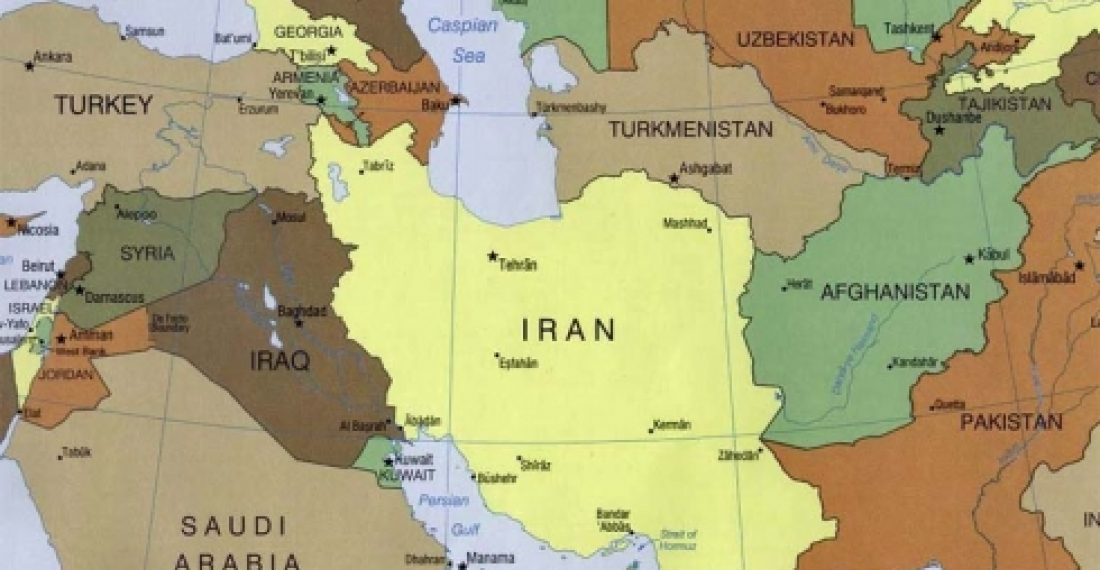
Саммит в Астрахани имеет большое значение для прибрежных государств.

Четвертый Каспийский саммит откроется сегодня в Астрахани, где соберутся руководители всех пяти прикаспийских государств - России, Ирана, Казахстана, Азербайджана и Туркменистана.

Усилия прикаспийских государств по разработке конвенции, которая будет регулировать использование и доступ к каспийским водам продолжаются уже более 15 лет. За этот период были согласованы ряд двусторонних соглашений о делимитаций Каспийского моря, но соглашения о более обширной конвенции еще не удалось достичь и никакого крупного прорыва от этой встречи не ожидают.

Российская сторона была оптимистична в преддверии саммита. По словам помощника  президента России Юрия Ушакова, будет принято политическое заявление пяти глав государств, которое "станет основой будущей конвенции [по правовому статусу Каспия]."

"Процесс подготовки Конвенции о правовом статусе Каспия близок к прорыву", заявил Ушаков. "И если в Астрахани все сложится успешно, то это откроет путь к подписанию [конвенции] на очередном саммите, который пройдет в Казахстане."

Официальный Кремль заявил, что в ходе подготовки заявления были достигнуты определенные результаты, в частности, о делимитации моря. По его словам, будут установлены две зоны - суверенная зона и зона с эксклюзивным правом рыбной ловли; Размер этих зон будет 25 морских миль.

Однако, наблюдатели считают, что различия между позициями пяти государств остаются существенными. И Россия, и Иран заинтересованы в том, чтобы исключить другие страны помимо пяти прибрежных государств из региона. Это может помешать другим трем странам в обеспечении технологии для разработки своих ресурсов в регионе.

Повестка дня саммита также включает в себя обсуждение вопросов безопасности, экономики, транспорта и экологии, а также международные вопросы. Как ожидается, будут подписаны три межправительственных соглашения - о сотрудничестве в преодолении чрезвычайных ситуаций, по вопросам гидрометеорологии и о сохранении водных биоресурсов Каспийского моря.

Источник: commonspace.eu по материалам Итар-Тасс 

Related articles

Editor's choice
News
Key European countries back Denmark in the face of Trump's continuing insistence on taking over Greenland

Key European countries back Denmark in the face of Trump's continuing insistence on taking over Greenland

 Six major European countries have declared their support to Denmark following renewed insistence by the US that it must have control over Greenland. "Greenland belongs to its people, and only Denmark and Greenland can decide on matters concerning their relations," said the leaders of the UK, France, Germany, Italy, Poland, and Spain, in a joint statement, issued on Tuesday (6 January), together with Denmark. On Sunday, Donald Trump said the US "needed" Greenland - a semi-autonomous region of fellow Nato member Denmark - for security reasons. He has refused to rule out the use of force to take control of the territory, and Danish Prime Minister Mette Frederiksen warned on Monday that an attack by the US would spell the end of Nato. The issue of Greenland's future resurfaced in the wake of the US military intervention in Venezuela, during which elite troops went in to seize the country's President Nicolás Maduro and take him to face drugs and weapons charges in New York. Following the raid, Trump said the US would "run" Venezuela for an unspecified period of time. He also said the US was returning to an 1823 policy of US supremacy in its sphere of influence in the Western hemisphere - and he warned a number of countries the US could turn its attention to them. The US military raid in Venezuela has reignited fears that the US may consider using force to secure control of Greenland. A day after the raid, Katie Miller - the wife of one of Trump's senior aides - posted on social media a map of Greenland in the colours of the American flag, alongside the word "SOON". On Monday, her husband Stephen Miller said it was "the formal position of the US government that Greenland should be part of the US". In an interview with CNN, he also said the US "is the power of Nato. For the US to secure the Arctic region, to protect and defend Nato and Nato interests, obviously Greenland should be part of the US." Asked repeatedly whether the US would rule out using force to annex it, Miller responded: "Nobody's going to fight the US over the future of Greenland." Stressing they were as keen as the US in Arctic security, the seven European signatories of Tuesday's joint statement said this must be achieved by Nato allies, including the US "collectively" - whilst "upholding the principles of the UN Charter, including sovereignty, territorial integrity and the inviolability of borders". Greenland's Prime Minister Jens-Frederik Nielsen welcomed the statement and called for "respectful dialogue". "The dialogue must take place with respect for the fact that Greenland's status is rooted in international law and the principle of territorial integrity," Nielsen said. Trump has claimed that making Greenland part of the US would serve American security interests due to its strategic location and its abundance of minerals critical to high-tech sectors. Greenland, which has a population of 57,000 people, has had extensive self-government since 1979, though defence and foreign policy remain in Danish hands. While most Greenlanders favour eventual independence from Denmark, opinion polls show overwhelming opposition to becoming part of the US.

Popular


