


Российский политолог: «Градус словесного противостояния постоянно повышается, что очень опасно»

Интервью 1news.az с политическим обозревателем РИА «Новости», ведущим RIAN TV, российским политологом Дмитрием Бабичем.

- В настоящий момент активных переговоров по карабахскому урегулированию мы не наблюдаем. Как вы считаете, не затишье ли это перед бурей?

- Надеюсь, что это не затишье перед бурей. Буря может быть только одна – война. И надеюсь, этого не произойдет. Азербайджан сейчас развивается очень быстро, и подвергать это благополучие каким-либо рискам, связанным с войной, было бы нехорошо. При этом стоит отметить, что градус словесного противостояния постоянно повышается, что очень опасно. Правда, слава Богу, это пока не переходит в вооруженное столкновение. Ведь в таком случае пострадают люди.

Что касается МГ ОБСЕ, то я не вижу возможности серьезного посредничества именно потому, что ситуация накалена. Посредники могут оказаться полезными, когда стороны готовы спокойно разговаривать. А насколько я понимаю, ситуация несколько иная.

И, по-моему, в мировой истории последних лет не было ни одной ситуации, чтобы посредники кого-то вынудили сесть за стол переговоров, и главное, чтобы из этого вышел какой-то толк.

Для начала надо, чтобы градус переговоров немного понизился.

- Может ли в ближайшее время измениться курс внешней политики РФ?

- Думаю, что он изменится и изменится положительно. Владимир Путин имеет все шансы на победу на предстоящих президентских выборах. Он - серьезный деловой политик. Ему не нужны пиар-эффекты. Да, он понимает значение пиара, но он все время нацелен на результат. Надеюсь, что в ближайшее время, после очередных президентских выборов в РФ, внешнеполитический курс страны изменится и будет нацелен на результаты. Это касается и Нагорного Карабаха.

При этом я ранее говорил, и сейчас хочу повторить, что ключ к решению карабахского конфликта лежит в Ереване и Баку. Он не в Москве, Вашингтоне и Брюсселе. Посредники могут помочь развить позитивные тенденции, но они не могут заставить стороны конфликта пойти друг другу навстречу. Да и стороны конфликта не будут подчиняться какому-то диктату со стороны.

- А президентские выборы в странах-посредниках в 2012 году оттягивают решение нагорно-карабахского конфликта или приближают?

- Если в мире в целом будет нарастать напряженность, а это может произойти, если не изменится нынешняя ситуация в ЕС, если останется у власти Саркози – дестабилизирующий фактор, если уйдет из власти Обама, который кажется более разумным человеком, то есть если в мире будет дестабилизация, опасность карабахского конфликта будет нарастать и ни к чему хорошему это не приведет. Хотелось бы видеть у власти в Москве, Париже, Вашингтоне прагматиков. Не циников, которых интересуют только деньги и власть, а людей, способных реально понимать, как можно помочь людям в нынешней ситуации. То есть не говорить о правах секс-меньшинств в странах, где их никогда не было и не будет, а вот реально помочь тем людям, которые серьезно нуждаются в их помощи. Например, азербайджанским беженцам из оккупированных районов Карабаха.

- Отношения Израиля и Турции сейчас оставляют желать лучшего. В свою очередь в Ереване надеются, что Тель-Авив таким образом изменит свою позицию по так называемому «геноциду» армян и карабахскому конфликту. Как вы считаете, подобное развитие событий возможно?

- Такое возможно, но не стоит забывать, что самое главное для Израиля – его собственная безопасность. А потому, если быть честным, Израиль равнодушен к иным конфликтам. У него слишком много дел со своей собственной безопасностью. Да, может, СМИ Израиля сейчас больше критикуют Турцию. И что дальше? Тель-Авив может гарантировать помощь и безопасность Армении? Нет, конечно. Израиль – маленькая страна, которая, повторю, прежде всего, думает о своей безопасности и все.
 

Related articles

Editor's choice
News
COP 17 in Armenia

COP 17 in Armenia

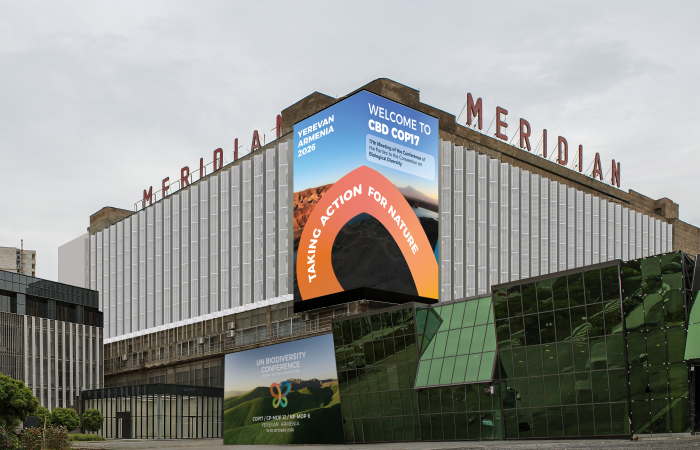
Armenia is currently hosting the COP17 conference of the Convention on Biological Diversity, which began earlier this week (19 October) and will run until 30 October, bringing around 15,000 participants from 196 different countries to Yerevan. At a leaders' summit held as part of COP17, Prime Minister Nikol Pashinyan expressed realistic ambitions: “We are halfway towards achieving these goals (Kunming-Montreal Global Biodiversity Framework), and we must honestly acknowledge that we are not yet moving in the right direction. Our task now is not to make new promises, but to fulfil the commitments we have already made.” Pashinyan pointed towards Armenia's own records, noting that the whitefish stock in Lake Sevan has increased substantially in the last ten years. Iranian President Masoud Pezeshkian and Georgian Prime Minister Irakli Kobakhidze also addressed the summit, with Turkiye sending its agriculture minister. However, there were no reports of Azerbaijani representatives attending. The conference has given Yerevan a valuable international platform, yet the absence of Azerbaijan is likely to be read as a sign that the peace process in the South Caucasus has not yet been translated into wider regional cooperation. The leaders' summit was opened by Armenian Prime Minister Nikol Pashinyan, who stressed that hosting the conference was a great honour for Armenia. He expressed hope that it would 'be productive and contribute to protecting our planet's biodiversity'. 'We – the citizens of Armenia, the government, state authorities and local governments – owe a debt to our nature,' the prime minister said. He noted that the international community had already developed the concept of 'living in harmony with nature’ and adopted the Kunming-Montreal Global Biodiversity Framework in 2022, setting out goals and specific targets to be achieved by 2030. 'We are halfway towards achieving these goals, and we must honestly acknowledge that we are not yet moving in the right direction. Our task now is not to make new promises, but to fulfil the commitments we have already made,' Nikol Pashinyan said. The COP17 conference is expected to adopt a declaration at leaders' level. More than 30 documents are scheduled for discussion. If approved, the commitments set out in them will become legally binding on countries that are parties to the Convention on Biological Diversity.”
Editor's choice
News
Landmines present to the European Union both a contradiction and a dilemma

Landmines present to the European Union both a contradiction and a dilemma

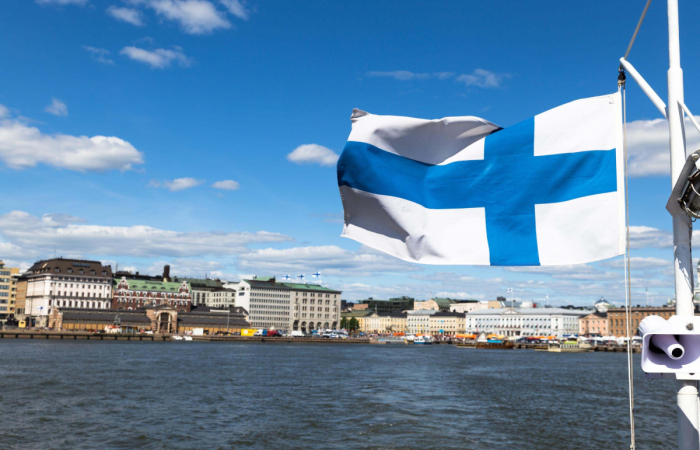
Finland’s decision to buy one million landmines creates a serious contradiction in the policy of the European Union, and is symbolic of a bigger dilemma facing European countries as they get used to the need to acquire “hard” power to face an increasing threat from Russia. Finland is seeking to acquire one million anti-personnel mines at a cost of 100 million euros. Finland, together with Poland, Latvia, Lithuania and Estonia last year abandoned the Ottawa agreement, the international framework that bans the use of anti-personnel mines, which the EU had been instrumental in establishing and supporting. All five countries cite the threat from Moscow as the reason. Colonel Riku Mikkonen of the Army Command told Finland’s national news agency STT that officials are now gathering information from suppliers regarding the deal, the AFP news agency reports. Helsinki would like domestic manufacturers to supply the mines, with contracts signed by the end of 2027 and production up and running by 2028. “It would be useful in many ways if Finnish companies produced the anti-personnel mines in Finland,” Mikkonen said. About half a dozen Finnish firms qualify, he told STT. “However, at this stage, buying the mines from abroad is not totally ruled out,” he added. LANDMINES PROVIDE THE EU WITH BOTH A CONTRADICTION, AND A DILEMMA Eliminating landmine contamination worldwide is one of the EU’s main soft power postures, and it basks in its record as the biggest funder of anti-landmine action in the world. But the fact that 5 of its 27 member states  have now left the Ottawa Treaty dents the EU moral high ground. It is a contradiction that is too big and important to be ignored. It also presents the European Union with a deeper dilemma. The threat from Russia is changing what the EU has stood for decades, namely a force for good able to mobilise its considerable soft power for the greater good of humanity. How the Union will implement this change will define its future. In the meantime landmines have not become any less lethal, benign, or unimportant. They remain in many parts of the world a major threat to life, an impediment to prosperity, and a potential trigger to further conflict. The 22 EU members states that still adhere to the Ottawa treaty must regroup, and be more assertive in their quest against anti-personnel land mines. All the reasons why they supported the Ottawa treaty in the first place still exist. The message must be clear: NO TO LANDMINES!

Popular

Editor's choice
Interview
Thursday Interview: Murad Muradov

Thursday Interview: Murad Muradov

Today, commonspace.eu starts a new regular weekly series. THURSDAY INTERVIEW, conducted by Lauri Nikulainen, will host  persons who are thinkers, opinion shapers, and implementors in their countries and spheres. We start the series with an interview with Murad Muradov, a leading person in Azerbaijan's think tank community. He is also the first co-chair of the Action Committee for a new Armenian-Azerbaijani Dialogue. Last September he made history by being the first Azerbaijani civil society activist to visit Armenia after the 44 day war, and the start of the peace process. Speaking about this visit Murad Muradov said: "My experience was largely positive. My negative expectations luckily didn’t play out. The discussions were respectful, the panel format bringing together experts from Armenia, Azerbaijan, and Turkey was particularly valuable during the NATO Rose-Roth Seminar in Yerevan, and media coverage, while varied in tone, remained largely constructive. Some media outlets though attempted to represent me as more of a government mouthpiece than an independent expert, which was totally misleading.  Overall, I see these initiatives as important steps in rebuilding trust and normalising professional engagement. The fact that soon a larger Azerbaijani civil society visits to Armenia followed, reinforces the sense that this process is moving in the right direction." (click the image to read the interview in full)

