Оптимизм в новогодних поздравлениях лидеров Южного Кавказа.

Лидеры Армении, Азербайджана и Грузии в своих телевизионных выступлениях были оптимистичны, позитивно оценив прошедший год и с уверенностью смотря на 2014.

В своем телевизионном послании президент Азербайджана Ильхам Алиев сказал: "2013 год был очень успешным для нашей страны. Ее развитие по всем направлениям радует каждого гражданина Азербайджана. Упрочились наши международные позиции."

Президент высоко оценил успех Азербайджана в реализации своей внешней политики и в укреплении Вооруженных Сил.

Относительно Нагорного Карабаха президент сказал:
"Армяно-азербайджанский, нагорно-карабахский конфликт должен решиться в рамках территориальной целостности нашей страны. Другого варианта быть не может. Азербайджан никогда не позволит, чтобы на наших землях было создано второе искусственное армянское государство. Уверен, что территориальная целостность нашей страны будет восстановлена, и на всех оккупированных землях будут жить граждане Азербайджана. А в будущем азербайджанцы вернуться на все свои исторические земли. Я уверен, и нисколько не сомневаюсь в этом. Для достижения этого мы должны стать еще сильнее, обладать еще более мощной армией и обеспечить экономическое развитие."
Касаясь экономических вопросов, президент Алиев сказал: 
"За последние десять лет наша экономика выросла в 3,4 раза, что является самым высоким показателем в мировом масштабе. Открыто более одного миллиона 200 тысяч новых рабочих мест. Большие успехи достигнуты по сокращению бедности. В настоящее время уровень бедности чуть превышает пять процентов. Борьба с безработицей дала прекрасные результаты. Уровень безработицы в Азербайджане ниже пяти процентов."
Глава государства упомянул крупные энергетические проекты, которые были начаты в прошлом году, а именно, TAP, TANAP и Шахдениз 2, назвав их "историческими проектами 21-го века."

Алиев упомянул президентские выборы, состоявшиеся в октябре и поблагодарил азербайджанский народ за их поддержку. Он добавил, что "политические реформы будут продолжены в нашей стране. В Азербайджане предпринимаются очень позитивные шаги, направленные на строительство демократического общества, обеспечивается верховенство закона, есть все свободы. Азербайджан превращается в одну из ведущих стран также по проведению политических реформ."

Традиционное новогоднее обращение президента Армении Сержа Саргсяна было немного короче.

Президент Саргсян сказал своим соотечественникам:
"Уходящий год был насыщен многочисленными инициативами и событиями, но самым важным, думаю, была глубоко осознанная работа, направленная на экономический подъем и повышение уровня безопасности Армении. Мы еще более углубили экономическое, политическое и военное сотрудничество Армении с Российской Федерацией, а в наступающем году, уверен, станем полноправным членом Таможенного союза. Армения создает новую реальность, в которой будет более защищенной и более конкурентоспособной.

Мы продолжили и будем последовательно продолжать наш путь реформ. Здесь наше сотрудничество с Европой и Соединенными Штатами Америки не только не ослабнет, но и углубится. Наша цель неизменна, и мы хотим, в лице Армении, увидеть современное государство с прочными общественными отношениями и состоявшейся правовой системой.

Признаемся, что прошедший год был также годом испытаний. Несмотря на все трудности, нам удалось сделать реальностью обещанную политику периодического повышения зарплат и пенсий. Мы нашли основополагающие решения, которые будут действовать не только в наступающем году."
Саргсян не упомянул Нагорный Карабах в своем обращении.

Оптимистичным были и новогодние послания президента и премьер-министра Грузии.
И президент Георгий Маргвелашвили и премьер-министр Ираклий Гарибашвили назвали новой эрой тот период, который начался в Грузии в 2013 году, и подчеркнули важность Соглашения об ассоциации с Европейским Союзом, которое было парафировано в ноябре, и должно быть подписано и документ должен вступить в силу в 2014 году. Премьер-министр Гарибашвили в своем выступлении сослался на восстановление справедливости в стране и заявил, что этот процесс начался в 2013 году и он продолжится. Со своей стороны Президент Маргвелашвили призвал к национальному единству и направил приветствие "абхазским и осетинским соотечественникам."

Источник: commonspace.eu по материалам официальных сайтов и СМИ.

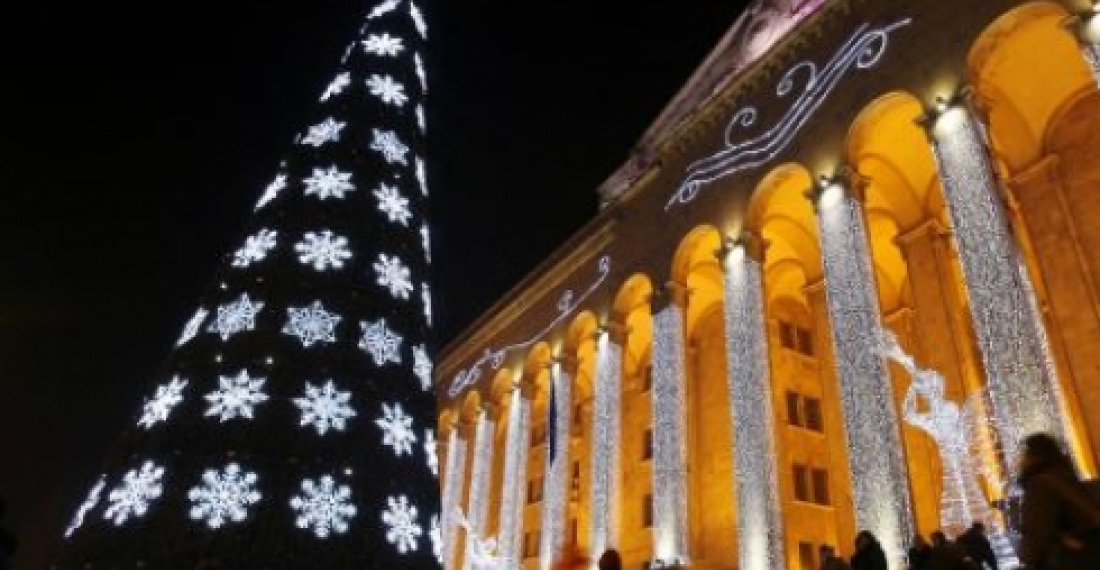
фото: Новогодние украшения на фасадн парламента Грузии в Тбилиси.

Related articles

Editor's choice
News
COP 17 in Armenia

COP 17 in Armenia

Armenia is currently hosting the COP17 conference of the Convention on Biological Diversity, which began earlier this week (19 October) and will run until 30 October, bringing around 15,000 participants from 196 different countries to Yerevan. At a leaders' summit held as part of COP17, Prime Minister Nikol Pashinyan expressed realistic ambitions: “We are halfway towards achieving these goals (Kunming-Montreal Global Biodiversity Framework), and we must honestly acknowledge that we are not yet moving in the right direction. Our task now is not to make new promises, but to fulfil the commitments we have already made.” Pashinyan pointed towards Armenia's own records, noting that the whitefish stock in Lake Sevan has increased substantially in the last ten years. Iranian President Masoud Pezeshkian and Georgian Prime Minister Irakli Kobakhidze also addressed the summit, with Turkiye sending its agriculture minister. However, there were no reports of Azerbaijani representatives attending. The conference has given Yerevan a valuable international platform, yet the absence of Azerbaijan is likely to be read as a sign that the peace process in the South Caucasus has not yet been translated into wider regional cooperation. The leaders' summit was opened by Armenian Prime Minister Nikol Pashinyan, who stressed that hosting the conference was a great honour for Armenia. He expressed hope that it would 'be productive and contribute to protecting our planet's biodiversity'. 'We – the citizens of Armenia, the government, state authorities and local governments – owe a debt to our nature,' the prime minister said. He noted that the international community had already developed the concept of 'living in harmony with nature’ and adopted the Kunming-Montreal Global Biodiversity Framework in 2022, setting out goals and specific targets to be achieved by 2030. 'We are halfway towards achieving these goals, and we must honestly acknowledge that we are not yet moving in the right direction. Our task now is not to make new promises, but to fulfil the commitments we have already made,' Nikol Pashinyan said. The COP17 conference is expected to adopt a declaration at leaders' level. More than 30 documents are scheduled for discussion. If approved, the commitments set out in them will become legally binding on countries that are parties to the Convention on Biological Diversity.”
Editor's choice
News
Landmines present to the European Union both a contradiction and a dilemma

Landmines present to the European Union both a contradiction and a dilemma

Finland’s decision to buy one million landmines creates a serious contradiction in the policy of the European Union, and is symbolic of a bigger dilemma facing European countries as they get used to the need to acquire “hard” power to face an increasing threat from Russia. Finland is seeking to acquire one million anti-personnel mines at a cost of 100 million euros. Finland, together with Poland, Latvia, Lithuania and Estonia last year abandoned the Ottawa agreement, the international framework that bans the use of anti-personnel mines, which the EU had been instrumental in establishing and supporting. All five countries cite the threat from Moscow as the reason. Colonel Riku Mikkonen of the Army Command told Finland’s national news agency STT that officials are now gathering information from suppliers regarding the deal, the AFP news agency reports. Helsinki would like domestic manufacturers to supply the mines, with contracts signed by the end of 2027 and production up and running by 2028. “It would be useful in many ways if Finnish companies produced the anti-personnel mines in Finland,” Mikkonen said. About half a dozen Finnish firms qualify, he told STT. “However, at this stage, buying the mines from abroad is not totally ruled out,” he added. LANDMINES PROVIDE THE EU WITH BOTH A CONTRADICTION, AND A DILEMMA Eliminating landmine contamination worldwide is one of the EU’s main soft power postures, and it basks in its record as the biggest funder of anti-landmine action in the world. But the fact that 5 of its 27 member states  have now left the Ottawa Treaty dents the EU moral high ground. It is a contradiction that is too big and important to be ignored. It also presents the European Union with a deeper dilemma. The threat from Russia is changing what the EU has stood for decades, namely a force for good able to mobilise its considerable soft power for the greater good of humanity. How the Union will implement this change will define its future. In the meantime landmines have not become any less lethal, benign, or unimportant. They remain in many parts of the world a major threat to life, an impediment to prosperity, and a potential trigger to further conflict. The 22 EU members states that still adhere to the Ottawa treaty must regroup, and be more assertive in their quest against anti-personnel land mines. All the reasons why they supported the Ottawa treaty in the first place still exist. The message must be clear: NO TO LANDMINES!

Popular

Editor's choice
Interview
Thursday Interview: Murad Muradov

Thursday Interview: Murad Muradov

Today, commonspace.eu starts a new regular weekly series. THURSDAY INTERVIEW, conducted by Lauri Nikulainen, will host  persons who are thinkers, opinion shapers, and implementors in their countries and spheres. We start the series with an interview with Murad Muradov, a leading person in Azerbaijan's think tank community. He is also the first co-chair of the Action Committee for a new Armenian-Azerbaijani Dialogue. Last September he made history by being the first Azerbaijani civil society activist to visit Armenia after the 44 day war, and the start of the peace process. Speaking about this visit Murad Muradov said: "My experience was largely positive. My negative expectations luckily didn’t play out. The discussions were respectful, the panel format bringing together experts from Armenia, Azerbaijan, and Turkey was particularly valuable during the NATO Rose-Roth Seminar in Yerevan, and media coverage, while varied in tone, remained largely constructive. Some media outlets though attempted to represent me as more of a government mouthpiece than an independent expert, which was totally misleading.  Overall, I see these initiatives as important steps in rebuilding trust and normalising professional engagement. The fact that soon a larger Azerbaijani civil society visits to Armenia followed, reinforces the sense that this process is moving in the right direction." (click the image to read the interview in full)