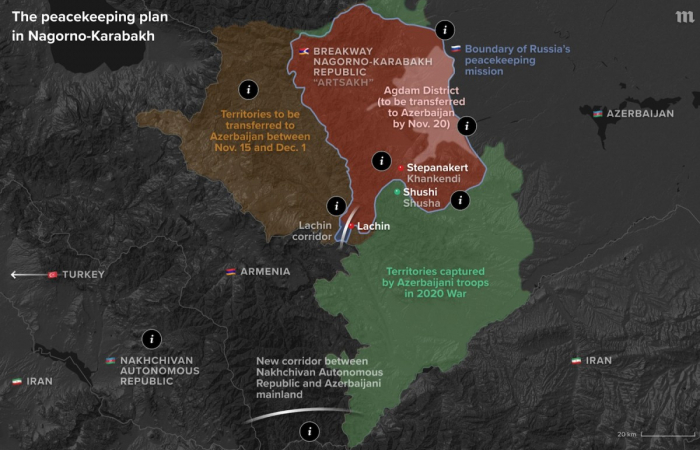
Towards the end of October, a lone Azerbaijani Airlines Gulfstream G650 landed in Yerevan, Armenia. It wasn’t the first to do so in over three decades of conflict but it could well change the future of multitrack diplomacy. Although mutual visits by Azerbaijanis to Armenia and Armenians to Azerbaijan are also not new, before October's flight they always occurred under the auspices of an international organisation or intergovernmental body including countries outside the region. Last month’s visit not only flew direct between the capitals but was bilaterally agreed.
According to the Armenian government over 60 flights have made the same journey since the 44-day-war in 2020. However, they were described as flights charted by international delegations operated by foreign airlines. In October, the AZAL flight carried what was announced as five representatives of Azerbaijan’s civil society to meet with five of their counterparts in Armenia. Though the meeting was only held for one day, its significance was clear and developments since indicate that it was likely only just the beginning.
If negotiations between the governments had largely become bilateral then now too had Track II diplomacy. It could also be argued that this was perhaps the start of a foray into Track 1.5 given the presence of Armenian Security Secretary Armen Grigoryan for part of the meeting. He reportedly took questions from Azerbaijani delegates.
Critics charge those representatives present were too close to their respective governments but the same criticism can be levelled at those skeptics considered too close to opposition or ideological movements interested in disrupting any possible peace deal. This approach was always destined for failure. Not only does it lack the ability to influence officials but also comprises activists disliked or even unknown to the majority of citizens in their own societies. At any rate, they had previously been favoured by donors, still receive some funding, and had their chance.
What could now prove a far more serious and effective process, however, is not guaranteed of success although the possibilities look encouraging. Any criticism of the meeting was largely minor and emanated from those that were anyway opposed to the current iteration of the peace process. Moreover, the Armenian delegation openly expressed its desire to visit Baku in the near future. Such visits have been rare over the last few decades. The last time involved journalists in 2019. That, however, was conducted under the auspices of the OSCE Minsk Group.
There were also no direct flights.
The timing was also relevant, coming as it did after an Azerbaijani researcher and analyst also visited Yerevan in September to participate in a NATO Parliamentary Assembly seminar. Again, this has occurred prior to 2020 but taken in the context of additional visits it seems to signal the launch of a new process on the Track II front held not in foreign capitals but in the countries themselves. Even this week another two Azerbaijani participants, including one that had been part of October’s meeting, arrived in Yerevan as panelists for a forum organised by the Armenian government.
Such activity in a little over two months is unprecedented.
Following the 8 August meeting of the Armenian and Azerbaijani leaders in the presence of U.S. President Donald Trump in Washington D.C., there are reasons to be optimistic. It is likely that these participants could be at the forefront of preparing the two populations for peace and informing their respective governments of concerns in each other's societies. The October meeting also suggested later focus on the resumption of media exchanges, people to people contact especially in border villages, continued work on the missing, and the sensitive issue of detainees.
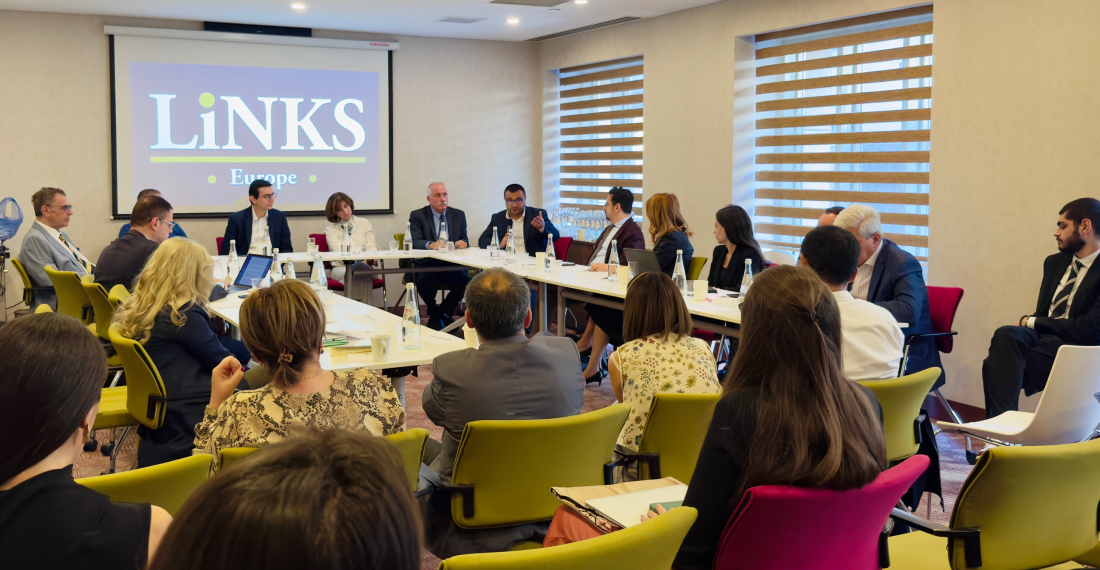
That is not to say that the new format should be the only dialogue that takes place. Indeed, one political commentator on Azerbaijani television not only welcomed the recent flight from Baku to Yerevan but also an event held a week later in Tbilisi involving two dozen young Armenians and Azerbaijanis openly active in thematic discussions organised by LINKS Europe. One of those Armenian participants was involved at October's Yerevan meeting. Another also attended the LINKS event. The Azerbaijani participant at the NATO seminar in Yerevan was also involved.
While scepticism is inevitable, the continuation of contacts highlights how isolation and secrecy is gradually being replaced by transparency and soon even inclusivity. If sustained and supported, this modest beginning could become the foundation for more connected and constructive relations between the two neighbouring countries. Nonetheless, it is still imperative that a more holistic approach is adopted, something that has been lacking for far too long. After the Yerevan meeting it was stressed that society must be involved. This time it really must be.