


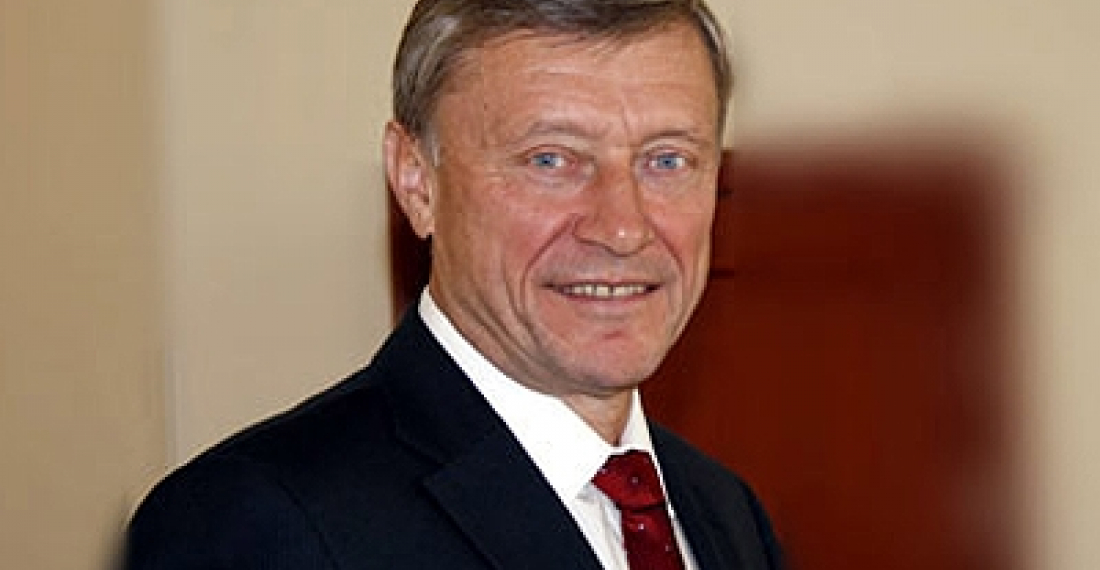
Николай Бордюжа:

Армения, как полноправный член ОДКБ, имеет право рассчитывать на многостороннюю помощь в кризисных ситуациях. Об этом 21 февраля в ходе видеомоста Ереван-Москва заявил генеральный секретарь ОДКБ Николай Бордюжа.

"Армения - член Организации со своими правами и обязанностями. Это значит, что, внося свой вклад в деятельность структуры, в обеспечение стабильности и безопасности, она одновременно должна рассчитывать на аналогичную помощь со стороны других государств-членов Организации. Вместе с тем то, как отреагирует ОДКБ в случае возникновения кризисной ситуации, связанной, в частности, с карабахским конфликтом, зависит от конкретной ситуации. Нужно учитывать, что подобные ситуации по своему характеру и формату бывают разными, следовательно, давать однозначные прогнозы не приходится", - отметил Бордюжа.

Он добавил, что ОДКБ не вовлечена в процесс урегулирования карабахского конфликта, что, однако, не мешает данной организации активно отслеживать развитие событий, проводить постоянный мониторинг ситуации. По его словам, в качестве формата урегулирования действует формат МГ ОБСЕ, причем, действует весьма эффективно, учитывая, насколько сложной является проблема. "Мы считаем, что МГ ОБСЕ справляется со своими функциями, и вовлечение какой бы то ни было структуры в процесс урегулирования. лишь навредит делу", - резюмировал генсек ОДКБ.

В 2012 году ОДКБ отметит юбилей: в мае исполнится 20 лет с момента подписания Договора о коллективной безопасности и 10 лет самой Организации. Членами сформированной на основе подписанного 15 мая 1992 года Договора о коллективной безопасности, Организации Договора о коллективной безопасности являются Россия, Армения, Беларусь, Казахстан, Узбекистан, Таджикистан и Кыргызстан. В 2012 году председательство в Организации Договора о коллективной безопасности перейдет к Казахстану.

Related articles

Editor's choice
News
The British prime minister says Europe must "stand on its own two feet" when it comes to defence

The British prime minister says Europe must "stand on its own two feet" when it comes to defence

The UK will deploy a carrier strike group, led by the aircraft carrier HMS Prince of Wales to the Arctic and the High North as part of efforts to bolster security against Russian threats. British prime minister, Sir Keir Starmer announced the deployment in a speech on Saturday (14 February) at the Munich Security Conference. Europe must be ready to fight to protect its people, values, and way of life,  Sir Keir told the Conference. Starmer also called for deeper links and cooperation, including economic ties, between the UK and EU. The PM stressed the continent must "stand on its own two feet" when it comes to defence commitments. "We must build our hard power, because that is the currency of the age," he told the conference. (Click image to read the full story).

Popular

Editor's choice
Interview
Thursday Interview: Murad Muradov

Thursday Interview: Murad Muradov

Today, commonspace.eu starts a new regular weekly series. THURSDAY INTERVIEW, conducted by Lauri Nikulainen, will host  persons who are thinkers, opinion shapers, and implementors in their countries and spheres. We start the series with an interview with Murad Muradov, a leading person in Azerbaijan's think tank community. He is also the first co-chair of the Action Committee for a new Armenian-Azerbaijani Dialogue. Last September he made history by being the first Azerbaijani civil society activist to visit Armenia after the 44 day war, and the start of the peace process. Speaking about this visit Murad Muradov said: "My experience was largely positive. My negative expectations luckily didn’t play out. The discussions were respectful, the panel format bringing together experts from Armenia, Azerbaijan, and Turkey was particularly valuable during the NATO Rose-Roth Seminar in Yerevan, and media coverage, while varied in tone, remained largely constructive. Some media outlets though attempted to represent me as more of a government mouthpiece than an independent expert, which was totally misleading.  Overall, I see these initiatives as important steps in rebuilding trust and normalising professional engagement. The fact that soon a larger Azerbaijani civil society visits to Armenia followed, reinforces the sense that this process is moving in the right direction." (click the image to read the interview in full)


