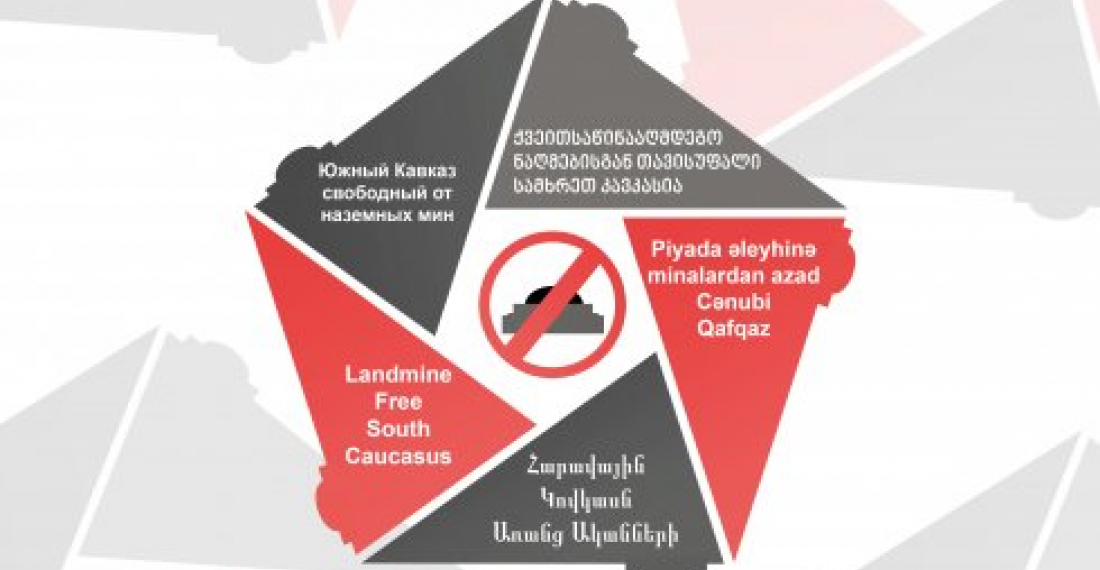
ЮЖНЫЙ КАВКАЗ СВОБОДНЫЙ ОТ НАЗЕМНЫХ МИН

В этом году впервые на Южном Кавказе 4 апреля будет отмечаться Международный день информирования о минной опасности в рамках общерегиональной информационной кампании под лозунгом «Южный Кавказ, свободный от наземных мин». В рамках кампании, которая пройдет с 4 по 10 апреля, будут посвящены мероприятия, проводимым в ряде городов и районов региона, и будет включать информационные материалы на армянском, азербайджанском, грузинском, русском и английском языках.

Согласно консервативным оценкам, за последние тридцать лет на Южном Кавказе были убиты или ранены в результате подрыва наземных мин или других неразорвавшихся боеприпасов более пяти тысяч человек. Эта проблема далека от разрешения, несмотря на ряд успешных усилий по расчистке больших территорий, особенно вблизи городских центров.

Наземные мины убивают и калечат без разбора; большинство жертв - невинные гражданские лица, включая детей. В своем отчете за 2018 год базирующаяся в Женеве организация Landmine and Cluster Munitions Monitor (Монитор наземных мин и кассетных боеприпасов) сообщила, что 87% глобальных жертв от наземных мин и неразорвавшихся боеприпасов - это не военные цели, а гражданские лица, причем 47% из них - дети. Там, где зафиксированы данные о жертвах с Южного Кавказа, большинство жертв также были гражданскими лицами. Эта проблема оказывает сильное влияние не только на тех, кто непосредственно затронут ею, но и на их семья, друзей и общества.

На Южном Кавказе наземные мины не только приводят к человеческим страданиям, но и во многих случаях препятствуют экономическому развитию. Среди прочего, они ограничивают возделывание сельскохозяйственных угодий и животноводство, что ограничивает развитие экономики.

В период с 4 по 10 апреля 2019 года кампания «ЮЖНЫЙ КАВКАЗ СВОБОДНЫЙ ОТ НАЗЕМНЫХ МИН» будет стимулировать правительства, сторонников общественного мнения и граждан всего региона активизировать свои усилия по очистке Южного Кавказа от бедствий, связанных с наземными минами и неразорвавшимися боеприпасами. Кампания будет распространять информацию о рисках, связанных с наземными минами, для детей, молодежи и других уязвимых групп, особенно тех, кто живет в районах, которые все еще заминированы. С другой стороны, кампания также отметит результаты той хорошей работы, которая была проделана и все еще выполняется сотнями преданных своему делу специалистами по всему региону, которые ежедневно рискуют своей жизнью, чтобы разминировать мины и другие неразорвавшиеся боеприпасы, чтобы сделать Южный Кавказ безопасным для их и будущих поколений.

Ряд национальных и международных организаций принимают участие в кампании «Южный Кавказ, свободный от наземных мин», в рамках инициативы, поддерживаемой Европейским союзом.

Информация о кампании «Южный Кавказ свободный от наземных мин» доступна в социальных сетях под хэштегом #landminefreeSC. Для получения дополнительной информации вы можете обратиться в координационный офис кампании «ЮЖНЫЙ КАВКАЗ СВОБОДНЫЙ ОТ НАЗЕМНЫХ МИН» по адресу office@links-dar.org


Вы можете прочитать и скачать пресс-релиз кампании на армянском языке здесь

Вы можете прочитать и скачать пресс-релиз кампании на азербайджанском языке здесь

Вы можете прочитать и скачать пресс-релиз кампании на грузинском языке здесь

Вы можете прочитать и скачать пресс-релиз кампании на русском языке здесь

Вы можете прочитать и скачать пресс-релиз кампании на английском языке здесь

 

Related articles

Editor's choice
News
Key European countries back Denmark in the face of Trump's continuing insistence on taking over Greenland

Key European countries back Denmark in the face of Trump's continuing insistence on taking over Greenland

 Six major European countries have declared their support to Denmark following renewed insistence by the US that it must have control over Greenland. "Greenland belongs to its people, and only Denmark and Greenland can decide on matters concerning their relations," said the leaders of the UK, France, Germany, Italy, Poland, and Spain, in a joint statement, issued on Tuesday (6 January), together with Denmark. On Sunday, Donald Trump said the US "needed" Greenland - a semi-autonomous region of fellow Nato member Denmark - for security reasons. He has refused to rule out the use of force to take control of the territory, and Danish Prime Minister Mette Frederiksen warned on Monday that an attack by the US would spell the end of Nato. The issue of Greenland's future resurfaced in the wake of the US military intervention in Venezuela, during which elite troops went in to seize the country's President Nicolás Maduro and take him to face drugs and weapons charges in New York. Following the raid, Trump said the US would "run" Venezuela for an unspecified period of time. He also said the US was returning to an 1823 policy of US supremacy in its sphere of influence in the Western hemisphere - and he warned a number of countries the US could turn its attention to them. The US military raid in Venezuela has reignited fears that the US may consider using force to secure control of Greenland. A day after the raid, Katie Miller - the wife of one of Trump's senior aides - posted on social media a map of Greenland in the colours of the American flag, alongside the word "SOON". On Monday, her husband Stephen Miller said it was "the formal position of the US government that Greenland should be part of the US". In an interview with CNN, he also said the US "is the power of Nato. For the US to secure the Arctic region, to protect and defend Nato and Nato interests, obviously Greenland should be part of the US." Asked repeatedly whether the US would rule out using force to annex it, Miller responded: "Nobody's going to fight the US over the future of Greenland." Stressing they were as keen as the US in Arctic security, the seven European signatories of Tuesday's joint statement said this must be achieved by Nato allies, including the US "collectively" - whilst "upholding the principles of the UN Charter, including sovereignty, territorial integrity and the inviolability of borders". Greenland's Prime Minister Jens-Frederik Nielsen welcomed the statement and called for "respectful dialogue". "The dialogue must take place with respect for the fact that Greenland's status is rooted in international law and the principle of territorial integrity," Nielsen said. Trump has claimed that making Greenland part of the US would serve American security interests due to its strategic location and its abundance of minerals critical to high-tech sectors. Greenland, which has a population of 57,000 people, has had extensive self-government since 1979, though defence and foreign policy remain in Danish hands. While most Greenlanders favour eventual independence from Denmark, opinion polls show overwhelming opposition to becoming part of the US.

Popular