


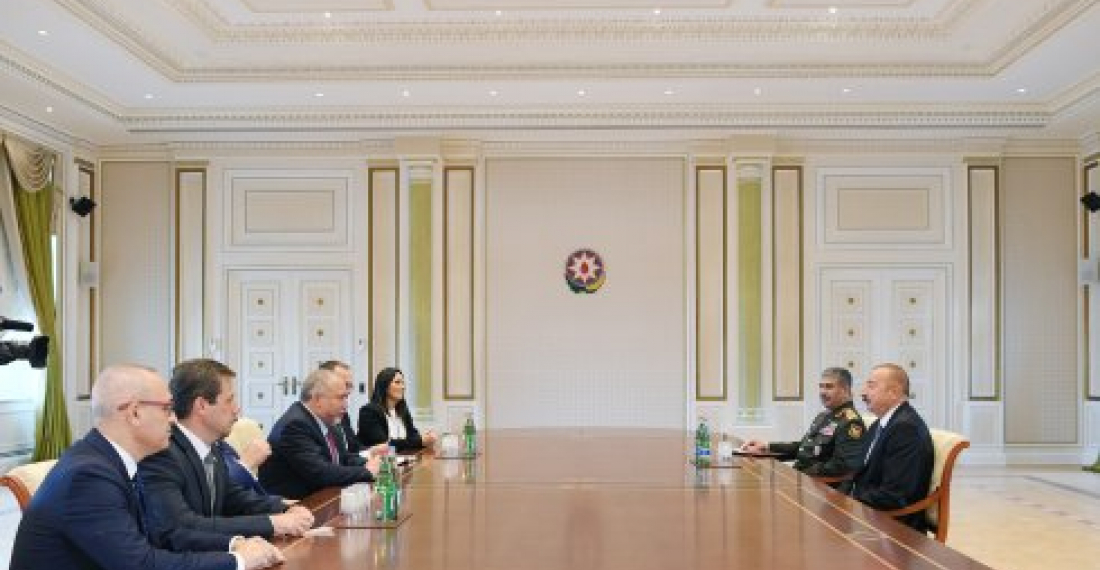
Министр обороны Израиля посетил Грузию и Азербайджан

В четверг в Азербайджан в рамках своего первого визита прибыл министр обороны Израиля Авигдор Либерман. Утром он провел встречу с президентом Азербайджана Ильхамом Алиевым. Азербайджан "является одним из крупнейших рынков для израильского оружия и источником 40 процентов поставляемой в Израиль нефти", сообщает Jerusalem Post в своем онлайн-издании.

По данным Стокгольмского международного института исследований проблем мира (SIPRI), организация, которая следит за глобальным рынком продаж оружия, Израиль был самым крупным экспортером вооружений в Азербайджане за последние два года, поставив вооружений на сумму в 385 млн долларов США. Азербайджан стал вторым по величине получателем израильского оружия в 2016 году после Индии и третьим по величине в 2017 году после Индии и Вьетнама.

Визит Либермана последовал за визитом премьер-министра Биньямина Нетаньяху в Баку, в декабре 2017 года. Алиев во время пресс-конференции с Нетаньяху объявил, что Азербайджан подписал долгосрочные контракты на покупку в объеме около 5 миллиардов долларов в сфере безопасности и военной техники из Израиля.

Либерман прибыл в Азербайджан из Грузии, где он был первым израильским министром обороны, который когда-либо посещал эту страну. Там он встретился с премьер-министром Грузии Мамукой Бахтадзе, министром обороны Леваном Изорией и министром иностранных дел Давидом Залкалиани.

Либерман выступил с заявлением, в котором говорится, что между двумя странами существует четыре направления сотрудничества в области безопасности: киберзащита, помощь в создании резервной службы, борьба с терроризмом и защита родины.

За десять лет до российско-грузинской войны в августе 2008 года Израиль продал небольшому южно-кавказскому государству военной техники на сумму от $300 до $500 миллионов. Возможно, что еще более важно, оборонные подрядчики были вовлечены в подготовку грузинских военных, и среди них были бывшие генералы, такие как Исраэль Зив и Гал Хирш, согласно данным Jerusalem Post.

commonspace.eu по материалам The Jerusalem Post

фото: Министр обороны Израиля Авигдор Либерман в ходе встречи с президентом Азербайджана Ильхамом Алиевым в Баку, 13 сентября 2018 года (фото предоставлено пресс-службой президента Азербайджана)


Related articles

Editor's choice
News
The British prime minister says Europe must "stand on its own two feet" when it comes to defence

The British prime minister says Europe must "stand on its own two feet" when it comes to defence

The UK will deploy a carrier strike group, led by the aircraft carrier HMS Prince of Wales to the Arctic and the High North as part of efforts to bolster security against Russian threats. British prime minister, Sir Keir Starmer announced the deployment in a speech on Saturday (14 February) at the Munich Security Conference. Europe must be ready to fight to protect its people, values, and way of life,  Sir Keir told the Conference. Starmer also called for deeper links and cooperation, including economic ties, between the UK and EU. The PM stressed the continent must "stand on its own two feet" when it comes to defence commitments. "We must build our hard power, because that is the currency of the age," he told the conference. (Click image to read the full story).

Popular

Editor's choice
Interview
Thursday Interview: Murad Muradov

Thursday Interview: Murad Muradov

Today, commonspace.eu starts a new regular weekly series. THURSDAY INTERVIEW, conducted by Lauri Nikulainen, will host  persons who are thinkers, opinion shapers, and implementors in their countries and spheres. We start the series with an interview with Murad Muradov, a leading person in Azerbaijan's think tank community. He is also the first co-chair of the Action Committee for a new Armenian-Azerbaijani Dialogue. Last September he made history by being the first Azerbaijani civil society activist to visit Armenia after the 44 day war, and the start of the peace process. Speaking about this visit Murad Muradov said: "My experience was largely positive. My negative expectations luckily didn’t play out. The discussions were respectful, the panel format bringing together experts from Armenia, Azerbaijan, and Turkey was particularly valuable during the NATO Rose-Roth Seminar in Yerevan, and media coverage, while varied in tone, remained largely constructive. Some media outlets though attempted to represent me as more of a government mouthpiece than an independent expert, which was totally misleading.  Overall, I see these initiatives as important steps in rebuilding trust and normalising professional engagement. The fact that soon a larger Azerbaijani civil society visits to Armenia followed, reinforces the sense that this process is moving in the right direction." (click the image to read the interview in full)

