


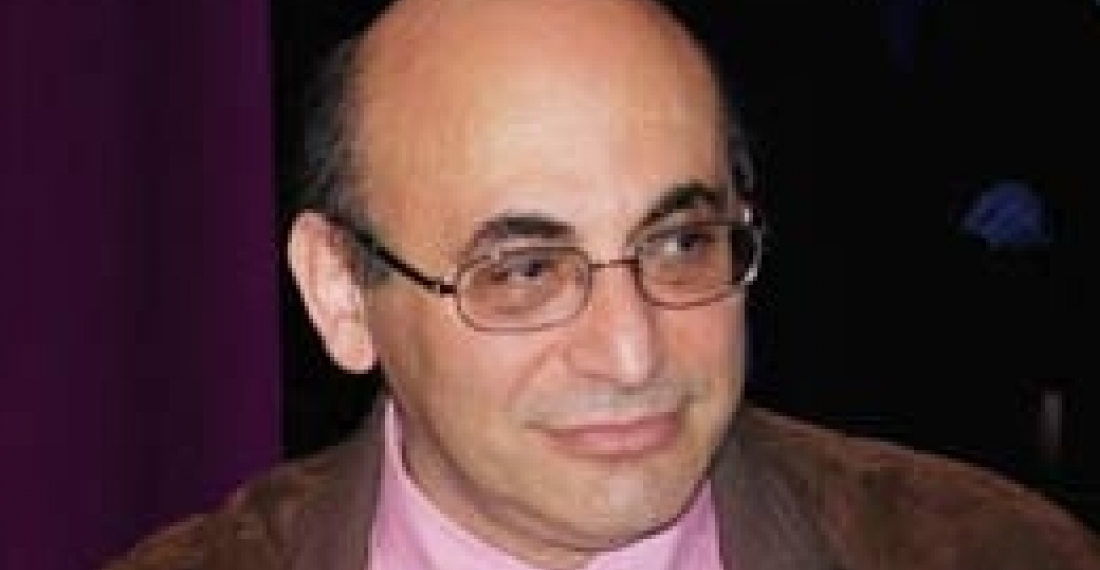
Ариф Юнусов: фактор Сафарова позволил властям Азербайджана раздуть ура- патриотическую кампанию, заработав на этом политические дивиденды

Слишком преувеличивать фактор влияния освобождения Рамиля Сафарова на армяно-азербайджанские отношения не стоит, учитывая, что на самом деле в армяно-азербайджанских отношениях не было серьезного диалога, особенно на политическом уровне, чтобы говорить о его продолжении или приостановлении. Подобное мнение, перечисляя возможные последствия освобождения Рамиля Сафарова, выразил АрмИнфо руководитель Департамента Конфликтологии и миграции Института Мира и Демократии (Баку), известный политолог Ариф Юнусов.

"Можно говорить о каком-то диалоге на уровне гражданских обществ, но и он с каждым годом становился все слабее и слабее. И переговорный процесс по урегулированию карабахского конфликта давно находится в тупике и скорее мы должны говорить об имитации переговоров, когда конфликтующие стороны делают вид, что ведут переговоры, а на самом деле не желают решения конфликта. Ведь ясно же, что решение возможно на основе компромисса, а вот его никто не желает. И когда конфликтующие стороны говорят о желании добиться справедливого мира, на самом деле они имеют в виду мир в свою пользу. И каждая сторона при этом убеждена, что время работает в их пользу. Армяне полагают, что со временем мир и в первую очередь Азербайджан свыкнутся с тем, что Карабах вне Азербайджана. В свою очередь, Азербайджан убежден, что с каждым годом Армения становится экономически слабой и надо просто дождаться своего часа, а до этого усиливать свою армию", - заметил азербайджанский политолог.

И потому, по его словам, власти обеих сторон просто все последние годы имитировали переговорный процесс, ибо этого желали сильные мира сего, для которых главное не допустить возобновления боевых действий. Зная, что реального прогресса в переговорах нет, все равно, ради соблюдения приличий сопредседатели Минской группы приезжают в регион, что-то армянам и азербайджанцам обещают, сами не веря в свои слова и обещания и потому все больше стали напоминать политтуристов, нежели посредников. В этих условиях, по мнению Юнусова, вся история с освобождением Сафарова, если оставить в сторону моральную сторону и говорить о политической,  сыграла свою роль для внутренней аудитории, как в Азербайджане, так и в Армении. То есть, фактор Сафарова позволил властям Азербайджана, а также другим политическим силам раздуть ура- патриотическую кампанию и заработать на этом политические дивиденды. Но и в Армении власти и политические силы также постарались использовать фактор Сафарова для сбора политического капитала. И еще долго этот фактор будет использоваться в обеих странах.

По мнению Юнусова, на линии соприкосновения сторон НКК периодически усилятся перестрелки, которые, однако, во что-то серьезное не перерастут, ибо обе стороны прекрасно понимают, что не они сегодня главные игроки в этом вопросе.  "Соответственно, сторонам НКК остаются пропагандистские акции, причем как у себя в странах и в регионе, так и на уровне международных структур. Но не более того. Безусловно, на определенное время, как минимум на несколько месяцев, переговорный процесс затухнет. Но потом все равно возобновится. Правда, опять речь будет идти об имитации. И снова к нам в регион будут приезжать политтуристы от Минской группы.  Другое дело, что должны делать представители гражданских обществ? Именно они сейчас не должны поддаваться ура-патриотизму и продолжить свою работу по продолжению диалога. Альтернатива этому - война", - подытожил Юнусов. 31 августа венгерские власти экстрадировали азербайджанского убийцу Рамиля Сафарова на родину, где он был помилован президентом Азербайджана, повышен в звании и объявлен национальным героем. В связи с экстрадицией Сафарова Армения приостановила дипломатические отношения с Венгрией. 19 февраля 2004 года спящий лейтенант армянской армии Гурген Маргарян был зверски зарублен топором азербайджанским коллегой Рамилем Сафаровым. 13 апреля 2006 года суд первой инстанции Будапешта приговорил Сафарова к пожизненному заключению без права на помилование в течение 30 лет. Согласно информации венгерских СМИ, Азербайджан принял обязательство купить государственные облигации Венгрии на общую сумму в 2-3 млрд евро.
Related articles

Editor's choice
News
Russia adds pressure on Armenia ahead of key elections; recalls Ambassador in Yerevan for consultations

Russia adds pressure on Armenia ahead of key elections; recalls Ambassador in Yerevan for consultations

Ahead of key parliamentary elections,scheduled to be held in Armenia on Sunday, 7 June, Russia continues to attempt to put pressure on the Armenian Government led by prime minister Nikol Pashinyan. On 30 May, Russia recalled its Ambassador to Yerevan for consultations. A terse statement, published on the website of the Russian Foreign Ministry, said, "The Ambassador of the Russian Federation to the Republic of Armenia , S.P. Kopyrkin, has been summoned to Moscow for consultations in connection with the steps taken by the Armenian leadership to move closer to the European Union, which are detrimental to cooperation within the EAEU." This followed a statement issued the day before, by the leaders of the Eurasian Economic Union (EAEU) that challenges the Armenian trajectory towards approximating to the European Union. Vladimir Putin is undertood to have personally pushed the other four EAEU leaders to issue the statement, which said: "Taking into account the significant risks to the economic security of the member states of the Eurasian Economic Union (hereinafter referred to as the Union) arising in connection with the preparation of the Republic of Armenia for accession to the European Union, as well as the need to prevent the associated damage to the member states of the Union: decided that the members of the Eurasian Intergovernmental Council from the Republic of Belarus, the Republic of Kazakhstan, the Kyrgyz Republic and the Russian Federation will report at the next meeting of the Supreme Eurasian Economic Council in December 2026 on the possible consequences of the suspension of the Treaty on the Eurasian Economic Union with respect to the Republic of Armenia. We share the position on the need to hold a national referendum in the Republic of Armenia as soon as possible on joining the European Union or continuing to be part of the Eurasian Economic Union."
Editor's choice
News
The leaders of the states of the Eurasian Economic Union issued a tough statement warning fellow-member state Armenia of the consequences of its desire to join the European Union.

The leaders of the states of the Eurasian Economic Union issued a tough statement warning fellow-member state Armenia of the consequences of its desire to join the European Union.

The leaders of the states of the Eurasian Economic Union (EEAS) issued a tough statement warning fellow-member state Armenia of the consequences of its desire to join the European Union. The stark, sharply worded,  warning, comes days before crucial parliamentary elections in Armenia, scheduled for 7 June. The full statement said, “We, the Presidents of the Republic of Belarus, the Republic of Kazakhstan, the Kyrgyz Republic and the Russian Federation, Taking into account the actions of the Republic of Armenia aimed at joining the European Union, including the approval in 2025 by the National Assembly of the Republic of Armenia and the signing by the President of the Republic of Armenia of the Law of the Republic of Armenia "On the Start of the Process of Accession of the Republic of Armenia to the European Union", as well as the confirmation by the European Union of the European aspirations of the Government of the Republic of Armenia, expressed in the joint declaration following the first Armenia-European Union summit, adopted on 5 May 2026, Taking into account the significant risks to the economic security of the member states of the Eurasian Economic Union (hereinafter referred to as the Union) arising in connection with the preparation of the Republic of Armenia for accession to the European Union, as well as the need to prevent the associated damage to the member states of the Union: decided that the members of the Eurasian Intergovernmental Council from the Republic of Belarus, the Republic of Kazakhstan, the Kyrgyz Republic and the Russian Federation will report at the next meeting of the Supreme Eurasian Economic Council in December 2026 on the possible consequences of the suspension of the Treaty on the Eurasian Economic Union with respect to the Republic of Armenia. We share the position on the need to hold a national referendum in the Republic of Armenia as soon as possible on joining the European Union or continuing to be part of the Eurasian Economic Union. Astana, May 29, 2026” A meeting of the Supreme Eurasian Economic Council was held in Astana, Kazakhstan, on May 29, 2026. The meeting of the Supreme Eurasian Economic Council in a restricted format was attended by Russian President Vladimir Putin, Belarusian President Alexander Lukashenko , Kazakh President Kassym-Jomart Tokayev , Kyrgyz President Sadyr Japarov , Armenian Deputy Prime Minister Mher Grigoryan, and Chairman of the Board of the Eurasian Economic Commission Bakytzhan Sagintayev. From the Russian side, the meeting was also attended by Deputy Prime Minister and member of the Council of the Eurasian Economic Commission Alexey Overchuk and Presidential Aide Yury Ushakov . The heads of delegations from EAEU observer states, including President of Uzbekistan Shavkat Mirziyoyev , Vice President of Cuba Salvador Valdés Mesa, Minister of Industry, Mines, and Trade of Iran Mohammad Atabak, and CIS Secretary General Sergei Lebedev, joined the expanded meeting . Following the meeting of the Supreme Eurasian Economic Council, a number of documents were signed .

Popular

Editor's choice
Interview
Thursday Interview: Murad Muradov

Thursday Interview: Murad Muradov

Today, commonspace.eu starts a new regular weekly series. THURSDAY INTERVIEW, conducted by Lauri Nikulainen, will host  persons who are thinkers, opinion shapers, and implementors in their countries and spheres. We start the series with an interview with Murad Muradov, a leading person in Azerbaijan's think tank community. He is also the first co-chair of the Action Committee for a new Armenian-Azerbaijani Dialogue. Last September he made history by being the first Azerbaijani civil society activist to visit Armenia after the 44 day war, and the start of the peace process. Speaking about this visit Murad Muradov said: "My experience was largely positive. My negative expectations luckily didn’t play out. The discussions were respectful, the panel format bringing together experts from Armenia, Azerbaijan, and Turkey was particularly valuable during the NATO Rose-Roth Seminar in Yerevan, and media coverage, while varied in tone, remained largely constructive. Some media outlets though attempted to represent me as more of a government mouthpiece than an independent expert, which was totally misleading.  Overall, I see these initiatives as important steps in rebuilding trust and normalising professional engagement. The fact that soon a larger Azerbaijani civil society visits to Armenia followed, reinforces the sense that this process is moving in the right direction." (click the image to read the interview in full)

