Анализ: Символическое значение Чоджук Марджанлы для Азербайджана

Небольшая деревня недалеко от границы Азербайджана с Ираном недавно приняла огромное символическое значение для азербайджанского правительства и общественности. С 1993 года деревня Чоджук Марджанлы, что в Джебраиловском районе, была необитаема после того, как была оккупирована армянскими силами во время карабахского конфликта. Деревня, расположенная близко к линии соприкосновения, находилась под пристальным взором армянских сил, которые контролировали её с холма, который находится в 2,9 километрах к северо-западу от деревни. Поэтому для жителей деревни было не безопасно оставаться там, хотя одна из семей осталась. В апреле 2016 года, в период интенсивных боевых действий в зоне карабахского конфликта, Азербайджану удалось восстановить контроль над холмом, с которого армянские силы осуществляли контроль над деревней и в результате чего стало возможно возвращение жителей Чоджук Марджанлы в свои дома.

Правительство Азербайджана совсем недавно объявило об амбициозных планах по восстановлению Чоджук Марджанлы. Президентским указом от 24 января из Бюджета страны в 2017 году Государственному комитету по делам беженцев и вынужденных переселенцев на строительство 50 домов, здания школы и соответствующей инфраструктуры в селе будет выделено 4 миллиона манатов ($ 2,12 млн).

Для Азербайджана история вокруг Чоджук Марджанлы представляет собой начало реализации страстного желания возвращения земель, которые были потеряны в результате карабахской войны в период с 1989-1994гг. Многие азербайджанские политики приветствовали восстановление села, высказав надежду на то, что это начало "великого возвращения"..

"Я считаю эти [апрельские столкновения] победой всего азербайджанского народа и считаю, что все наши территории будут освобождены от оккупации", - говорит Зияфет Аскеров, первый вице-спикер парламента Азербайджана, комментируя восстановительные работы в деревне.
"Приказ Ильхама Алиева о мерах по восстановлению села Чоджук Марджанлы Джебраиловского района является историческим шагом, историческим решением. Это начало больших событий", утверждает вице-премьер, исполнительный секретарь правящей партии "Ени Азербайджан" Али Ахмедов. "Азербайджанское государство и правительство в очередной раз продемонстрировали свою решимость освободить оккупированные территории. Восстанавливая наши возвращенные земли, начиная с одного села, мы доносим высокий моральный дух общества до всего мира. Это наш месседж международным организациям, созданным для решения нагорно-карабахского конфликта, и армянской стороне, временно оккупировавшей наши земли." "Наши вынужденные переселенцы вернутся на свои земли, в свои дома. Таким образом, будет восстановлена территориальная целостность Азербайджана и будет устранена большая историческая несправедливость."

Ахмедов отметил, что работы в Джоджуг Марджанлы будут проведены за счет государственных средств. "Но я считаю, что с освобождением азербайджанских земель, международные и экономические организации окажут поддержку в восстановлении наших земель, выделят гранты. Но это дело будущего", - добавил он.

Азербайджан намерен в ближайшее время пригласить посетить Джоджуг Марджанлы дипломатов и представителей международных организаций.

Но на данный момент правительство Азербайджана может представить историю с Джоджуг Марджанлы как доказательство того, что освобождение его земель военным путем возможно, и не в последнюю очередь, чтобы оправдать перед своим народом высокие расходы на военный бюджет в последние годы.

В апрельских боях в 2016 погибли многие армянские и азербайджанские солдаты. Это часть той цены, которую обе страны платят из-за того, что не могут разрешить конфликт мирным путем. Многие наблюдатели считают, что в этом году стоит ожидать больше боевых действий, если переговоры не наберут ход. Все больше молодых людей будут гибнуть из-за борьба за пустые деревни и стратегические высоты. Радость возвращения перемещенных лиц в свои дома сдерживается перспективой того, что это может спровоцировать дальнейшее насилие, если политики по обе стороны не продемонстрируют свою ответственность и с новыми силами возьмутся за урегулирование конфликта мирным путем.

Данная статья была подготовленна сотрудниками commonspace.eu

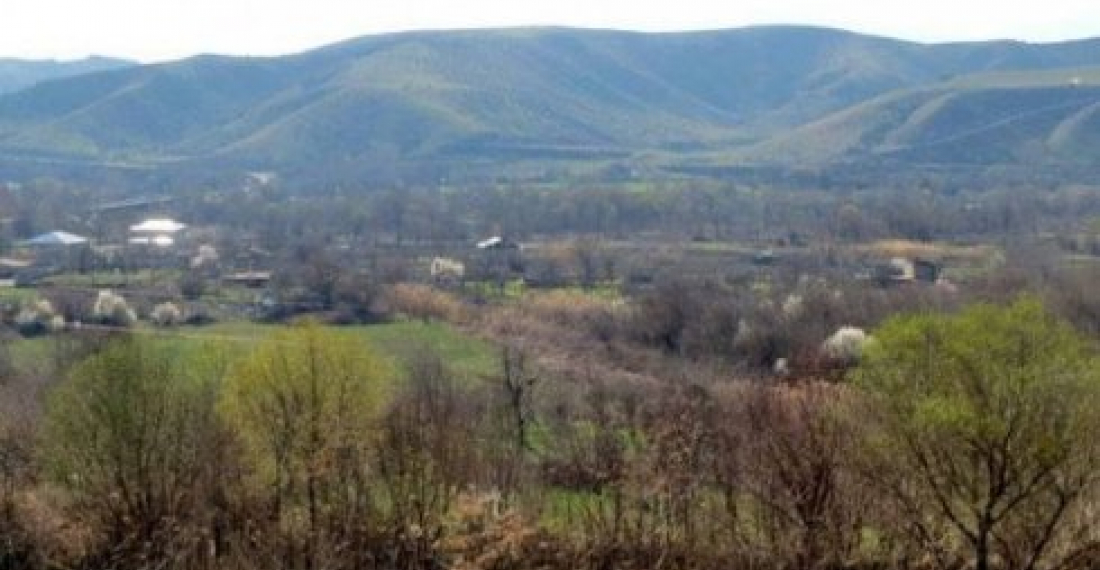
Деревня Джоджуг Марджанлы (фото любезно предоставлено haqqin.az).
Related articles

Editor's choice
News
Russia adds pressure on Armenia ahead of key elections; recalls Ambassador in Yerevan for consultations

Russia adds pressure on Armenia ahead of key elections; recalls Ambassador in Yerevan for consultations

Ahead of key parliamentary elections,scheduled to be held in Armenia on Sunday, 7 June, Russia continues to attempt to put pressure on the Armenian Government led by prime minister Nikol Pashinyan. On 30 May, Russia recalled its Ambassador to Yerevan for consultations. A terse statement, published on the website of the Russian Foreign Ministry, said, "The Ambassador of the Russian Federation to the Republic of Armenia , S.P. Kopyrkin, has been summoned to Moscow for consultations in connection with the steps taken by the Armenian leadership to move closer to the European Union, which are detrimental to cooperation within the EAEU." This followed a statement issued the day before, by the leaders of the Eurasian Economic Union (EAEU) that challenges the Armenian trajectory towards approximating to the European Union. Vladimir Putin is undertood to have personally pushed the other four EAEU leaders to issue the statement, which said: "Taking into account the significant risks to the economic security of the member states of the Eurasian Economic Union (hereinafter referred to as the Union) arising in connection with the preparation of the Republic of Armenia for accession to the European Union, as well as the need to prevent the associated damage to the member states of the Union: decided that the members of the Eurasian Intergovernmental Council from the Republic of Belarus, the Republic of Kazakhstan, the Kyrgyz Republic and the Russian Federation will report at the next meeting of the Supreme Eurasian Economic Council in December 2026 on the possible consequences of the suspension of the Treaty on the Eurasian Economic Union with respect to the Republic of Armenia. We share the position on the need to hold a national referendum in the Republic of Armenia as soon as possible on joining the European Union or continuing to be part of the Eurasian Economic Union."
Editor's choice
News
The leaders of the states of the Eurasian Economic Union issued a tough statement warning fellow-member state Armenia of the consequences of its desire to join the European Union.

The leaders of the states of the Eurasian Economic Union issued a tough statement warning fellow-member state Armenia of the consequences of its desire to join the European Union.

The leaders of the states of the Eurasian Economic Union (EEAS) issued a tough statement warning fellow-member state Armenia of the consequences of its desire to join the European Union. The stark, sharply worded,  warning, comes days before crucial parliamentary elections in Armenia, scheduled for 7 June. The full statement said, “We, the Presidents of the Republic of Belarus, the Republic of Kazakhstan, the Kyrgyz Republic and the Russian Federation, Taking into account the actions of the Republic of Armenia aimed at joining the European Union, including the approval in 2025 by the National Assembly of the Republic of Armenia and the signing by the President of the Republic of Armenia of the Law of the Republic of Armenia "On the Start of the Process of Accession of the Republic of Armenia to the European Union", as well as the confirmation by the European Union of the European aspirations of the Government of the Republic of Armenia, expressed in the joint declaration following the first Armenia-European Union summit, adopted on 5 May 2026, Taking into account the significant risks to the economic security of the member states of the Eurasian Economic Union (hereinafter referred to as the Union) arising in connection with the preparation of the Republic of Armenia for accession to the European Union, as well as the need to prevent the associated damage to the member states of the Union: decided that the members of the Eurasian Intergovernmental Council from the Republic of Belarus, the Republic of Kazakhstan, the Kyrgyz Republic and the Russian Federation will report at the next meeting of the Supreme Eurasian Economic Council in December 2026 on the possible consequences of the suspension of the Treaty on the Eurasian Economic Union with respect to the Republic of Armenia. We share the position on the need to hold a national referendum in the Republic of Armenia as soon as possible on joining the European Union or continuing to be part of the Eurasian Economic Union. Astana, May 29, 2026” A meeting of the Supreme Eurasian Economic Council was held in Astana, Kazakhstan, on May 29, 2026. The meeting of the Supreme Eurasian Economic Council in a restricted format was attended by Russian President Vladimir Putin, Belarusian President Alexander Lukashenko , Kazakh President Kassym-Jomart Tokayev , Kyrgyz President Sadyr Japarov , Armenian Deputy Prime Minister Mher Grigoryan, and Chairman of the Board of the Eurasian Economic Commission Bakytzhan Sagintayev. From the Russian side, the meeting was also attended by Deputy Prime Minister and member of the Council of the Eurasian Economic Commission Alexey Overchuk and Presidential Aide Yury Ushakov . The heads of delegations from EAEU observer states, including President of Uzbekistan Shavkat Mirziyoyev , Vice President of Cuba Salvador Valdés Mesa, Minister of Industry, Mines, and Trade of Iran Mohammad Atabak, and CIS Secretary General Sergei Lebedev, joined the expanded meeting . Following the meeting of the Supreme Eurasian Economic Council, a number of documents were signed .

Popular

Editor's choice
Interview
Thursday Interview: Murad Muradov

Thursday Interview: Murad Muradov

Today, commonspace.eu starts a new regular weekly series. THURSDAY INTERVIEW, conducted by Lauri Nikulainen, will host  persons who are thinkers, opinion shapers, and implementors in their countries and spheres. We start the series with an interview with Murad Muradov, a leading person in Azerbaijan's think tank community. He is also the first co-chair of the Action Committee for a new Armenian-Azerbaijani Dialogue. Last September he made history by being the first Azerbaijani civil society activist to visit Armenia after the 44 day war, and the start of the peace process. Speaking about this visit Murad Muradov said: "My experience was largely positive. My negative expectations luckily didn’t play out. The discussions were respectful, the panel format bringing together experts from Armenia, Azerbaijan, and Turkey was particularly valuable during the NATO Rose-Roth Seminar in Yerevan, and media coverage, while varied in tone, remained largely constructive. Some media outlets though attempted to represent me as more of a government mouthpiece than an independent expert, which was totally misleading.  Overall, I see these initiatives as important steps in rebuilding trust and normalising professional engagement. The fact that soon a larger Azerbaijani civil society visits to Armenia followed, reinforces the sense that this process is moving in the right direction." (click the image to read the interview in full)