


АЛИЕВ: "Для Азербайджана мультикультурализм это и государственная политика и образ жизни"

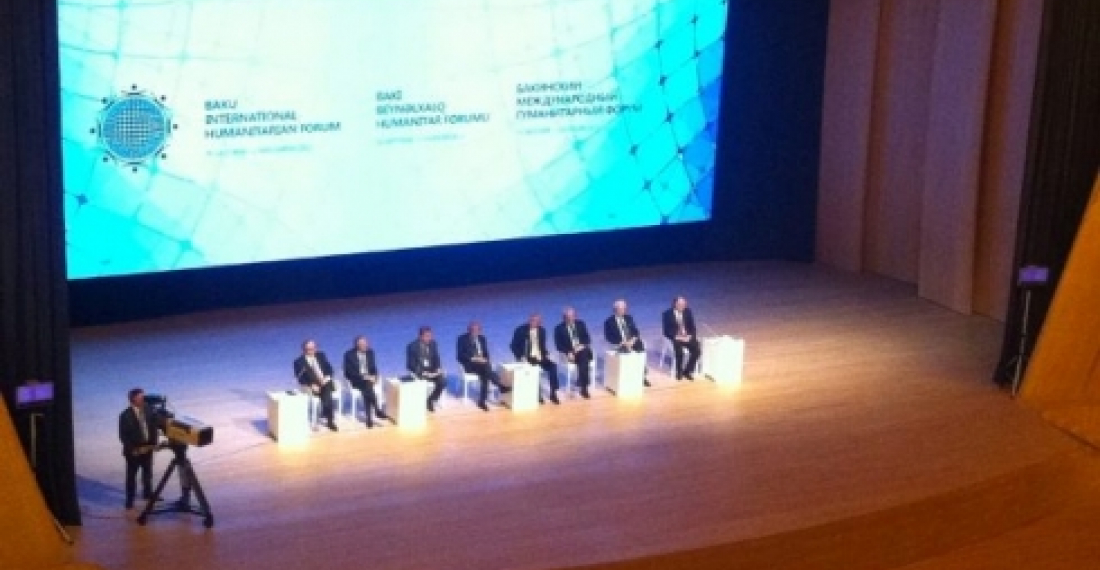
Более чем восемьсот интеллектуалов, академиков и общественных деятелей из 70 стран мира этим утром собрались в Центре им. Гейдара Алиева в Баку на открытии 3-его Международного Гуманитарного форума. Среди гостей были бывшие президенты европейских стран, включая бывшего президента Турции Сулеймана Демирли и двенадцать обладателей Нобелевской премии в различных сферах. 

В своей речи перед гостями форума президент Азербайджана Ильхам Алиев подчеркнул важность мероприятия и заявил, что Азербайджан является живым доказательством успешного мультикультурализма и живым противоречием утверждению, что мультикультурализм не имеет будущего. "Для Азербайджана мультикультурализм это и государственная политика и образ жизни", заявил президент Алиев. "Ксенофобия, исламофобия и сепаратизм не имеют места в 21-м веке", добавил он.

Глава государства говорил об успехах Азербайджана, а также и проблемах, подчеркнув, что карабахский конфликт является самой большой проблемой страны, и еще раз выразил разочарование тем, что международное сообщество в последние двадцать лет не в состоянии действовать по ряду резолюций ООН и также других организаций, в то время как по другим аналогичным вопросам решение принимаются в считаные часы. Он добавил, что нынешняя ситуация грубо нарушает права одного миллиона азербайджанцев, которые были перемещены в результате конфликта.

Ильхам Алиев говорил о необходимости для Азербайджана продолжить движение по пути глубоких экономических реформ, в то же время защитить  население от трудностей, которые могут возникнуть в результате такого преобразования. Вместе с тем он предостерег от дорогой популистской политики, которая имело место у других стран в экономические трудности. Он сказал, что он часто говорит своим коллегам, что судьба Азербайджана связана с его достижениями в области образования и науки. Это то, как развитые страны достигли своих успехов и Азербайджан будет идти по этому пути.

Касательно международных отношений Ильхам Алиев сообщил, что "сегодня в мировой политике наблюдается кризис доверия, его признаки иногда наблюдаются даже между союзниками, но без доверия строить международное сотрудничество невозможно".

Форум продлится до завтрашнего дня, затем он будет разделен на девять кластеров каждый из которых будет посвящен определенной теме, начиная от науки и техники заканчивая средствами массовой информации и правами человека.

Источник: commonspace.eu

фото: министр иностранных дел Азербайджана Эльмар Мамедъяров с бывшими президентами европейских стран на встрече во время 3-го Бакинского международного гуманитарного форума, который открылся в столице Азербайджана в четверг, 31 октября. (Фото любезно предоставлено Вугар Сеидов)
Related articles

Editor's choice
News
Borrell tells the European Parliament that the situation in Afghanistan was critical, but the EU will remain engaged

Borrell tells the European Parliament that the situation in Afghanistan was critical, but the EU will remain engaged

Borrell underlined that the European Union will make every effort to support the peace process and to remain a committed partner to the Afghan people. "Of course, we will have to take into account the evolving situation, but disengagement is not an option.  We are clear on that: there is no alternative to a negotiated political settlement, through inclusive peace talks.
Editor's choice
News
Germany accuses Russia of cyberattacks and disinformation campaign

Germany accuses Russia of cyberattacks and disinformation campaign

The German government holds Russia responsible for a cyberattack on German air traffic control, and for targeted disinformation campaigns before the last federal election. According to the German Foreign Office in Berlin, the incidents could be clearly attributed to the Russian military intelligence service, the GRU. In response, the Russian ambassador to Berlin was summoned to the Foreign Ministry. "We have been observing a massive increase in threatening hybrid activities by Russia for some time now," a spokesperson for the Foreign Ministry stated. These range from disinformation campaigns and espionage to cyberattacks and sabotage attempts. The aim is to divide society, sow distrust, and undermine confidence in democratic institutions. The spokesperson added that with these actions, Russia is "very concretely threatening our security, not only through its war of aggression against Ukraine, but also here in Germany."  The Foreign Ministry spokesperson explained that the cyberattack on air traffic control in August 2024 was clearly attributed to the hacker collective "APT28," known as "Fancy Bear," and to the responsibility of the Russian military intelligence service, the GRU. Furthermore, it could now be "conclusively stated" that Russia had attempted "to influence and destabilize both the last Federal election and the ongoing internal affairs of the Federal Republic of Germany." There was "absolutely irrefutable evidence" for this". The so-called "Storm 1516" campaign, which has been running since 2024, is allegedly backed by "reliable information" that the Moscow-based think tank "Center for Geopolitical Expertise" is behind it. The Center is also said to be supported by Russian military intelligence. Its primary aim is to influence democratic elections in the West. (Click the image to read more).

Popular

Editor's choice
News
Germany accuses Russia of cyberattacks and disinformation campaign

Germany accuses Russia of cyberattacks and disinformation campaign

The German government holds Russia responsible for a cyberattack on German air traffic control, and for targeted disinformation campaigns before the last federal election. According to the German Foreign Office in Berlin, the incidents could be clearly attributed to the Russian military intelligence service, the GRU. In response, the Russian ambassador to Berlin was summoned to the Foreign Ministry. "We have been observing a massive increase in threatening hybrid activities by Russia for some time now," a spokesperson for the Foreign Ministry stated. These range from disinformation campaigns and espionage to cyberattacks and sabotage attempts. The aim is to divide society, sow distrust, and undermine confidence in democratic institutions. The spokesperson added that with these actions, Russia is "very concretely threatening our security, not only through its war of aggression against Ukraine, but also here in Germany."  The Foreign Ministry spokesperson explained that the cyberattack on air traffic control in August 2024 was clearly attributed to the hacker collective "APT28," known as "Fancy Bear," and to the responsibility of the Russian military intelligence service, the GRU. Furthermore, it could now be "conclusively stated" that Russia had attempted "to influence and destabilize both the last Federal election and the ongoing internal affairs of the Federal Republic of Germany." There was "absolutely irrefutable evidence" for this". The so-called "Storm 1516" campaign, which has been running since 2024, is allegedly backed by "reliable information" that the Moscow-based think tank "Center for Geopolitical Expertise" is behind it. The Center is also said to be supported by Russian military intelligence. Its primary aim is to influence democratic elections in the West. (Click the image to read more).

