


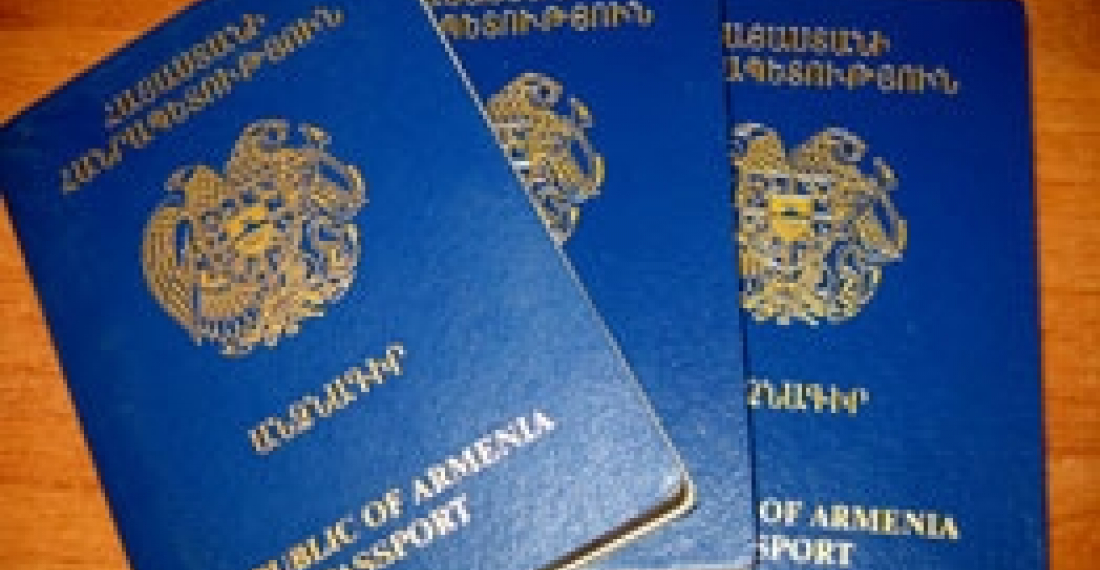
Внедрение в Армении биометрических паспортов облегчит получение виз в страны ЕС


Внедрение в Армении биометрических паспортов позволит существенно облегчить процесс получения виз в страны ЕС. Об этом 21 мая на пресс- конференции заявил начальник Паспортно-визового управления Полиции Армении, полковник Ованнес Кочарян.

Переход к новой системе, по словам начальника управления, предусмотрен в соответствии с утвержденной в 2008 г. правительством Армении программой реформ в миграционной системе, в свою очередь, реализуемой в рамках сотрудничества с ЕС. По его словам, биометрические паспорта и ID-карты позволят снизить вероятность фальсификации паспортов, автоматизировать процесс идентификации граждан. В перспективе идентификационные карты также позволят гражданам обращаться в госорганы по тому или иному вопросу без визуального общения с ними, что в свою очередь, снижает коррупционные риски.

Система биометрических паспортов и идентификационных карт в Армении будет внедрена с 1 июня 2012 г. Работы по изготовлению паспортов в ID-карт выполнит польская компания PWPW, которая победила в конкурсе в апреле 2011 года. Планируется, что в общей сложности в период с 2012 по 2016 гг. будет выпущено около 304 тыс.  паспортов и 1 млн. ID-карт на сумму в 16 млн. евро. Производство одной единицы паспорта обойдется в 37 евро, и 1 идентификационной карты - в 6 евро. При этом идентификационная карта будет использоваться в качестве удостоверения личности внутри страны, биометрические паспорта - при заграничных поездках. При этом последние, в отличие от ID-карт, будут содержать также отпечатки пальцев граждан.

Срок действия ID-карты составит 10 лет, она будет содержать информацию о личности  на армянском и английском языках, причем - ту же информацию, которая содержится в нынешних паспортах.

По словам Кочаряна, граждане могут приобрести биометрические паспорта за 25 тыс.  драмов, а идентификационные карты - 3 тыс. драмов. При этом он подчеркнул, что их получение не является обязательным для граждан. Последние при желании могут сохранить, а в случае необходимости и получать старые типы паспортов.


 

Related articles

Editor's choice
News
Russian attacks against Ukrainian civilians continue

Russian attacks against Ukrainian civilians continue

Rescuers in Ukraine are continuing their search for survivors in the wreckage of a big shopping centre hit by Russia on Friday. Sixteen people were killed and 130 injured when two drones hit the busy centre in Kryvyi Rih in quick succession in what is known as a double-tap strike. Four people are still missing. The search and rescue operation could last for another two days. President Volodymyr Zelensky condemned the "cynical and despicable" attack in which the second drone targeted emergency workers. The sides exchanged more fire overnight, with Ukrainian attacks said to have killed at least four people in Russia, including two children, and three people reported dead by Kyiv as a result of Russian strikes. The death toll from Friday's attack reached 16 after another body was retrieved from the rubble overnight, said Dnipropetrovsk regional head Oleksandr Hanzha. "We're doing everything possible to speed up... the search and rescue operation," he told Ukrainian TV on Saturday morning. (click image tio read more)

Popular

Editor's choice
Interview
Thursday Interview: Murad Muradov

Thursday Interview: Murad Muradov

Today, commonspace.eu starts a new regular weekly series. THURSDAY INTERVIEW, conducted by Lauri Nikulainen, will host  persons who are thinkers, opinion shapers, and implementors in their countries and spheres. We start the series with an interview with Murad Muradov, a leading person in Azerbaijan's think tank community. He is also the first co-chair of the Action Committee for a new Armenian-Azerbaijani Dialogue. Last September he made history by being the first Azerbaijani civil society activist to visit Armenia after the 44 day war, and the start of the peace process. Speaking about this visit Murad Muradov said: "My experience was largely positive. My negative expectations luckily didn’t play out. The discussions were respectful, the panel format bringing together experts from Armenia, Azerbaijan, and Turkey was particularly valuable during the NATO Rose-Roth Seminar in Yerevan, and media coverage, while varied in tone, remained largely constructive. Some media outlets though attempted to represent me as more of a government mouthpiece than an independent expert, which was totally misleading.  Overall, I see these initiatives as important steps in rebuilding trust and normalising professional engagement. The fact that soon a larger Azerbaijani civil society visits to Armenia followed, reinforces the sense that this process is moving in the right direction." (click the image to read the interview in full)

