



Венецианская Комиссия Совета Европы представила свои рекомендации по улучшению закона о чрезвычайном положении в Армении среда

Венецианская Комиссия Совета Европы на 89-ой пленарной сессии приняла предварительное мнение по законопроекту о законности применения режима чрезвычайного положения в Армении. Как сообщила корреспонденту АрмИнфо в телефонной беседе заместитель секретаря Венецианской комиссии Симона Граната- Менгини (Simona Granata-Menghini), закон о чрезвычайном положении важен для любой страны и существуют стандарты, которые должны быть применены.


"Минюст Армении представил нам законопроект, который показался нам конструктивным, в нем много положительных пунктов, в частности, отмечен принцип необходимости пропорционального применения силы, что очень важно. Это означает, что в основном меры предпринимаются только в случае чрезвычайного положения, а также любая мера должна быть пропорциональной, что позволит защитить народ страны. Это очень важно и мы рады, что они присутствуют в законе", - отметила Граната-Менгини.


Кроме того, по ее словам, в законопроекте отмечается тот факт, что хотя президент, исполнительная власть принимают решение о введении чрезвычайного положения, а также о необходимых мерах, Национальное Собрание наделено властью прервать режим чрезвычайного положения и отменить любые предпринимаемые меры. "Это очень положительное явление, что свидетельствует о наличии демократического контроля за решением исполнительной власти. Несмотря на эти положительные пункты, мы сделали некоторые рекомендации для улучшения закона. Прежде всего, мы указали на то, чтобы в законе четко было прописано, что указ президента о чрезвычайном положении и о мерах должен быть немедленно отослан в парламент, чтобы там был немедленно реализован контроль. Мы хотели бы, чтобы закон быть четким и предоставлял возможность гражданину обратиться в суд в случае, если есть нарушение его прав. В законопроекте есть положение, которое мы бы хотели, чтобы оно было исключено оттуда. Оно касается того, что в случае чрезвычайного положения, возможно прекращение деятельности политической партии. Мы не считаем, что такая мера необходима. Чрезвычайное положение - временное явление, а решение по политической партии - окончательно, и они не связаны между собой. Решение по политической партии - очень крайняя мера, которая может быть принята в очень специфических обстоятельствах, и после они должны пройти процедуры в суде. В законе Армении прописана возможность роспуска партии, но без процедуры обжалования данного решения в Конституционном суде, поэтому мы бы хотели, чтобы это положение было исключено из закона.


Говоря о возможности выполнения рекомендаций властями Армении, европейский чиновник отметила, что рекомендации Венецианской Комиссии не имеют обязывающего характера. "Власти Армении, тем не менее, убедили нас, что предоставленные рекомендации приемлемы для них, и мы надеемся, что они будут приняты к сведению в процессе подготовки окончательного варианта закона", - резюмировала Граната-Менгини.
Related articles

Editor's choice
News
Uzbekistan strengthens its relations with China and US

Uzbekistan strengthens its relations with China and US

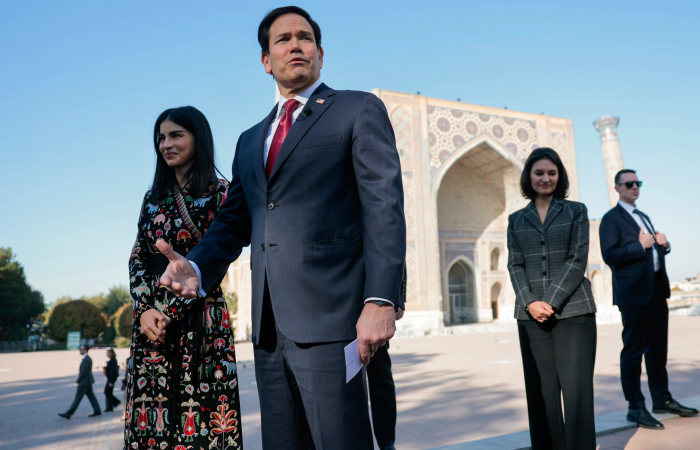
In recent days, Uzbekistan welcomed the Chinese and American governments in quick succession. During Chinese Premier Li Qiang’s visit on 17-18 October, the Uzbek presidential administration said that joint projects backed by firm agreements had reached nearly $60 billion. US Secretary of State Marco Rubio then arrived in Samarkand for C5+1 talks, accompanied at the time by American business leaders seeking contracts, particularly in critical minerals. During the visit, Uzbekistan announced 54 agreements covering trade, investment, and technology. The agreements are said to be worth a total of $12 billion, according to Uzbekistan’s Ministry of Investment, Industry and Trade. However, China still accounts for 23% of Uzbekistan’s foreign trade in January-August 2026, while US goods trade with Uzbekistan totalled at $1.05 billion in 2025, which is less than a fifteenth of the value of its trade with China. Rubio said Washington was not asking Central Asian countries to stop cooperating with other partners, but would instead compete for investment. Tashkent is likely to welcome investment from both sides, but the trade gap shows how challenging it will be if it were to decrease its dependence on Beijing. “Chinese Premier Li Qiang visited Uzbekistan on October 17–18, just ahead of United States Secretary of State Marco Rubio, who arrived in Samarkand on October 18 with a delegation of American business leaders seeking new contracts. While China already has a substantial presence in Uzbek manufacturing and energy, Washington is seeking to expand American involvement in critical minerals and technology. The visits highlight the growing competition between the world’s two largest economies for influence in Central Asia. On October 17, President Shavkat Mirziyoyev received Li Qiang. According to the Uzbek presidential administration, the portfolio of joint projects backed by firm agreements has reached nearly $60 billion. More than 6,000 joint ventures with Chinese participation have been established in Uzbekistan. (...) Construction of the China–Kyrgyzstan–Uzbekistan railway was another topic of discussion. Work officially began in December 2024. The route will cross mountainous areas of Kyrgyzstan and connect the railway networks of China and Uzbekistan. The 304-kilometer section through Kyrgyzstan alone is estimated to cost $4.7 billion and will require 50 bridges and 29 tunnels. (...) On October 19, Rubio attended talks in Samarkand under the C5+1 format, bringing together the U.S. and Kazakhstan, Kyrgyzstan, Tajikistan, Turkmenistan, and Uzbekistan. Rubio said nearly 300 American businesses were represented in Samarkand. Companies were discussing agreements potentially worth billions of dollars, with concrete announcements expected following the meetings. Among Washington’s priorities are critical minerals used in advanced technologies, including electronics and batteries.”

Popular

Editor's choice
Interview
Thursday Interview: Murad Muradov

Thursday Interview: Murad Muradov

Today, commonspace.eu starts a new regular weekly series. THURSDAY INTERVIEW, conducted by Lauri Nikulainen, will host  persons who are thinkers, opinion shapers, and implementors in their countries and spheres. We start the series with an interview with Murad Muradov, a leading person in Azerbaijan's think tank community. He is also the first co-chair of the Action Committee for a new Armenian-Azerbaijani Dialogue. Last September he made history by being the first Azerbaijani civil society activist to visit Armenia after the 44 day war, and the start of the peace process. Speaking about this visit Murad Muradov said: "My experience was largely positive. My negative expectations luckily didn’t play out. The discussions were respectful, the panel format bringing together experts from Armenia, Azerbaijan, and Turkey was particularly valuable during the NATO Rose-Roth Seminar in Yerevan, and media coverage, while varied in tone, remained largely constructive. Some media outlets though attempted to represent me as more of a government mouthpiece than an independent expert, which was totally misleading.  Overall, I see these initiatives as important steps in rebuilding trust and normalising professional engagement. The fact that soon a larger Azerbaijani civil society visits to Armenia followed, reinforces the sense that this process is moving in the right direction." (click the image to read the interview in full)

