Ваан Ованнисян - редкий тип армянских политиков, который совместил политическую проницательность и решимость, с большим личным обаянием и остроумием.

Известие о смерти Ваана Ованнисяна, армянского политика и государственного деятеля, огорчила многих в его стране, а также среди армянских общин за рубежом. С 2013 года Ованнисян служил послом Армении в Германии. Но он был известен больше, как политик, и де-факто лидер Армянской Революционной Федерации - АРФ - (также известной как партия Дашнакцутюн).

Оганесян родился в Ереване. В 1978 году он окончил Московский государственный педагогический университет со степенью по истории и археологии. После службы в Советской Армии с 1978 по 1980, он был научным сотрудником. С 1990 по 1992 он принимал участие в нагорно-карабахской войне.

Он был членом Центрального комитета АРФ с 1990 по 1992 и членом Бюро АРФД с 1992 по 1995. Он был заключен в тюрьму с 1995 по 1998 вместе с другими членами АРФ и ее должностными лицами. Во времена президентства Левон Тер Петросяна был обвинен  в планировании свержения правительства силой. Спустя несколько дней после назначения Роберта Кочаряна на пост президента он был выпущен. С 1999 по 2013 был видным членом армянского парламента, в качестве Председателя различных комитетов, включая Комитет Безопасности и обороны, а с 2003-2008 гг в качестве вице-спикера. На президентских выборах, состоявшихся 19 февраля 2008 года, Оганесян, выдвигался в качестве кандидата АРФД и набрал 6,2% голосов.

Оганесян был хорошо известен и уважаем среди политических кругов в западных странах, где он часто бывал в качестве гостя армянских общин и диаспоры. Он также был активным участником Социалистического интернационала - группировка мирового центра левых политических партий, где АРФД давно является членом. Он также в течение нескольких лет возглавлял парламентскую делегацию Армении в Парламентской Ассамблее НАТО.

Политический редактор Commonspace.eu в своем комментарии написал следующее:

Ваан Ованнисян - редкий тип армянских политиков, который совместил политическую проницательность и решимость, с большим личным обаянием и остроумием. У него были сильные, а иногда и противоречивые взгляды по ряду вопросов, которые он силой отстаивал как в Армении, так и на международной арене. Он был особенно критически настроен по отношению к Турции, и проводил кампанию за признание событий в Анатолии в 1915 как геноцид. Он часто принимал прагматический взгляд по вопросам, связанным с нагорно-карабахским конфликтом. Он принимал участие в конфликте в начале 1990-х годов, но был готов сидеть с азербайджанскими политиками и обсуждать решение этого конфликта. Последние два года его присутствие в большой политике Армении стало менее заметным, так как он был назначен Послом в Германии. Известие о его смерти огорчило многих  армян и тех, кто его знал.


источник: commonspace.eu

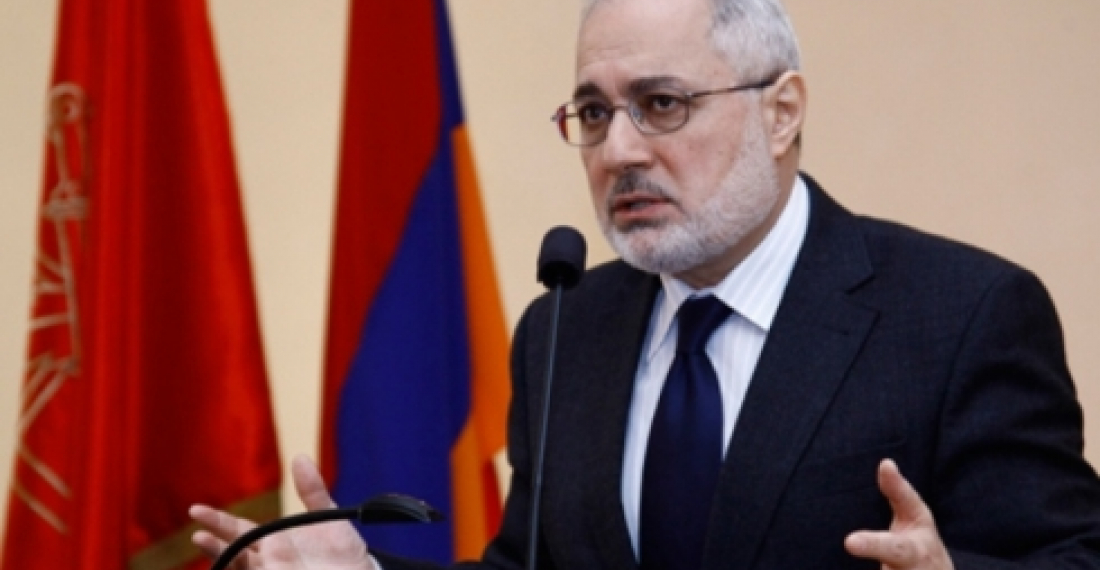
фото: Ваан Ованнисян, армянский политик, который 28 декабря 2014 ушел из жизни (фото из архива).
Related articles

Editor's choice
News
Uzbekistan strengthens its relations with China and US

Uzbekistan strengthens its relations with China and US

In recent days, Uzbekistan welcomed the Chinese and American governments in quick succession. During Chinese Premier Li Qiang’s visit on 17-18 October, the Uzbek presidential administration said that joint projects backed by firm agreements had reached nearly $60 billion. US Secretary of State Marco Rubio then arrived in Samarkand for C5+1 talks, accompanied at the time by American business leaders seeking contracts, particularly in critical minerals. During the visit, Uzbekistan announced 54 agreements covering trade, investment, and technology. The agreements are said to be worth a total of $12 billion, according to Uzbekistan’s Ministry of Investment, Industry and Trade. However, China still accounts for 23% of Uzbekistan’s foreign trade in January-August 2026, while US goods trade with Uzbekistan totalled at $1.05 billion in 2025, which is less than a fifteenth of the value of its trade with China. Rubio said Washington was not asking Central Asian countries to stop cooperating with other partners, but would instead compete for investment. Tashkent is likely to welcome investment from both sides, but the trade gap shows how challenging it will be if it were to decrease its dependence on Beijing. “Chinese Premier Li Qiang visited Uzbekistan on October 17–18, just ahead of United States Secretary of State Marco Rubio, who arrived in Samarkand on October 18 with a delegation of American business leaders seeking new contracts. While China already has a substantial presence in Uzbek manufacturing and energy, Washington is seeking to expand American involvement in critical minerals and technology. The visits highlight the growing competition between the world’s two largest economies for influence in Central Asia. On October 17, President Shavkat Mirziyoyev received Li Qiang. According to the Uzbek presidential administration, the portfolio of joint projects backed by firm agreements has reached nearly $60 billion. More than 6,000 joint ventures with Chinese participation have been established in Uzbekistan. (...) Construction of the China–Kyrgyzstan–Uzbekistan railway was another topic of discussion. Work officially began in December 2024. The route will cross mountainous areas of Kyrgyzstan and connect the railway networks of China and Uzbekistan. The 304-kilometer section through Kyrgyzstan alone is estimated to cost $4.7 billion and will require 50 bridges and 29 tunnels. (...) On October 19, Rubio attended talks in Samarkand under the C5+1 format, bringing together the U.S. and Kazakhstan, Kyrgyzstan, Tajikistan, Turkmenistan, and Uzbekistan. Rubio said nearly 300 American businesses were represented in Samarkand. Companies were discussing agreements potentially worth billions of dollars, with concrete announcements expected following the meetings. Among Washington’s priorities are critical minerals used in advanced technologies, including electronics and batteries.”

Popular

Editor's choice
Interview
Thursday Interview: Murad Muradov

Thursday Interview: Murad Muradov

Today, commonspace.eu starts a new regular weekly series. THURSDAY INTERVIEW, conducted by Lauri Nikulainen, will host  persons who are thinkers, opinion shapers, and implementors in their countries and spheres. We start the series with an interview with Murad Muradov, a leading person in Azerbaijan's think tank community. He is also the first co-chair of the Action Committee for a new Armenian-Azerbaijani Dialogue. Last September he made history by being the first Azerbaijani civil society activist to visit Armenia after the 44 day war, and the start of the peace process. Speaking about this visit Murad Muradov said: "My experience was largely positive. My negative expectations luckily didn’t play out. The discussions were respectful, the panel format bringing together experts from Armenia, Azerbaijan, and Turkey was particularly valuable during the NATO Rose-Roth Seminar in Yerevan, and media coverage, while varied in tone, remained largely constructive. Some media outlets though attempted to represent me as more of a government mouthpiece than an independent expert, which was totally misleading.  Overall, I see these initiatives as important steps in rebuilding trust and normalising professional engagement. The fact that soon a larger Azerbaijani civil society visits to Armenia followed, reinforces the sense that this process is moving in the right direction." (click the image to read the interview in full)