


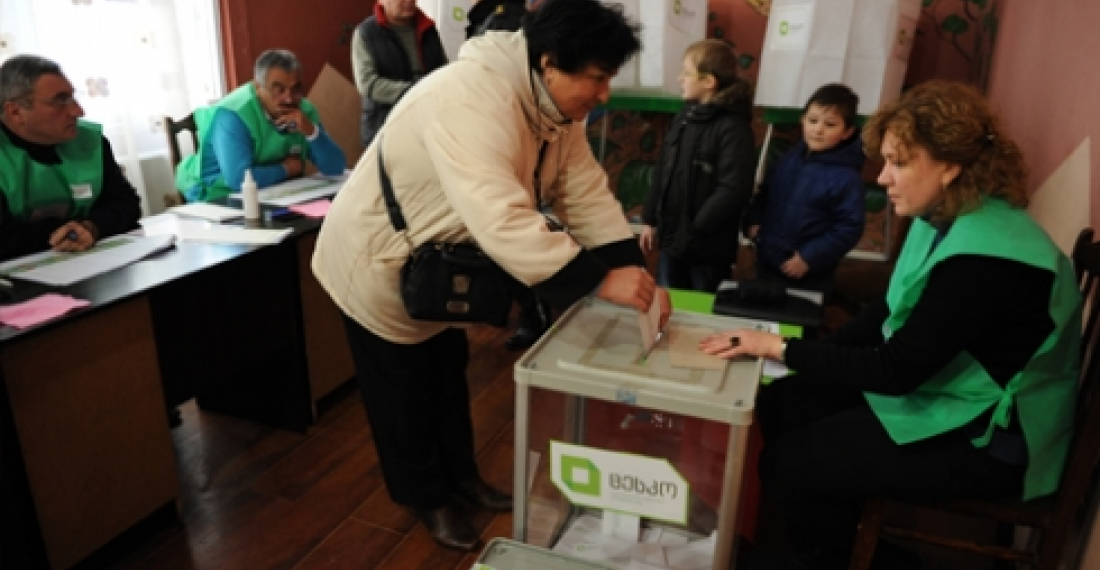
В Грузии проходят президентские выборы.

Сегодня Грузия выбирает нового президента. После спокойной предвыборной кампании народ Грузии должeен сейчас сделать свой выбор в пользу одного из 23 кандидатов. 

Фаворитом в гонке по социологическим данным является Георгий Маргвелашвили, кандидат от коалиции "Грузинская мечта", кого публично поддержал премьер-министр Бидзина Иванишвили. Иванишвили лично принимал участие в некоторых встречах с избирателями данного кандидата во время кампании. 

По мнению политического редактора Commonspace.eu, выборы ознаменуют поворотную точку в современной истории Грузии. Президента, чей срок полномочий истек, сменят путем голосования, которое до сих пор проходит без явных нарушений. Большинство международных организаций не будут спешить с оценкой выборов до конца дня голосования и процесса подсчета голосов. Но если все пойдет хорошо, эти выборы откроют серьезные перспективы для Грузии в достижении своих долгосрочных стремлений к  присоединению к Европе в качестве равноправного партнера.

Новая ситуация, которая может возникнуть после выборов имеет свои опасности. Если "Грузинская мечта" займет кресло президента и правительства, а также большинство в парламенте, то тот краткий процесс сосуществования, сложившийся в Грузии за последний год, завершится, а вместе с ним и та система сдержек и противовесов, что имело место в этой модели. Ничего плохого в этом нет. Многие страны имеют президентов и правительств из одной и той же партии. В этом случае, однако, роль судебной системы и гражданского общества становится очень важной, и также надлежащий контроль со стороны парламента за поведением правительства. Акцент будет смещен на эти три сектора, после того, как пыль выборов осядет.

Источник: Commonspace.eu

Фото: Грузины на выборах на одном из предвыборном участке.

Related articles

Editor's choice
News
The British prime minister says Europe must "stand on its own two feet" when it comes to defence

The British prime minister says Europe must "stand on its own two feet" when it comes to defence

The UK will deploy a carrier strike group, led by the aircraft carrier HMS Prince of Wales to the Arctic and the High North as part of efforts to bolster security against Russian threats. British prime minister, Sir Keir Starmer announced the deployment in a speech on Saturday (14 February) at the Munich Security Conference. Europe must be ready to fight to protect its people, values, and way of life,  Sir Keir told the Conference. Starmer also called for deeper links and cooperation, including economic ties, between the UK and EU. The PM stressed the continent must "stand on its own two feet" when it comes to defence commitments. "We must build our hard power, because that is the currency of the age," he told the conference. (Click image to read the full story).

Popular

Editor's choice
Interview
Thursday Interview: Murad Muradov

Thursday Interview: Murad Muradov

Today, commonspace.eu starts a new regular weekly series. THURSDAY INTERVIEW, conducted by Lauri Nikulainen, will host  persons who are thinkers, opinion shapers, and implementors in their countries and spheres. We start the series with an interview with Murad Muradov, a leading person in Azerbaijan's think tank community. He is also the first co-chair of the Action Committee for a new Armenian-Azerbaijani Dialogue. Last September he made history by being the first Azerbaijani civil society activist to visit Armenia after the 44 day war, and the start of the peace process. Speaking about this visit Murad Muradov said: "My experience was largely positive. My negative expectations luckily didn’t play out. The discussions were respectful, the panel format bringing together experts from Armenia, Azerbaijan, and Turkey was particularly valuable during the NATO Rose-Roth Seminar in Yerevan, and media coverage, while varied in tone, remained largely constructive. Some media outlets though attempted to represent me as more of a government mouthpiece than an independent expert, which was totally misleading.  Overall, I see these initiatives as important steps in rebuilding trust and normalising professional engagement. The fact that soon a larger Azerbaijani civil society visits to Armenia followed, reinforces the sense that this process is moving in the right direction." (click the image to read the interview in full)


