


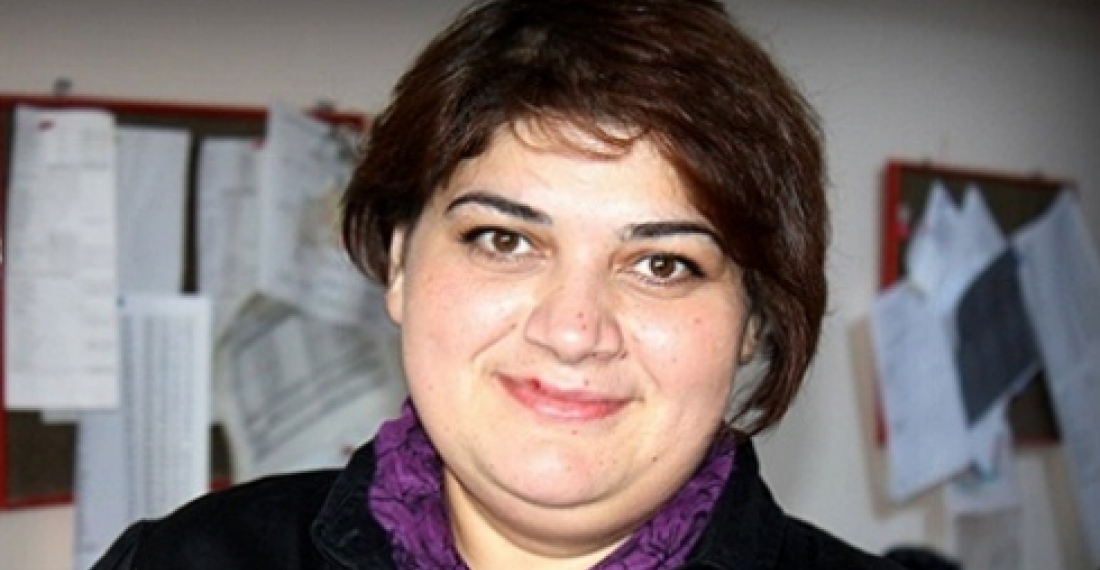
В Азербайджане освободили Хадиджу Исмаилову

Хадиджа Исмайлова, известая азербайджанская журналистка, была освобождена из заключения. Об этом было объявлено в среду. Освобождению предшествовало длительная международная кампания по снятию с неё обвинений.

Журналистка RFE/RL была арестована в декабре 2014 года и приговорена к 7,5 годам за различные финансовые преступления, в том числе в хищении и уклонении от уплаты налогов. Тем не менее, ряд международных правозащитных организаций раскритиковали эти обвинения. Amnesty International заявило, что этим арестом "хотели заставить замолчать свободные средства массовой информации".

3 мая Исмайлова была награждена премией Юнеско/Гильермо Кано за её журналистские расследования. В то время как правительство обвиняет её в преступлениях, она говорит, что проводила журналистские расследования против правящих элит Азербайджана.

"Я журналист и моим "единственным" преступлением было расследование коррупции на высшем уровне в правительстве и семье президента Азербайджана Ильхама Алиева", написала она в Washington Post в марте.

Освобождение состоялось после серии помилований президентом Алиевым в марте, как раз перед тем, как президент Азербайджана принял участие в саммите в Вашингтоне. США и Европейский союз настаивали на освобождении Исмайловой. Правительство Азербайджана также планирует ряд помилований за мелкие преступления 28 мая, в Национальный день Азербайджана.

В случае, если апелляция Исмайловой была бы отклонена, то дело могло быть передано в Европейский суд по правам человека, где бы её скорее всего представляла Амалья Клуни, что привлекло бы дополнительное внимание.

Лидер оппозиции Ильгар Мамедов остается в заключении, хоть Европейский суд и заявил, что обвинения против него политически мотивированы.

источник: commonspace.eu по материалам агентств

фото: Хадиджа Исмайлова

 

Related articles

Editor's choice
News
The British prime minister says Europe must "stand on its own two feet" when it comes to defence

The British prime minister says Europe must "stand on its own two feet" when it comes to defence

The UK will deploy a carrier strike group, led by the aircraft carrier HMS Prince of Wales to the Arctic and the High North as part of efforts to bolster security against Russian threats. British prime minister, Sir Keir Starmer announced the deployment in a speech on Saturday (14 February) at the Munich Security Conference. Europe must be ready to fight to protect its people, values, and way of life,  Sir Keir told the Conference. Starmer also called for deeper links and cooperation, including economic ties, between the UK and EU. The PM stressed the continent must "stand on its own two feet" when it comes to defence commitments. "We must build our hard power, because that is the currency of the age," he told the conference. (Click image to read the full story).

Popular

Editor's choice
Interview
Thursday Interview: Murad Muradov

Thursday Interview: Murad Muradov

Today, commonspace.eu starts a new regular weekly series. THURSDAY INTERVIEW, conducted by Lauri Nikulainen, will host  persons who are thinkers, opinion shapers, and implementors in their countries and spheres. We start the series with an interview with Murad Muradov, a leading person in Azerbaijan's think tank community. He is also the first co-chair of the Action Committee for a new Armenian-Azerbaijani Dialogue. Last September he made history by being the first Azerbaijani civil society activist to visit Armenia after the 44 day war, and the start of the peace process. Speaking about this visit Murad Muradov said: "My experience was largely positive. My negative expectations luckily didn’t play out. The discussions were respectful, the panel format bringing together experts from Armenia, Azerbaijan, and Turkey was particularly valuable during the NATO Rose-Roth Seminar in Yerevan, and media coverage, while varied in tone, remained largely constructive. Some media outlets though attempted to represent me as more of a government mouthpiece than an independent expert, which was totally misleading.  Overall, I see these initiatives as important steps in rebuilding trust and normalising professional engagement. The fact that soon a larger Azerbaijani civil society visits to Armenia followed, reinforces the sense that this process is moving in the right direction." (click the image to read the interview in full)


