


В 2012 ГОДУ РОССИЯ ПРОДАЛА ОРУЖИЯ НА $ 15,16 млрд.
Россия в 2012 году продала вооружений на рекордные $ 15,16 млрд., расширив список своих внешних покупателей, как сообщает РИА Новости со ссылкой на Федеральную службу по военно-техническому сотрудничеству (ФСВТС) в отчете от 21 января.

"По предварительным итогам ­ окончательные итоги мы подведем в конце января ­ начале февраля, на сегодняшний день объем экспорта продукции военного назначения за рубеж составил 15,16 миллиарда долларов, с точки зрения планов они выполнены на 111,8%", ­ приводит слова Фомина РИА Новости.

"За последние десять лет мы видели общий рост экспорта, который увеличился в три раза с 2003 года", - сказал Фомин. Общая стоимость российских контрактов достигла в 2011 году уровня в $13,2 млрд.  "Портфель заказов оборонной продукции также увеличился в три раза. Его текущий объём превышает $ 46 млрд.", - добавил он.

Россия занимает в мире второе место по экспорту оружия после Соединенных Штатов. Индия является ведущим покупателем российского оружия, с Мьянмой, Вьетнамом, Венесуэлой и странами Ближнего Востока среди основных клиентов оборонной промышленности России.

Фомин сообщил, что список стран, которым Россия поставляет оружие также расширился в 2012 году, в него попали  Афганистан, Гана, Оман и Танзания. ФСВТС также утверждает, что качество экспортируемой продукции улучшилось, хотя проблемы и остаются, особенно из-за плохого послепродажного сервиса.

И Армения, и Азербайджан закупают оружие в России. Армения также получила военную помощь от России в результате ее членства в российском военном альянсе ОДКБ и из-за российской базы в Армении. Азербайджан менее зависим от российских вооружений. Израиль стал самым важным поставщиком оружия для Азербайджана.

Источник: commonspace.eu по материалам RIA.ru и Hurriyet Daily News.

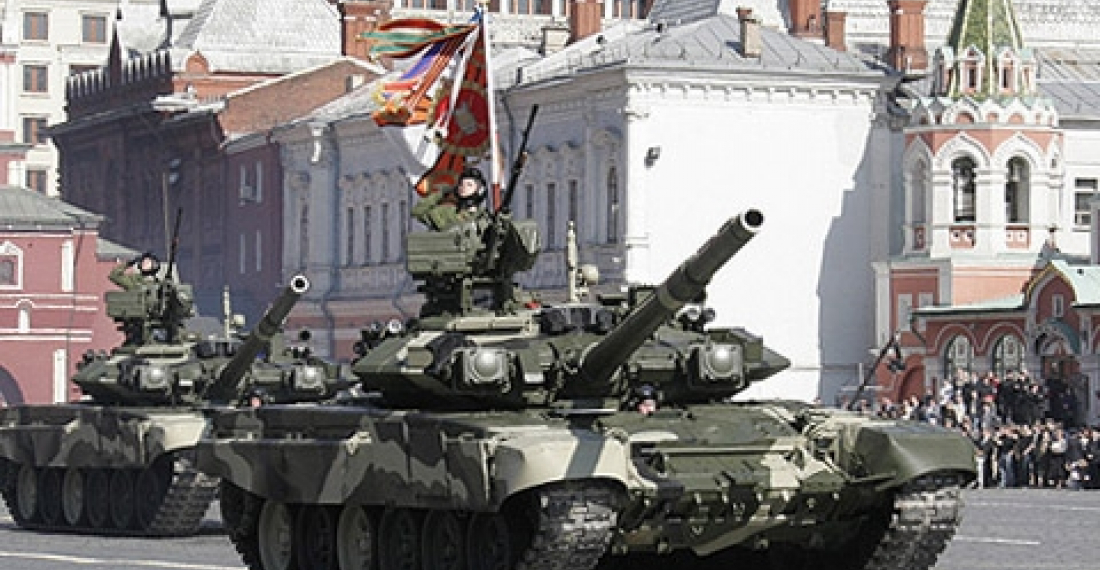
Фото: Российский танк T-90 на параде в Москве в 2009 году. Азербайджан недавно закупил в России партию этих танков.

Related articles

Editor's choice
News
Key European countries back Denmark in the face of Trump's continuing insistence on taking over Greenland

Key European countries back Denmark in the face of Trump's continuing insistence on taking over Greenland

 Six major European countries have declared their support to Denmark following renewed insistence by the US that it must have control over Greenland. "Greenland belongs to its people, and only Denmark and Greenland can decide on matters concerning their relations," said the leaders of the UK, France, Germany, Italy, Poland, and Spain, in a joint statement, issued on Tuesday (6 January), together with Denmark. On Sunday, Donald Trump said the US "needed" Greenland - a semi-autonomous region of fellow Nato member Denmark - for security reasons. He has refused to rule out the use of force to take control of the territory, and Danish Prime Minister Mette Frederiksen warned on Monday that an attack by the US would spell the end of Nato. The issue of Greenland's future resurfaced in the wake of the US military intervention in Venezuela, during which elite troops went in to seize the country's President Nicolás Maduro and take him to face drugs and weapons charges in New York. Following the raid, Trump said the US would "run" Venezuela for an unspecified period of time. He also said the US was returning to an 1823 policy of US supremacy in its sphere of influence in the Western hemisphere - and he warned a number of countries the US could turn its attention to them. The US military raid in Venezuela has reignited fears that the US may consider using force to secure control of Greenland. A day after the raid, Katie Miller - the wife of one of Trump's senior aides - posted on social media a map of Greenland in the colours of the American flag, alongside the word "SOON". On Monday, her husband Stephen Miller said it was "the formal position of the US government that Greenland should be part of the US". In an interview with CNN, he also said the US "is the power of Nato. For the US to secure the Arctic region, to protect and defend Nato and Nato interests, obviously Greenland should be part of the US." Asked repeatedly whether the US would rule out using force to annex it, Miller responded: "Nobody's going to fight the US over the future of Greenland." Stressing they were as keen as the US in Arctic security, the seven European signatories of Tuesday's joint statement said this must be achieved by Nato allies, including the US "collectively" - whilst "upholding the principles of the UN Charter, including sovereignty, territorial integrity and the inviolability of borders". Greenland's Prime Minister Jens-Frederik Nielsen welcomed the statement and called for "respectful dialogue". "The dialogue must take place with respect for the fact that Greenland's status is rooted in international law and the principle of territorial integrity," Nielsen said. Trump has claimed that making Greenland part of the US would serve American security interests due to its strategic location and its abundance of minerals critical to high-tech sectors. Greenland, which has a population of 57,000 people, has had extensive self-government since 1979, though defence and foreign policy remain in Danish hands. While most Greenlanders favour eventual independence from Denmark, opinion polls show overwhelming opposition to becoming part of the US.

Popular



