


Усилия по перезагрузке мирных переговоров по Карабаху продолжаются.

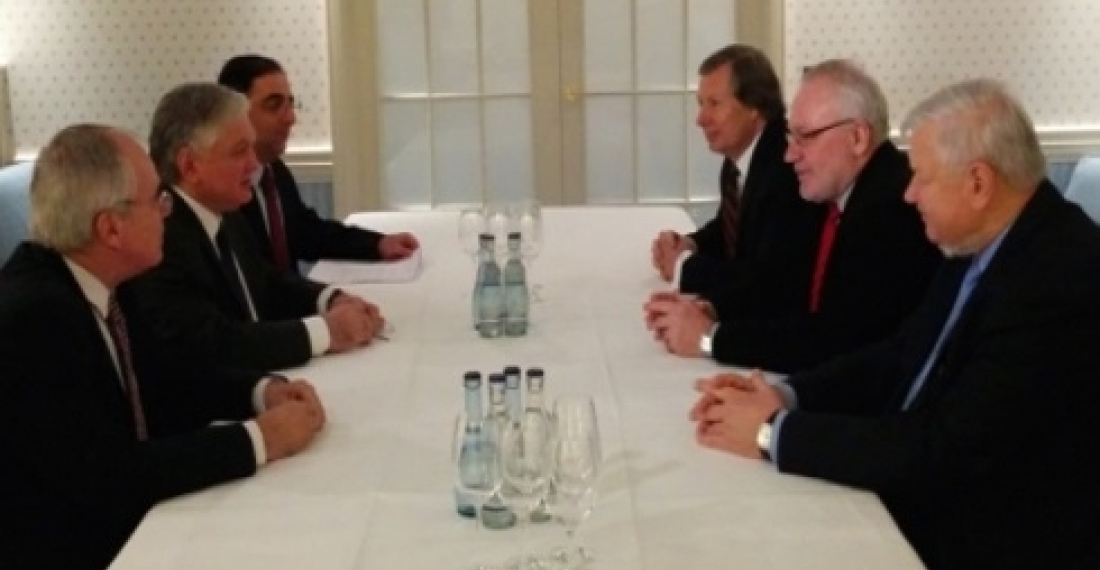
Международные усилия направленные на перезагрузку переговоров по урегулированию конфликта между Арменией и Азербайджаном продолжилиь вчера в Мюнхене во время встречи сопредседателей Минского процесса ОБСЕ с министром иностранных дел Армении Эдвардом Налбандяном в кулуарах Мюнхенской Конференция по безопасности. В заявлении, опубликованном через пресс-службу Организации по безопасности и сотрудничеству в Европе (ОБСЕ) послы Игор Попов от Российской Федерации, Джеймса Уорлика от Соединенных Штатов Америки, и Пьер Андрие от Франции сказали следующее:

"Мы с тревогой отмечаем рост числа инцидентов вдоль линии соприкосновения и армяно-азербайджанской границы, в том числе в жилых районах. Мы также обсудили с министром предложенные меры по снижению вероятности таких инцидентов. В частности, сторонам необходимо принять меры по недопущению повторения инцидента со сбитым вертолетем 12 ноября.

Насилие и напряженность между сторонами, подчеркивает необходимость начала всеобъемлющих переговоров и как можно скорее достичь прочного урегулирования. Мы призвали министра проявить больше гибкости, чтобы такие переговоры могли начаться.

Мы напомнили о важности скорой реализации договоренностей президентов по обмену данными о пропавших без вести лиц под эгидой МККК. Такой обмен данными может построить доверие между сторонами и содействовать процессу примирения.

Кроме того, мы призвали к возобновлению диалога между президентами при первой же возможности."

Политический редактор Commonspace.eu в своем комментарии сообщает, "заявление отражает возросшее разочарование в международном сообществе в связи с неспособностью сторон положительно участвовать в усилиях по урегулированию конфликта мирным путем, и опасений, что насилие постоянно происходящее на линии соприкосновения может выйти из под контроля. Стороны ежедневно сообщают о жертвах, число жертв среди гражданского населения также растет поэтому необходимо возобновить серьезные переговоры. Сопредседатели в конце этого месяца посетят регион, чтобы встретиться с двумя  президентами. Однако, встреча президентов лицом к лицу или на уровне министров пока врятли возможна. Тон заявления сопредседателей после встречи с министром иностранных дел Армении был более грубый, чем обычно, и в соответствии с аналогичным заявлением опубликованным 26 января, когда сопредседатели встретились с министром иностранных дел Азербайджана в Польше. На данный момент у посредников в их распоряжении немного средств, помимо дипломатической настойчивости. Мы пока еще не видили дипломатического выкручивания рук, но рукопожатия становятся грубее."

источник: commonspace.eu

фото: министр иностранных дел Армении Эдвард Налбандян на встрече с сопредседателями Минского процесса ОБСЕ в Мюнхене, 6 февраля 2015 года (фото любезно предоставлено пресс-службой Министерства иностранных дел Армении).


Related articles

Editor's choice
News
Women emerge favourite to lead United Nations from next year, after straw-poll of UN Security Council members

Women emerge favourite to lead United Nations from next year, after straw-poll of UN Security Council members

​ Two women have emerged as favourite to lead the United Nations as Secretary-General from 1 January 2027, when the term of the present incumbent, Antonio Gutteres, expires. A straw poll of the members of the UN Security Council, held on Thursday, 30 July showed that of the seven candidates, Rebecca Grynspan of Costa Rica and Carolyn Rodriguez-Birkett of Guyana received ten and nine positive endorsements respectively, by the 15 members UN Security Council Although the poll and its result are supposed to be secret, the result leaked within minutes, and was carried on world media outlets, such as Reuters. The result was as follows   Michelle Bachelet 6 encourage 5  discourage   4 no opinion María Fernanda Espinosa 5 2 8 Rafael Grossi 7 2 6 Rebeca Grynspan 10 1 4 Olara Otunnu 2 5 8 Carolyn Rodrigues-Birkett 9 2 4 Macky Sall 6 7 2   Article 97 of the UN Charter states that the “Secretary-General shall be appointed by the General Assembly upon the recommendation of the Security Council”. Straw polls are informal ballots used to determine the viability of Secretary-General candidates.  The seven current candidates are: Michelle Bachelet Jeria (Chile), who was nominated by Brazil, Chile, and Mexico on 2 February, with Chile withdrawing its nomination on 24 March; María Fernanda Espinosa Garcés (Ecuador), who was nominated by Antigua and Barbuda on 11 May; Rafael Mariano Grossi (Argentina), who was nominated by Argentina on 26 November 2025; Rebeca Grynspan Mayufis (Costa Rica), who was nominated by Costa Rica on 3 March; Olara Otunnu (Uganda), who was nominated by Uganda on 24 July; Carolyn Rodrigues Birkett (Guyana), who was nominated by Guyana on 15 June; and Macky Sall (Senegal), who was nominated by Burundi on 2 March. At Thursday's straw poll, there was no difference between the ballots presented to the five permanent members (P5) and the ten elected members (E10). Council members received one ballot per candidate, containing the candidate’s name followed by three options: “encouraged”, “discouraged”, and “no opinion expressed”.   It is ofcourse early days, and the straw poll is just an informal indication of the mood of the UN Security Council, but the strong showwing by the two womencandidates may be an indication that for the first time, the head of the UN can be a women. (click image to read more) ​

Popular

Editor's choice
Interview
Thursday Interview: Murad Muradov

Thursday Interview: Murad Muradov

Today, commonspace.eu starts a new regular weekly series. THURSDAY INTERVIEW, conducted by Lauri Nikulainen, will host  persons who are thinkers, opinion shapers, and implementors in their countries and spheres. We start the series with an interview with Murad Muradov, a leading person in Azerbaijan's think tank community. He is also the first co-chair of the Action Committee for a new Armenian-Azerbaijani Dialogue. Last September he made history by being the first Azerbaijani civil society activist to visit Armenia after the 44 day war, and the start of the peace process. Speaking about this visit Murad Muradov said: "My experience was largely positive. My negative expectations luckily didn’t play out. The discussions were respectful, the panel format bringing together experts from Armenia, Azerbaijan, and Turkey was particularly valuable during the NATO Rose-Roth Seminar in Yerevan, and media coverage, while varied in tone, remained largely constructive. Some media outlets though attempted to represent me as more of a government mouthpiece than an independent expert, which was totally misleading.  Overall, I see these initiatives as important steps in rebuilding trust and normalising professional engagement. The fact that soon a larger Azerbaijani civil society visits to Armenia followed, reinforces the sense that this process is moving in the right direction." (click the image to read the interview in full)

