


Удержание баланса для ЕС в отношениях с Азербайджаном является сложным процессом, но необходимым

Этот комментарий подготовлен редакционной коллегией Commonspace.eu

На следующей неделе Азербайджан посетит Комиссар Европейского Союза по вопросам европейской политики соседства и переговоров по расширению, Йоханнес Хан. Глава делегации ЕС в Баку, посол Мелана Мард, охарактеризовала визит как "важный". Мард сообщила азербайджанским СМИ, что такие визиты в страны-партнеры являются нормальным, и что визит Хана также является частью подготовки к Встрече на высшем уровне между ЕС и странами Восточного партнерства, запланированной на ноябрь.

Однако, визит проходит в решающий момент в отношениях между ЕС и Азербайджаном. Обе стороны в феврале начали переговоры о новом рамочном соглашении, которое определит отношения между ними в течение следующего десятилетия. Обсуждения продолжаются, и ожидается, что новый раунд состоится в Баку также на следующей неделе, на повестке дня вопросы "политической безопасности и торговли".

И Азербайджан, и Европейский Союз видят выгоду в прочных связях между ними, и стремятся к быстрому и успешному завершению переговоров.

Однако, в двусторонней повестке дня остаются нерешенные вопросы, которые ставят перед обеими сторонами проблемы. Некоторые из них являются техническими и связаны с необходимостью для Азербайджана обновить множество законов, мер и практики в сфере бизнеса и экономики. Некоторые из них более проблематичны, поскольку они находятся в политической сфере. В Брюсселе есть опасения по ряду вопросов государственного управления и стремление к тому, чтобы правительство Азербайджана делало больше для решения этих проблем. Представители ЕС в начале переговоров ясно дали понять, что эти вопросы не могут быть исключены из отношений. Недавние сообщения о случаях жестокого обращения в тюрьмах, а также о проблеме азербайджанцев, проживающих в Грузии, говорится в заявлении, опубликованном Европейским Союзом 2 июня, усложняют контекст продолжающихся переговоров.

Комиссару Хану придется затронуть эти вопросы в ходе переговоров с руководством Азербайджана на следующей неделе. Однако, не бывает легких и быстрых решений. Процесс реформ в Азербайджане продолжается, но идет медленнее, чем ожидалось, когда президент Ильхам Алиев пришел к власти в 2003 году. Европейский Союз может подтолкнуть процесс вперед, но не дальше желания руководства Азербайджана. Потребуется проявить терпение во всем. Однако, Европейскому Союзу также необходимо развивать связи с различными элементами азербайджанского общества, в том числе с политической оппозицией. Этот процесс должен быть прозрачным и о нем необходимо надлежащим образом сообщать властям Азербайджана, чтобы избежать неправильного понимания, но этого процесса не избежать. В интересах всех, чтобы в случае нового соглашения между ЕС и Азербайджаном, оно имело самую широкую поддержку среди азербайджанского общества.

Другой вопрос, который маячит на заднем плане - Нагорный Карабах. ЕС привержен к мирному решению карабахского конфликта и поддерживает работу Минской группы в этом направлении. ЕС признает территориальную целостность трех стран Южного Кавказа. Это важный момент для азербайджанской стороны. Исходя из этого, ЕС не поддерживает связей с де-факто властями в Нагорном Карабахе. В отличие от других сценариев, таких как в Абхазии и Южной Осетии и Приднестровья, ЕС не играет роли в процессе посредничества. Это означает, что он не видит никаких оснований для взаимодействия с де-факто властями за самым низким минимумом. Поиск правильной формулировки для решения этой проблемы в новом соглашении будет сложным, тем более, что эта формулировка должна соответствовать формулировке, которая будет использоваться в соглашении ЕС-Армения, которое в настоящее время находится в процессе рассмотрения, и, которое Армения надеется подписать к концу года. Потребуется проявить гибкость со всех сторон - что в весьма большом дефиците.

Европейскому Союзу необходимо сохранить сотрудничество с Азербайджаном в полной мере, тесно сотрудничая с правительством, а также и с другими частями общества. Во время своего визита в Баку Комиссар Хан должен будет проявить твердость и принципиальность, но и справедливость и гибкость. И в ЕС и в самом регионе найдутся те, кто по узким причинам хотел бы, чтобы переговоры между Азербайджаном и Европейским Союзом потерпели неудачу. Этого нельзя допускать. Удержание баланса для ЕС в отношениях с Азербайджаном является сложным процессом, но необходимым.

Этот комментарий подготовлен редакционной коллегией Commonspace.eu

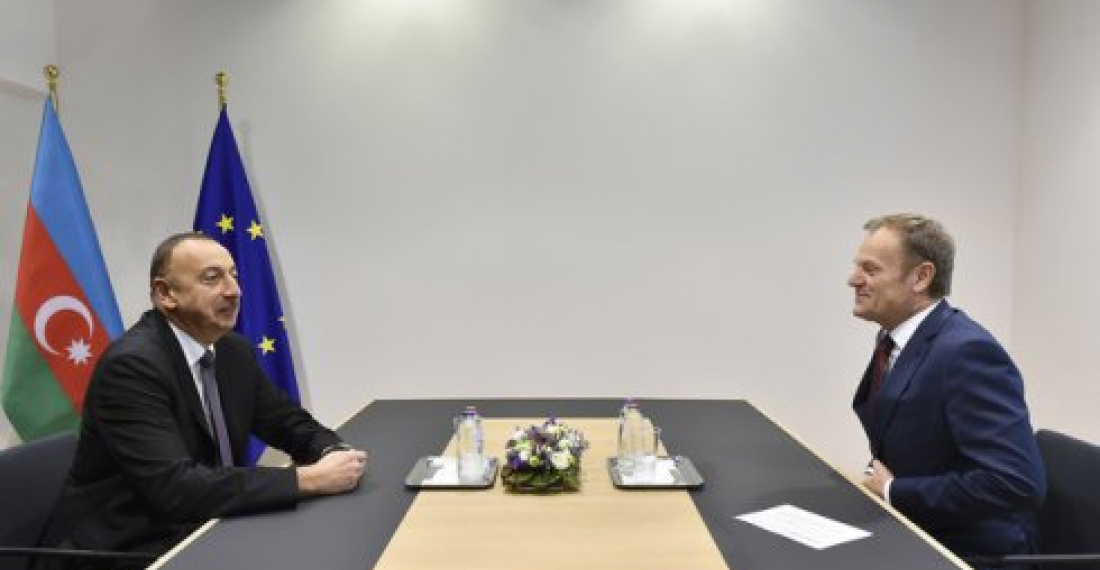
Фото: Президент Азербайджана Алиев в ходе встречи с президентом Европейского Совета Дональдом Туском в Брюсселе, в феврале 2017 года (фото из архива).


Related articles

Editor's choice
News
Russia adds pressure on Armenia ahead of key elections; recalls Ambassador in Yerevan for consultations

Russia adds pressure on Armenia ahead of key elections; recalls Ambassador in Yerevan for consultations

Ahead of key parliamentary elections,scheduled to be held in Armenia on Sunday, 7 June, Russia continues to attempt to put pressure on the Armenian Government led by prime minister Nikol Pashinyan. On 30 May, Russia recalled its Ambassador to Yerevan for consultations. A terse statement, published on the website of the Russian Foreign Ministry, said, "The Ambassador of the Russian Federation to the Republic of Armenia , S.P. Kopyrkin, has been summoned to Moscow for consultations in connection with the steps taken by the Armenian leadership to move closer to the European Union, which are detrimental to cooperation within the EAEU." This followed a statement issued the day before, by the leaders of the Eurasian Economic Union (EAEU) that challenges the Armenian trajectory towards approximating to the European Union. Vladimir Putin is undertood to have personally pushed the other four EAEU leaders to issue the statement, which said: "Taking into account the significant risks to the economic security of the member states of the Eurasian Economic Union (hereinafter referred to as the Union) arising in connection with the preparation of the Republic of Armenia for accession to the European Union, as well as the need to prevent the associated damage to the member states of the Union: decided that the members of the Eurasian Intergovernmental Council from the Republic of Belarus, the Republic of Kazakhstan, the Kyrgyz Republic and the Russian Federation will report at the next meeting of the Supreme Eurasian Economic Council in December 2026 on the possible consequences of the suspension of the Treaty on the Eurasian Economic Union with respect to the Republic of Armenia. We share the position on the need to hold a national referendum in the Republic of Armenia as soon as possible on joining the European Union or continuing to be part of the Eurasian Economic Union."
Editor's choice
News
The leaders of the states of the Eurasian Economic Union issued a tough statement warning fellow-member state Armenia of the consequences of its desire to join the European Union.

The leaders of the states of the Eurasian Economic Union issued a tough statement warning fellow-member state Armenia of the consequences of its desire to join the European Union.

The leaders of the states of the Eurasian Economic Union (EEAS) issued a tough statement warning fellow-member state Armenia of the consequences of its desire to join the European Union. The stark, sharply worded,  warning, comes days before crucial parliamentary elections in Armenia, scheduled for 7 June. The full statement said, “We, the Presidents of the Republic of Belarus, the Republic of Kazakhstan, the Kyrgyz Republic and the Russian Federation, Taking into account the actions of the Republic of Armenia aimed at joining the European Union, including the approval in 2025 by the National Assembly of the Republic of Armenia and the signing by the President of the Republic of Armenia of the Law of the Republic of Armenia "On the Start of the Process of Accession of the Republic of Armenia to the European Union", as well as the confirmation by the European Union of the European aspirations of the Government of the Republic of Armenia, expressed in the joint declaration following the first Armenia-European Union summit, adopted on 5 May 2026, Taking into account the significant risks to the economic security of the member states of the Eurasian Economic Union (hereinafter referred to as the Union) arising in connection with the preparation of the Republic of Armenia for accession to the European Union, as well as the need to prevent the associated damage to the member states of the Union: decided that the members of the Eurasian Intergovernmental Council from the Republic of Belarus, the Republic of Kazakhstan, the Kyrgyz Republic and the Russian Federation will report at the next meeting of the Supreme Eurasian Economic Council in December 2026 on the possible consequences of the suspension of the Treaty on the Eurasian Economic Union with respect to the Republic of Armenia. We share the position on the need to hold a national referendum in the Republic of Armenia as soon as possible on joining the European Union or continuing to be part of the Eurasian Economic Union. Astana, May 29, 2026” A meeting of the Supreme Eurasian Economic Council was held in Astana, Kazakhstan, on May 29, 2026. The meeting of the Supreme Eurasian Economic Council in a restricted format was attended by Russian President Vladimir Putin, Belarusian President Alexander Lukashenko , Kazakh President Kassym-Jomart Tokayev , Kyrgyz President Sadyr Japarov , Armenian Deputy Prime Minister Mher Grigoryan, and Chairman of the Board of the Eurasian Economic Commission Bakytzhan Sagintayev. From the Russian side, the meeting was also attended by Deputy Prime Minister and member of the Council of the Eurasian Economic Commission Alexey Overchuk and Presidential Aide Yury Ushakov . The heads of delegations from EAEU observer states, including President of Uzbekistan Shavkat Mirziyoyev , Vice President of Cuba Salvador Valdés Mesa, Minister of Industry, Mines, and Trade of Iran Mohammad Atabak, and CIS Secretary General Sergei Lebedev, joined the expanded meeting . Following the meeting of the Supreme Eurasian Economic Council, a number of documents were signed .

Popular

Editor's choice
Interview
Thursday Interview: Murad Muradov

Thursday Interview: Murad Muradov

Today, commonspace.eu starts a new regular weekly series. THURSDAY INTERVIEW, conducted by Lauri Nikulainen, will host  persons who are thinkers, opinion shapers, and implementors in their countries and spheres. We start the series with an interview with Murad Muradov, a leading person in Azerbaijan's think tank community. He is also the first co-chair of the Action Committee for a new Armenian-Azerbaijani Dialogue. Last September he made history by being the first Azerbaijani civil society activist to visit Armenia after the 44 day war, and the start of the peace process. Speaking about this visit Murad Muradov said: "My experience was largely positive. My negative expectations luckily didn’t play out. The discussions were respectful, the panel format bringing together experts from Armenia, Azerbaijan, and Turkey was particularly valuable during the NATO Rose-Roth Seminar in Yerevan, and media coverage, while varied in tone, remained largely constructive. Some media outlets though attempted to represent me as more of a government mouthpiece than an independent expert, which was totally misleading.  Overall, I see these initiatives as important steps in rebuilding trust and normalising professional engagement. The fact that soon a larger Azerbaijani civil society visits to Armenia followed, reinforces the sense that this process is moving in the right direction." (click the image to read the interview in full)

