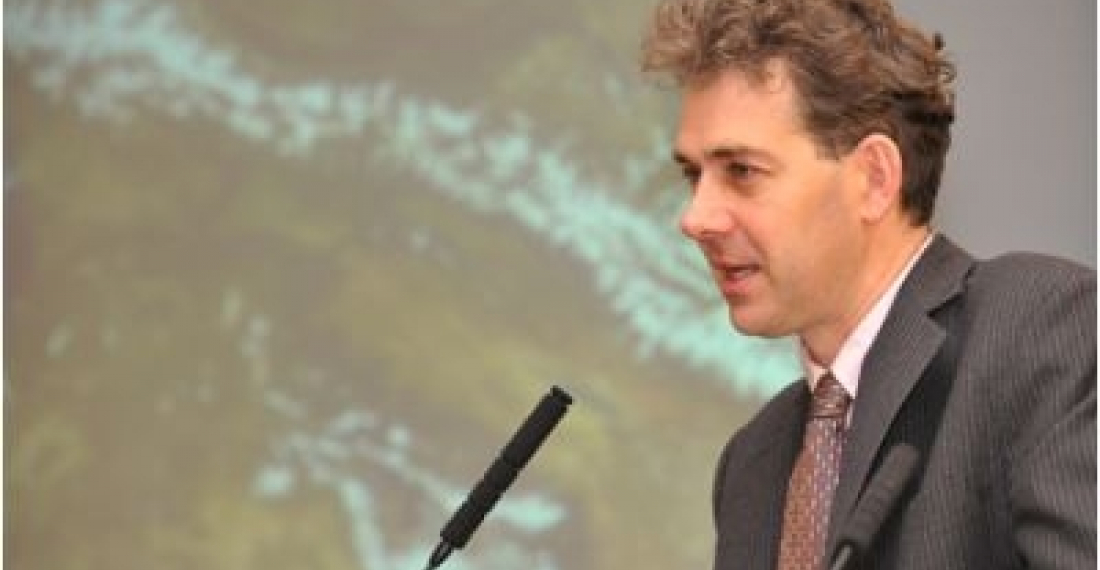
Томас де Ваал:

В условиях шквала международных новостей на данный момент, будет простительным пропустить заявление президентов Медведева, Обамы и Саркози на саммите «большой восьмерки» в Довиле по поводу конфликта в Нагорном Карабахе. Но оно, тем не менее - наиболее серьезное международное заявление по поводу конфликта за многие годы. Об этом в американском издании "The National Interest" пишет эксперт американского института Карнеги, автор ряда книг и публикаций по Карабаху Томас де Ваал.

В статье, озаглавленной «Еще один провалившийся мирный процесс”, эксперт отмечает:

“В течение полутора десятков лет мир едва замечал переговоры по разрешению самого долгоиграющего затяжного конфликта на постсоветском пространстве, армяно-азербайджанского спора по поводу Карабаха. Мирный процесс слишком закрыт, а вопрос слишком сложен и таинствен для всех, кроме бедной несчастной невежественной группы аналитиков (таких как я сам), которые следят за ним и обращают на него внимание».

Заявление, сделанное 26 мая тремя главами государств, предпринимающих посреднические усилия, ясно дает понять, что момент истины приближается. В Казани в конце июня президент Дмитрий Медведев при поддержке американских и французских переговорщиков окажет сильное давление на президентов Алиева и Саркисяна с тем, чтобы они, наконец, достигли договоренности по Документу об основных принципах, который они обсуждают уже более пяти лет на настоящий момент.

“Как я заявлял ранее в The National Interest, карабахский конфликт получает лишь малую толику того внимания, которое уделялось, например, Косово, но при этом развивается в гораздо более стратегически чувствительным и восприимчивом окружении», - пишет эксперт. Он добавил, что если одна из двух сторон - а по существу это означает проигравшую сторону в конфликте 1991-1994 годов, Азербайджан - решит вернуться к войне, это станет катастрофой. Довильская декларация гласит: «Использование силы создало нынешнюю ситуацию конфронтации и нестабильность. Использование ее снова принесет лишь больше страданий и опустошения, и будет осуждено международным сообществом».

Документ о базовых принципах имеет своей целью решить головоломку с суверенитетом, лежащую в центре конфликта. В советское время Нагорный Карабах был автономным регионом в составе советского Азербайджана, регионом с преимущественно армянским населением. После своей военной победы в 1994 году армяне контролировали не только сам Карабах, от которого, как они говорят, они никогда не откажутся, но также и «буферную зону» из азербайджанских территорий вокруг него, от которых, как они говорят, они готовы будут отказаться в случае, если контроль над Карабахом будет гарантирован. Со своей стороны, азербайджанцы настаивают на своих международных юридических правах на Карабах и направляют доходы от нефти и газа на создание новой сильной армии.

Документ о базовых принципах предлагает конструктивную двусмысленность. Он подразумевает постепенный вывод армянских сил с территорий вокруг Карабаха; «промежуточный статус» для самого Карабаха, предоставление ему расширенной международной легитимности, но не полной независимости; и обещание в будущем проведение народного голосования, которое станет «юридически обязывающим выражением воли» населения, для определения будущего статуса территории.

Но тут возникают сомнения. Несмотря на интенсивные переговоры на неофициальном уровне, в открытую лидеры по-прежнему озвучивают максималистские позиции и призывают своего противника сдаться. Риторика особенно жесткая с азербайджанской стороны. На следующий день после появления Довилльской декларации заместитель премьер-министра Азербайджана Али Гасанов назвал армянского президента «преступником», а его правительство «фашистским режимом», который должен быть «свергнут».

Так что все упирается в политическую волю. Возможно, армянский и азербайджанский лидеры просто используют бесконечно ускользающий карабахский мирный процесс как инструмент для того, чтобы подмазываться к международному сообществу, а также требовать лояльности со стороны собственного населения, и при этом ни капли не собираются подписывать мирное соглашение? Или же они на самом деле привержены идее мирного соглашения, которое начнет долгосрочную трансформацию их региона, но при этом находятся в ловушке своих собственных национальных речей и политической риторики и опасаются двигаться вперед? Или же и то, и другое понемногу?

Вот почему я приветствуют строчку в Довильском документе, которая гласит: «Дальнейшее откладывание лишь вызовет вопросы по поводу приверженности обеих сторон идее достижения соглашения». Или если сформулировать это по-другому, «У нас есть рабочий документ. Покажите нам, что вы настроены серьезно, и подпишите его».

Это также вопрос и международной воли. Иностранные державы должны быть не менее серьезными. В отсутствие сильной внутренней поддержки мира, именно представители международного сообщества должны жестко надавить на президентов и оформить новый компромисс. Им нужно будет взять на себя обязательства по восстановлению и по миротворческой работе. Россия, Соединенные Штаты и Европейский Союз вполне неплохо работали вместе в переговорном процессе, но, учитывая различные интересы всех троих на Кавказе, их двустороннюю повестку дня в отношениях с обеими странами и все конкурирующие между собой претензии на их ресурсы, будет трудно оформить совместное постконфликтное решение для Карабаха.

Это будет особенно важным, если рабочий план будет согласован, и образуется неизбежный разрыв между первоначальным соглашением и прогрессом на месте. Противники поспешат попытаться уничтожить его. Вспомним Осло и Ближний Восток.

Итак, по мере приближения встречи в Казани, ставки на Кавказе растут как на мир, так и на войну.

 

Latest

Editor's choice
Monday Commentary
Monday Commentary: PEACE IN OUR TIME?

Monday Commentary: PEACE IN OUR TIME?

Making peace between Armenia and Azerbaijan was never going to be simple, nor easy, nor quick. It is taking time, writes Dennis Sammut in this Monday Commentary. “There is a sense of realism coming from the leaders of the two countries – President Ilham Aliyev of Azerbaijan and prime minister Nikol Pashinyan of Armenia, that frankly, is necessary and welcome”, he writes. At a time when conflicts are raging all over the world – from Ukraine to the Gulf, from Africa to South Asia, the prospect that Armenia and Azerbaijan had finally, after decades of conflict that left thousands of dead and many more displaced, decided on embarking on a journey of peace was welcomed. Peace between Armenia and Azerbaijan can be top-down up to a point. Both leaders have spent political capital preparing for a peace deal. But both are aware that their people are not ready for peace yet. In fact, in Armenia, most of the elite are negative toward a peace deal with Azerbaijan. Pashinyan needs time to persuade his countryfolk. That is why 2031 is realistic. Ilham Aliyev runs a tighter shop, but he is also not immune to public opinion. Every time someone hits a landmine in Karabakh, which unfortunately happens often, peace comes into question. Which is why Aliyev chooses to sound hardline, more often than not. In pursuing the peace agenda, both Aliyev and Pashinyan need to proceed cautiously. But they are right in making peace the central issue in their agenda. It is the main issue, and the one that will define them in history. So forward, cautiously but resolutely! In pursuing the peace agenda, Aliyev and Pashinyan need to be supported clearly and unambiguously. There are too many people in Baku and Yerevan who are sitting on the sides, waiting. The international community is not doing enough. It is time to be counted. Otherwise, the spoilers will win, and the region will go back to its bad habits. (Click the image to read the full commentary).

Popular

Editor's choice
Monday Commentary
Monday Commentary: European-Azerbaijan relations need an intensive and multifaceted dialogue that is frank and honest

Monday Commentary: European-Azerbaijan relations need an intensive and multifaceted dialogue that is frank and honest

Last week I visited Baku, Azerbaijan. My visit was relatively short, but very intensive, and had many meetings with stakeholders and colleagues. When I arrived in Baku first time in 1996,  Azerbaijan was a different country: weak, poor, and shaken by defeat in war. For thirty year the Karabakh issue dominated the agenda: the political agenda but also the popular mindset. Now, thirty years later, Azerbaijan has returned to Karabakh, and peace with Armenia is on the horizon. It is a new era for Armenia-Azerbaijan relations, for the South Caucasus, but also for Europe.  But we cannot be complacent: the Peace agreement has been initialed but not signed; borders remain closed; TRIPP is ambitious but remains an idea; and there are spoilers who want to turn the clock back. We must not allow them, and in this Europe and Azerbaijan must work together. Europe’ vanguard organization is the European Union – it is a free union of 27 member states; it is a strong global economic force, and increasingly a diplomatic and military force too. But it remains “work in progress” and can often appear dysfunctional. It often lacks collective and institutional memory. In its dealings with Azerbaijan the EU has made many mistakes – not least opening the delegation here late – in 2008. It sometimes appears condescending. Some utterances from the European Parliament and from some quarters in some member states are not understandable even for me. They irritate the Azerbaijanis, but serve no other purpose But Azerbaijan has also not handled relations with the EU well. It has failed to respond when the hand of friendship reached out; and it confused irritating actions, sometimes by well-meaning people; sometimes by outright spoilers, with strategic action. In short, EU-Azerbaijan relations have suffered from a lack of proper dialogue. This dialogue must be frank, honest and multi-faceted involving different segments of society on both sides.   Is Azerbaijan Europe? When Azerbaijan applied to join the Council of Europe in the 1990s, there were some who opposed, saying this was not Europe. I was one of the people who argued that Armenia and Azerbaijan may be on the periphery of the continent geographically, but were European in essence. Certainly their elites. During the discussion on 4 September in Baku, my friend Farhad Mammedov, mentioned that Azerbaijan is not interested in joining the EU, and was now close to the Central Asian countries in the 5 plus 1 format. Neither things mean that Azerbaijan is not Europe. There are several European countries that are not in the EU, and do not want to be, for example Norway and Switzerland. Iceland has recently voted to stay out of the EU. The UK was a member and left. Europe is bigger than the EU, and the holding of the European Political Community summit in Baku in 2027 proves that. Despite all the rhetoric, I never heard the president of Azerbaijan  saying that Azerbaijan is not Europe, nor have I heard any European president say it either. Not wanting to join the EU and forging close relations with neighbouring regions does not make Azerbaijan any less European. It is only logical that when Europeans talk to Azerbaijan they talk like family. The conversation is often frank. It must also be honest, and Europeans need always to remember this too. A frank, honest and multi-faceted dialogue A frank, honest and multifaceted dialogue will contribute to relations between Azerbaijan and the rest of Europe: it will avoid misperception, which unfortunately is very common on both sides; it will provide a forum where problems can be discussed and resolved, and it will increase mutual trust, so that together common problems can be addressed. (click image to read the full Monday Commentary)
Editor's choice
Monday Commentary
Monday Commentary: “The barren rocks of Aden” and “These lands of Yemen are so ruthless”

Monday Commentary: “The barren rocks of Aden” and “These lands of Yemen are so ruthless”

There are two early 20th-century tunes that mark foreign attempts to occupy and “pacify” Yemen. The Scottish tune “The barren rocks of Aden” marks the mobilisation of Highland soldiers, enlisted to be deployed to the Yemeni port of Aden, that in 1837 became the last colony to be incorporated into the British Empire. The tune talks of the harshness of the terrain, but is celebratory, It was even played as a farewell tune to Sir William Luce at the parade in Sharjah celebrating his end as “British Viceroy” in the Middle East in 1966. The second tune is an Anatolian lament. As Ilker Sezer reminded us this weekend, in his weekly feature on “Turkiye Today”, it “mourns the tragic fate of Ottoman soldiers dispatched to the harsh, remote deserts of Yemen during the fall of the empire, young men who marched away from their villages and never returned home. Most of their names, and numbers, were never recorded. Yet, their fate left a mark on the Turkish psyche.” Subsequent invaders have discovered that Yemen is a grave that cannot be overcome by the strength of modern technology, and that whilst Yemeni society is splintered and divided, building a reliable alliance with Yemeni factions is difficult. These are the harsh lessons facing Saudi Arabia, as the Kingdom faces its biggest challenge in its modern history. The leadership of the Kingdom now has to respond decisively. At stake is their very credibility. This is likely to be a long and messy conflict. Saudi military objectives need to be focused: to box in the Houthis rather than destroy them. This is likely to include: (a) regaining territory lost on the Red Sea coast; (b) control over Bab el Mandeb Strait; (c) some kind of cordon sanitaire on the Saudi-Yemeni border; and if things go well (d) the capture of Sanaa. All this would not eliminate the Houthi problem, but it will contain it. In the end the Saudis will have to continue managing Yemen with a mixture of carrot and stick. For the moment, the stick is likely, but the carrot cannot be forgotten either. (click the image to read the Monday Commentary in full)