


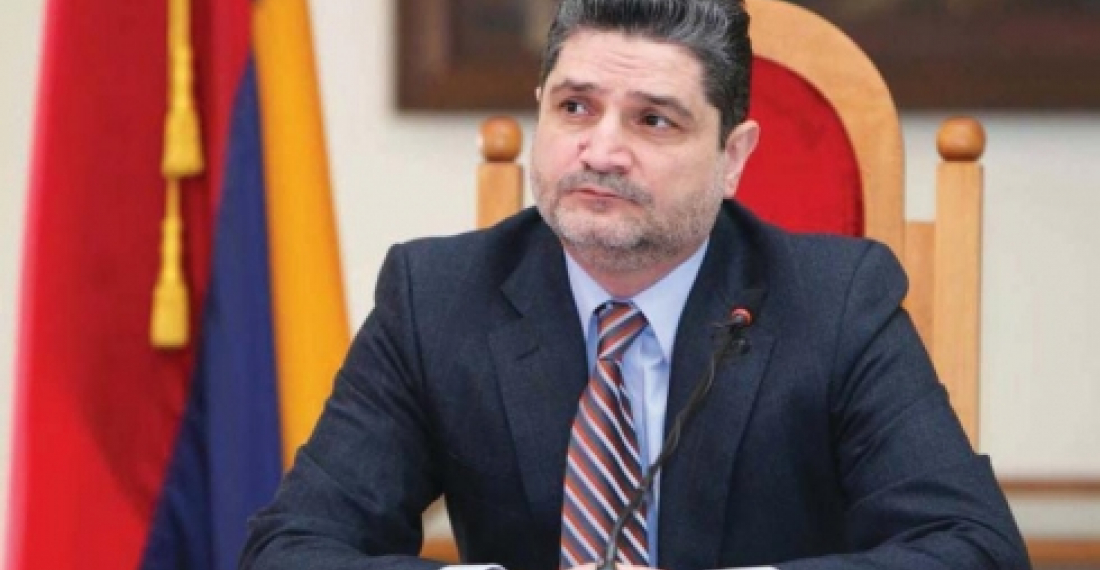
Тигран Саркисян:

Мы ничего не скрываем от наших партнеров - и в этом наша сила. Подобное мнение в интервью газете "Коммерсант" выразил премьер-министр Армении Тигран Саркисян.

"Я не согласен с тем, что программа ЕС "Восточное партнерство", в которой участвует и Ереван направлена на ослабление позиций РФ. Мы сотрудничаем и с НАТО, и с ЕС. Эти процессы не направлены против третьей стороны. Точно так же, как наши стратегические отношения с РФ не направлены против ЕС. Обо всех наших программах сотрудничества - будь то с ЕС, НАТО, США, Ираном, Китаем или Грузией - наш стратегический партнер Россия в курсе. Она с пониманием относится к этому поскольку у нас нет большого выбора для развития партнерских отношений, учитывая нашу геополитическую ситуацию и проблемы с соседями", - заметил премьер.

По словам Саркисяна, Армения не видит для себя барьеров с точки зрения интеграционных процессов и в рамках ЕврАзЭС, и в рамках СНГ. Более того, республика жизненно заинтересована в том, чтобы эти процессы углублялись и усиливались. "Но в мировой практике нет такого примера, чтобы страна, не имея границы, становилась членом Таможенного союза. Это было бы бессмысленным. Смысл Таможенного союза в том, что обмен товарами осуществляется без таможенного досмотра. В нашем случае это невозможно, потому что мы должны проходить через территорию соседнего государства и дважды проходить растаможку. Это делает бессмысленной всю процедуру облегчения растаможки для хозяйствующих субъектов. Взамен мы получили бы только проблемы, связанные с повышением таможенных пошлин и налогов. Российские коллеги с пониманием относятся к такой ситуации. Мы ищем формы сотрудничества без Таможенного союза. По-видимому, стоит подумать о какой-то новой платформе или особом статусе для Армении", - заметил Саркисян.

Вместе с тем, по словам премьера, для Армении очень важным является освоение новых экономических территорий, поскольку учитывая геополитические условия Армении, республика должна расширять свое экономическое пространство. Это одно из условий дееспособности экономики республики. "Мы заинтересованы в сотрудничестве в рамках СНГ, но хотим, чтобы и европейский рынок был открытым для нас. Для этого мы должны внедрять определенные стандарты, соответствующие европейским требованиям. Прежде всего, это стандарты, связанные с безопасностью пищевых продуктов. На то, чтобы эти стандарты были проработаны, внедрены и реализовывались, уйдет около трех лет. И тогда для нас откроется новый большой рынок", - подытожил Саркисян.

Таможенный союз - форма торгово-экономической интеграции Беларуси, Казахстана и РФ, предусматривающая единую таможенную территорию, в пределах которой во взаимной торговле товарами не применяются таможенные пошлины и ограничения экономического характера, за исключением специальных защитных, антидемпинговых и компенсационных мер. При этом страны-участники таможенного союза применяют единый таможенный тариф и другие единые меры регулирования торговли товарами с третьими странами. Межгосударственными соглашениями предусматривается также присоединение к союзу Киргизии. По оценкам специалистов, создание Таможенного союза Белоруссии, Казахстана и России позволит стимулировать экономическое развитие и может дать дополнительно до 15 % роста ВВП стран-участниц к 2015 году.

Related articles

Editor's choice
News
Israeli parliament votes to bring back the death penalty, but only for Palestinians

Israeli parliament votes to bring back the death penalty, but only for Palestinians

srael’s parliament approved a bill on Monday that would allow the execution of Palestinians convicted on terror charges for deadly attacks, a move that has been criticized as discriminatory and immediately drew a court challenge. Sixty-two lawmakers, including Prime Minister Benjamin Netanyahu, voted in favor and 48 against the bill, championed by far-right National Security Minister Itamar Ben Gvir. There was one abstention and the rest of the lawmakers were not present. Ben Gvir in the run-up to the vote had worn a lapel pin in the shape of a noose, symbolising his support for the legislation. “We made history!!! We promised. We delivered,” he posted on X after the vote. The bill would make the death penalty the default punishment for Palestinians in the Israeli-occupied West Bank found guilty of intentionally carrying out deadly attacks deemed “acts of terrorism” by an Israeli military court. The bill says that the sentence may be reduced to life imprisonment under “special circumstances.” Palestinians in the West Bank are automatically tried in Israeli military courts. Meanwhile, under the bill, in Israeli criminal courts anyone “who intentionally causes the death of a person with the aim of harming an Israeli citizen or resident out of an intention to put an end to the existence of the State of Israel shall be sentenced to death or life imprisonment.” Criminal courts try Israeli nationals, including Palestinian citizens and residents of east Jerusalem. The bill sets the execution method as hanging, adding that it should be carried out within 90 days of the sentencing, with a possible postponement of up to 180 days. - ‘Parallel tracks’ - The bill appears to conflict with Israel’s Basic Laws, which prohibit arbitrary discrimination, and shortly after it was passed, a leading human rights group announced that it had filed a petition with the Supreme Court demanding the legislation’s annulment. “The law creates two parallel tracks, both designed to apply to Palestinians,” the Association for Civil Rights in Israel said in a statement. “In military courts — which have jurisdiction over West Bank Palestinians — it establishes a near-mandatory death sentence,” the rights group said. In civilian courts, the law’s stipulation that defendants must have acted “with the aim of negating the existence” of Israel “structurally excludes Jewish perpetrators,” the group added. The association argued the law should be annulled on both jurisdictional and constitutional grounds. During the debate in parliament, opposition lawmaker and former deputy Mossad director, Ram Ben Barak, expressed outrage at the legislation. “Do you understand what it means that there is one law for Arabs in Judea and Samaria, and a different law for the general public for which the State of Israel is responsible?” he asked fellow parliamentarians, using the Israeli name for the West Bank. “It says that Hamas has defeated us. It has defeated us because we have lost all our values.” - ‘Discriminatory application’ - Lawmaker Limor Son Har-Melech from Ben Gvir’s party, who years ago survived an attack by Palestinian militants in which her husband was killed, urged fellow parliamentarians to approve the bill. “For years, we endured a cruel cycle of terror, imprisonment, release in reckless deals, and the return of these human monsters to murder Jews again ... And today, my friends, this cycle has come full circle.” The Palestinian Authority condemned the law’s adoption, saying that “Israel has no sovereignty over Palestinian land.” “This law once again reveals the nature of the Israeli colonial system, which seeks to legitimize extrajudicial killing under legislative cover,” it added. In February, Amnesty International had urged Israeli lawmakers to reject the legislation, citing its “discriminatory application against Palestinians.” On Sunday, Britain, France, Germany and Italy expressed “deep concern” over the bill, which they said risked “undermining Israel’s commitments with regards to democratic principles.” While the death penalty exists for a small number of crimes in Israel, it has become a de facto abolitionist country — the Nazi Holocaust perpetrator Adolf Eichmann was the last person to be executed in 1962. Israel has occupied the West Bank since 1967 and violence there has soared since Hamas’s October 7, 2023 attack on Israel triggered the Gaza war. (read more by clicking the image above).

Popular

Editor's choice
Interview
Thursday Interview: Murad Muradov

Thursday Interview: Murad Muradov

Today, commonspace.eu starts a new regular weekly series. THURSDAY INTERVIEW, conducted by Lauri Nikulainen, will host  persons who are thinkers, opinion shapers, and implementors in their countries and spheres. We start the series with an interview with Murad Muradov, a leading person in Azerbaijan's think tank community. He is also the first co-chair of the Action Committee for a new Armenian-Azerbaijani Dialogue. Last September he made history by being the first Azerbaijani civil society activist to visit Armenia after the 44 day war, and the start of the peace process. Speaking about this visit Murad Muradov said: "My experience was largely positive. My negative expectations luckily didn’t play out. The discussions were respectful, the panel format bringing together experts from Armenia, Azerbaijan, and Turkey was particularly valuable during the NATO Rose-Roth Seminar in Yerevan, and media coverage, while varied in tone, remained largely constructive. Some media outlets though attempted to represent me as more of a government mouthpiece than an independent expert, which was totally misleading.  Overall, I see these initiatives as important steps in rebuilding trust and normalising professional engagement. The fact that soon a larger Azerbaijani civil society visits to Armenia followed, reinforces the sense that this process is moving in the right direction." (click the image to read the interview in full)


