САММИТ СНГ ОТКРЫЛСЯ В ДУШАНБЕ

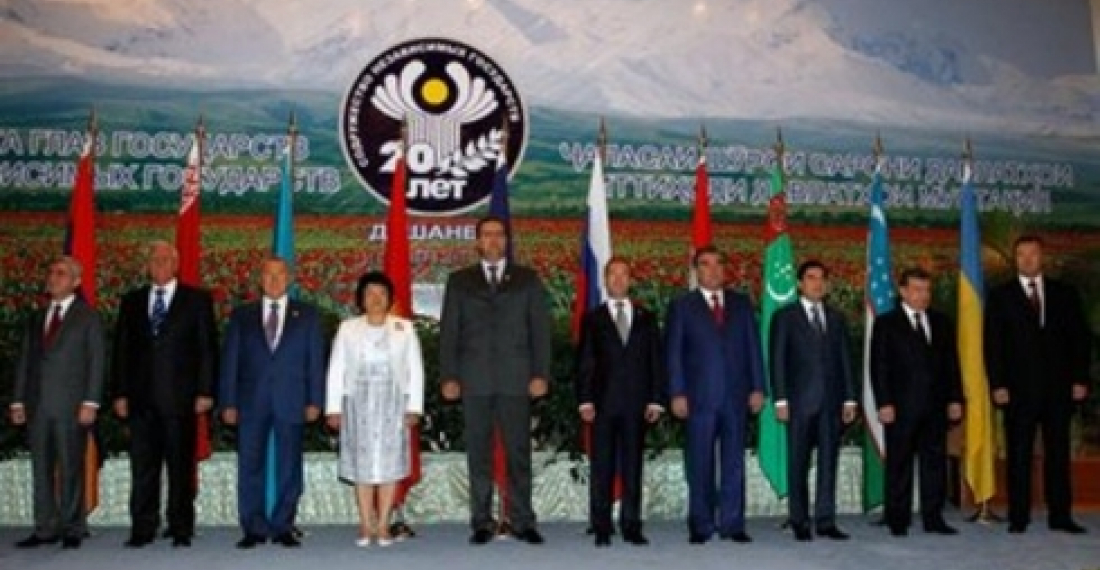
Лидеры бывших советских республик собрались в столице Таджикистана на мероприятии, которое должно было быть праздничным юбилейным саммитом. Но отсутствие президентов Азербайджана, Беларуси и Узбекистана бросает тень на встречу.

Встреча проходит за закрытыми дверями, чтобы позволить лидерам обсудить будущее СНГ среди растущей критики в адрес ее эффективности. Российский аналитик, Иннокентий Адясов, который является ведущим консультантом по вопросам экспертного совета Комитета Государственной Думы по делам СНГ написал на сайте РИА Новости, что "В этом году Содружеству исполняется 20 лет, и к юбилею оно подошло не в лучшей форме. Большинство граждан стран СНГ не понимает, зачем нужно это объединение с массой бюрократических структур. Содружество независимых государств больше похоже на некий дискуссионный клуб, площадку для обмена мнениями, чем на координирующий орган."


Будучи неэффективным органом, чтобы координировать экономические и торговые вопросы, а также вопросы политики и безопасности, СНГ ещё больше погрузилась в кризис, в результате войны между двумя ее членами - Россией и Грузией, в 2008 году.СНГ было полностью способно предотвратить войну, остановить её, когда она началась, или помочь наладить грузино-российские отношения после войны. Грузия впоследствии покинула организацию.


Для того, чтобы стать эффективной СНГ должна снизить свои амбиции, прекратить подписание соглашений, которые впоследствии не реализовываются и приводят к затруднениям, и сосредоточить внимание на областях, представляющих общий интерес. России также необходимо заново переосмыслить свою роль в организации и начать действовать на равных, а не первым среди равных. В конце концов, факт, что прошлое советского опыта не достаточно, чтобы сделать СНГ эффективной организацией, и более глубокое сотрудничество между некоторыми из ее членов будет более эффективным  в других организациях, таких как ОДКБ в военной и сфере безопасности, и ЕврАзЭС - таможенный союз, в экономической сфере.


Этот комментарий был подготовлен политическим редактором commonspace.eu

Фото: Главы государств стран СНГ в Душанбе (предоставлено www.kremlin.ru)
Related articles

Editor's choice
News
The British prime minister says Europe must "stand on its own two feet" when it comes to defence

The British prime minister says Europe must "stand on its own two feet" when it comes to defence

The UK will deploy a carrier strike group, led by the aircraft carrier HMS Prince of Wales to the Arctic and the High North as part of efforts to bolster security against Russian threats. British prime minister, Sir Keir Starmer announced the deployment in a speech on Saturday (14 February) at the Munich Security Conference. Europe must be ready to fight to protect its people, values, and way of life,  Sir Keir told the Conference. Starmer also called for deeper links and cooperation, including economic ties, between the UK and EU. The PM stressed the continent must "stand on its own two feet" when it comes to defence commitments. "We must build our hard power, because that is the currency of the age," he told the conference. (Click image to read the full story).

Popular

Editor's choice
Interview
Thursday Interview: Murad Muradov

Thursday Interview: Murad Muradov

Today, commonspace.eu starts a new regular weekly series. THURSDAY INTERVIEW, conducted by Lauri Nikulainen, will host  persons who are thinkers, opinion shapers, and implementors in their countries and spheres. We start the series with an interview with Murad Muradov, a leading person in Azerbaijan's think tank community. He is also the first co-chair of the Action Committee for a new Armenian-Azerbaijani Dialogue. Last September he made history by being the first Azerbaijani civil society activist to visit Armenia after the 44 day war, and the start of the peace process. Speaking about this visit Murad Muradov said: "My experience was largely positive. My negative expectations luckily didn’t play out. The discussions were respectful, the panel format bringing together experts from Armenia, Azerbaijan, and Turkey was particularly valuable during the NATO Rose-Roth Seminar in Yerevan, and media coverage, while varied in tone, remained largely constructive. Some media outlets though attempted to represent me as more of a government mouthpiece than an independent expert, which was totally misleading.  Overall, I see these initiatives as important steps in rebuilding trust and normalising professional engagement. The fact that soon a larger Azerbaijani civil society visits to Armenia followed, reinforces the sense that this process is moving in the right direction." (click the image to read the interview in full)