


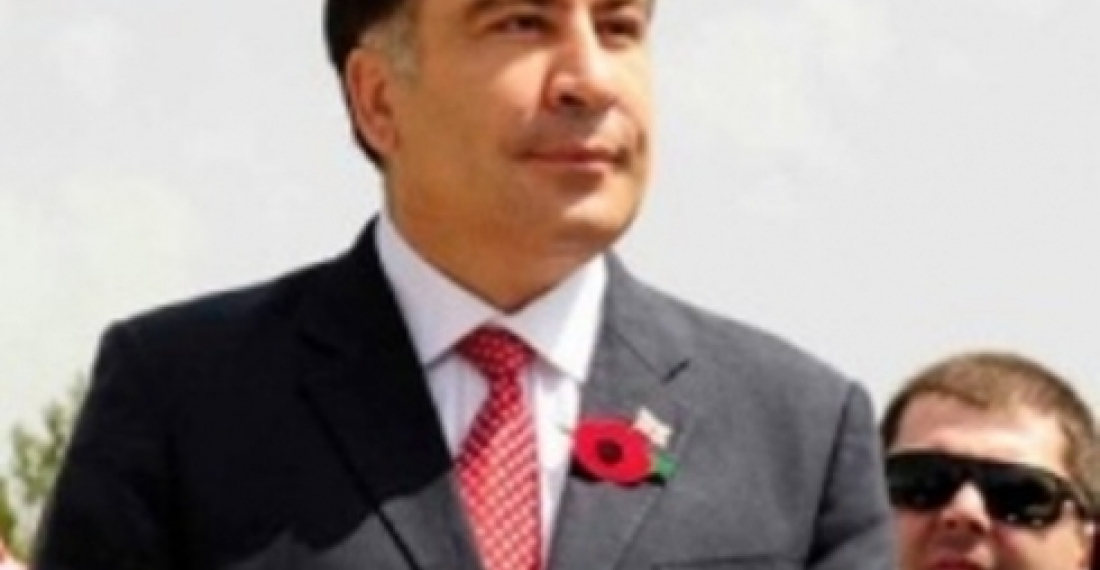
Саакашвили предупреждает, что умиротворение России является заблуждением. Президент Грузии в интервью "Рустави 2" говорит об опасностях для государственности Грузии.

Президент Грузии Михаил Саакашвили в среду дал обширное интервью телекомпании "Рустави-2" по случаю пятой годовщины войны с Россией.

Как сообщает новостной портал Сivil.ge, президент Грузии Михаил Саакашвили заявил, что пять лет назад он сделал все для того, чтобы предотвратить войну с Россией, в том числе и путем предложения Москве важных для нее уступок, среди которых был и отказ от устремлений в НАТО, ослабление сотрудничества с США и план разделения Абхазии. Саакашвили заявил, что его усилия были тщетными, так как Москва готовилась к войне, которая ставила своей целью «полное уничтожение» Грузии.

Говоря об интервью премьер-министра России Дмитрия Медведева телекомпании «Рустави-2», Саакашвили заявил, что совершенно четким посланием является то, что Грузия должна свыкнуться с потерей Абхазии и Южной Осетии, отказаться от интеграции в НАТО и должна объединиться в Евразийский союз, если желает нормализовать отношения с Россией.

"Перед грузинской нацией… стоит конкретный выбор – если грузинская нация желает отказаться от очень важной части своей территории, если грузинская нация желает отказаться от надежды на реальной развитие в будущем – потому, что евроатлантическое пространство подразумевает это… если Грузия готова отказаться от своего внутреннего выбора потому, что Евразийский союз означает, что они устанавливают тебе правила игры, тогда, естественно, определенные возможности с Россией уже есть", - заявил он.

По его словам, единственным правильным вариантом для Грузии является достойное развитие без того, чтобы склонять голову перед Россией.

Саакашвили заявил, что если страна вновь продолжит обманывать себя с надеждой, что ласки в отношении России принесут результат, за этим последует разрушение государственности Грузии.

Полное интервью президента Грузии Михаила Саакашвили, доступна на сайте новостного портала Civil.Ge, с ним можно ознакомиться здесь

Источник: Civil.ge и телекомпания "Рустави 2"


Похожие статьи на commonspace.eu

Руководство России делает осторожные комментарии к 5-й годовщине войны с Грузией.

Деннис Саммут:  Война без победителей, которую можно было избежать, и которая не должна повториться.

Интервью с Дмитрием Медоев, послом Южной Осетии в Москве (опубликовано 7 августа 2013 года)

Грузия отмечает пятую годовщину войны с Россией; заявление Министерства иностранных дел (опубликовано 7 августа 2013 года)

Никогда больше! Десять вопросов об августовской войне 2008 года между Грузией и Россией (опубликовано 6 августа 2013 года)


Россия возводит искусственный забор в центре Кавказа (опубликовано 5 августа 2013)

Related articles

Editor's choice
News
Women emerge favourite to lead United Nations from next year, after straw-poll of UN Security Council members

Women emerge favourite to lead United Nations from next year, after straw-poll of UN Security Council members

​ Two women have emerged as favourite to lead the United Nations as Secretary-General from 1 January 2027, when the term of the present incumbent, Antonio Gutteres, expires. A straw poll of the members of the UN Security Council, held on Thursday, 30 July showed that of the seven candidates, Rebecca Grynspan of Costa Rica and Carolyn Rodriguez-Birkett of Guyana received ten and nine positive endorsements respectively, by the 15 members UN Security Council Although the poll and its result are supposed to be secret, the result leaked within minutes, and was carried on world media outlets, such as Reuters. The result was as follows   Michelle Bachelet 6 encourage 5  discourage   4 no opinion María Fernanda Espinosa 5 2 8 Rafael Grossi 7 2 6 Rebeca Grynspan 10 1 4 Olara Otunnu 2 5 8 Carolyn Rodrigues-Birkett 9 2 4 Macky Sall 6 7 2   Article 97 of the UN Charter states that the “Secretary-General shall be appointed by the General Assembly upon the recommendation of the Security Council”. Straw polls are informal ballots used to determine the viability of Secretary-General candidates.  The seven current candidates are: Michelle Bachelet Jeria (Chile), who was nominated by Brazil, Chile, and Mexico on 2 February, with Chile withdrawing its nomination on 24 March; María Fernanda Espinosa Garcés (Ecuador), who was nominated by Antigua and Barbuda on 11 May; Rafael Mariano Grossi (Argentina), who was nominated by Argentina on 26 November 2025; Rebeca Grynspan Mayufis (Costa Rica), who was nominated by Costa Rica on 3 March; Olara Otunnu (Uganda), who was nominated by Uganda on 24 July; Carolyn Rodrigues Birkett (Guyana), who was nominated by Guyana on 15 June; and Macky Sall (Senegal), who was nominated by Burundi on 2 March. At Thursday's straw poll, there was no difference between the ballots presented to the five permanent members (P5) and the ten elected members (E10). Council members received one ballot per candidate, containing the candidate’s name followed by three options: “encouraged”, “discouraged”, and “no opinion expressed”.   It is ofcourse early days, and the straw poll is just an informal indication of the mood of the UN Security Council, but the strong showwing by the two womencandidates may be an indication that for the first time, the head of the UN can be a women. (click image to read more) ​

Popular

Editor's choice
Interview
Thursday Interview: Murad Muradov

Thursday Interview: Murad Muradov

Today, commonspace.eu starts a new regular weekly series. THURSDAY INTERVIEW, conducted by Lauri Nikulainen, will host  persons who are thinkers, opinion shapers, and implementors in their countries and spheres. We start the series with an interview with Murad Muradov, a leading person in Azerbaijan's think tank community. He is also the first co-chair of the Action Committee for a new Armenian-Azerbaijani Dialogue. Last September he made history by being the first Azerbaijani civil society activist to visit Armenia after the 44 day war, and the start of the peace process. Speaking about this visit Murad Muradov said: "My experience was largely positive. My negative expectations luckily didn’t play out. The discussions were respectful, the panel format bringing together experts from Armenia, Azerbaijan, and Turkey was particularly valuable during the NATO Rose-Roth Seminar in Yerevan, and media coverage, while varied in tone, remained largely constructive. Some media outlets though attempted to represent me as more of a government mouthpiece than an independent expert, which was totally misleading.  Overall, I see these initiatives as important steps in rebuilding trust and normalising professional engagement. The fact that soon a larger Azerbaijani civil society visits to Armenia followed, reinforces the sense that this process is moving in the right direction." (click the image to read the interview in full)


