


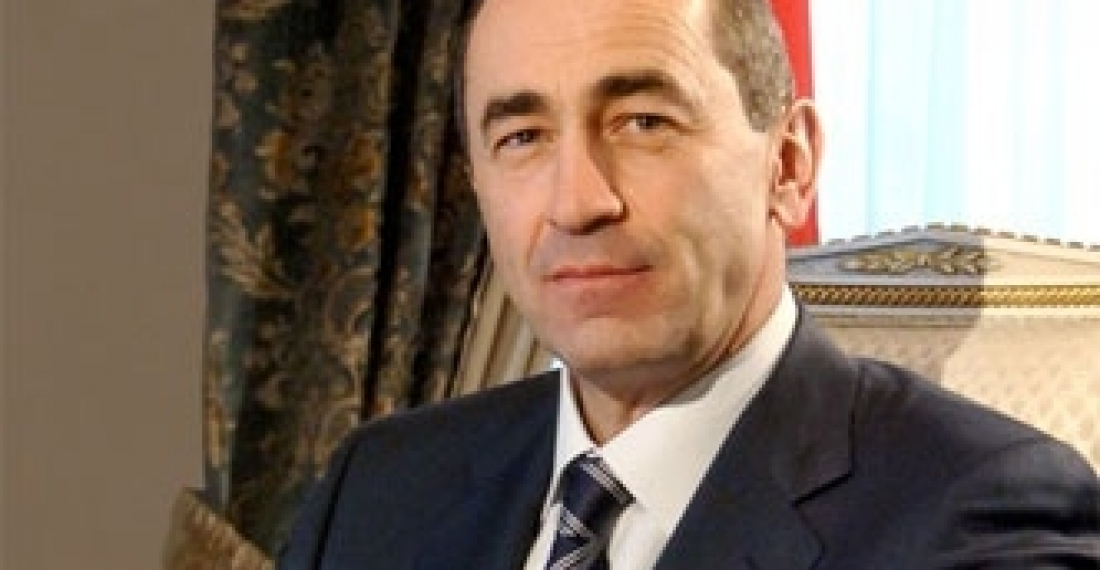
Роберт Кочарян:

"Карабахское движение начиналось под девизом воссоединения с Армений. Однако независимость давала Нагорно-Карабахской Республике - Арцаху более серьезные правовые основания для дальнейшего существования. Потому, что это было созвучно с действовавшим тогда законодательством, означало фактическое осуществление права на самоопределение, а право на самоопределение является одним из фундаментальных принципов международного права. Это стало основой создания серьезной базы для существования будущего государства. Это был верный шаг в нужный момент". Как сообщает собкор АрмИнфо в Степанакерте, об этом заявил первый президент Нагорно-Карабахской Республики НКР и второй президент Республики Армения Роберт Кочарян в интервью Общественному телевидению НКР.

Кочарян разделил становление карабахской государственности на три этапа: первый - советского периода, который назвал "романтическим". "С развалом СССР мы поняли, что остаемся один на один с противником и необходимо быть готовым к противостоянию во всех смыслах. Второй этап

- это военный период, который начинается с осени 1991 года и продолжается до мая 1994 года, и третий этап - после заключения перемирия, когда стали восстанавливать гражданские структуры. Этот этап продолжается по сей день", - отметил он.

Говоря о нынешнем состоянии переговорного процесса по урегулированию азербайджано-карабахского конфликта, Роберт Кочарян сказал: "Я не согласен с утверждением о том, что Карабах не принимает участия в переговорах. Карабах не принимает участия в переговорах на  одном этапе переговорного процесса - на встречах президентов РА и АР, где интересы НКР представляет президент Армении. Например, в мое президентство все вопросы детально обсуждались с тогдашним президентом НКР Аркадием Гукасяном. Однако переговорный процесс шире, и Карабах посредством сопредседателей Минской группы ОБСЕ участвует в переговорах. Конечно, нужно говорить о полноценном участии, и я не сомневаюсь, что Карабах будет полноценно участвовать в переговорах". По его словам, в плане признания права на самоопределение время, с учетом имеющихся прецедентов, несомненно, работает в пользу Карабаха.


 

Related articles

Editor's choice
News
The British prime minister says Europe must "stand on its own two feet" when it comes to defence

The British prime minister says Europe must "stand on its own two feet" when it comes to defence

The UK will deploy a carrier strike group, led by the aircraft carrier HMS Prince of Wales to the Arctic and the High North as part of efforts to bolster security against Russian threats. British prime minister, Sir Keir Starmer announced the deployment in a speech on Saturday (14 February) at the Munich Security Conference. Europe must be ready to fight to protect its people, values, and way of life,  Sir Keir told the Conference. Starmer also called for deeper links and cooperation, including economic ties, between the UK and EU. The PM stressed the continent must "stand on its own two feet" when it comes to defence commitments. "We must build our hard power, because that is the currency of the age," he told the conference. (Click image to read the full story).

Popular

Editor's choice
Interview
Thursday Interview: Murad Muradov

Thursday Interview: Murad Muradov

Today, commonspace.eu starts a new regular weekly series. THURSDAY INTERVIEW, conducted by Lauri Nikulainen, will host  persons who are thinkers, opinion shapers, and implementors in their countries and spheres. We start the series with an interview with Murad Muradov, a leading person in Azerbaijan's think tank community. He is also the first co-chair of the Action Committee for a new Armenian-Azerbaijani Dialogue. Last September he made history by being the first Azerbaijani civil society activist to visit Armenia after the 44 day war, and the start of the peace process. Speaking about this visit Murad Muradov said: "My experience was largely positive. My negative expectations luckily didn’t play out. The discussions were respectful, the panel format bringing together experts from Armenia, Azerbaijan, and Turkey was particularly valuable during the NATO Rose-Roth Seminar in Yerevan, and media coverage, while varied in tone, remained largely constructive. Some media outlets though attempted to represent me as more of a government mouthpiece than an independent expert, which was totally misleading.  Overall, I see these initiatives as important steps in rebuilding trust and normalising professional engagement. The fact that soon a larger Azerbaijani civil society visits to Armenia followed, reinforces the sense that this process is moving in the right direction." (click the image to read the interview in full)

